Archive for February 24th, 2013

February 24, 2013

Elephant Graveyard

by safarisogood

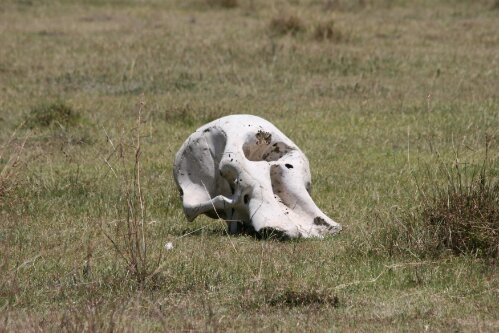
With a great Driver/Guide like Masha, we learn many interesting facts that even Michael didn’t know.  One of the better stories Masha told was about Elephant Graveyards in response to the question, “Do elephants really all go to one place to die?”  The reality is that elephants are born with 6 pair of molars and can live into their 80’s.  They lose sets of molars throughout their lives and if they live long enough, after they lose their last set of molars, they can no longer chew hard stuff.  At that point, they walk to the marsh in order to have soft grass to eat.  As they gather in this area, they stay until they die — creating what becomes the Elephant Graveyard. 
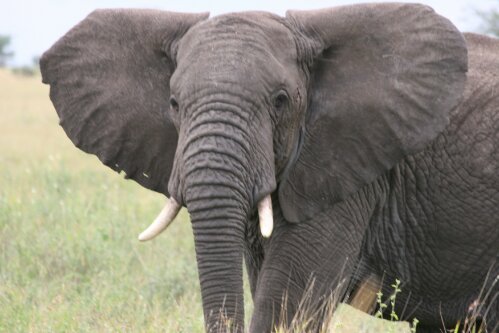
Seeing these huge creatures up close and wandering free has been an incredible experience (mostly).  We’ve seen a number of lone males walking toward some destination.  They do not just wander around, as Karlene suggested at one point.  Masha says they are always headed somewhere — in search of food, a lady friend, or to water.  You can tell if they are males or females based on whether there is a baby or a group (females) or alone (males).  We came upon a young male that appeared to be sick. His ribs showed and his hips seemed out of alignment.  He was very close to the road and we stopped to take pictures.  He turned and made aggressive gestures, so Masha moved a little.  As he walked on, we again attempted to get close to him (he was 30-40 feet from us).  We all had our heads poked up through the roof taking pictures when he suddenly snorted and turned toward us, coming straight at the Land Cruiser!!!  I got my picture, then quickly sat, slamming the window shut.  Masha immediately drove us to a safe distance.  We were all pumped with adrenaline and exhilarated from the experience when Masha asked from the driver’s seat, “Did someone really shut a window?”  When I responded sheepishly, “Yes, I did”, he broke out in laughter, as did the rest of us.  The absurdness of thinking I could keep this giant creature out of a vehicle that was smaller than he simply by closing the window, did not occur to me.  Pure
image

Young male elephant charging us.

image

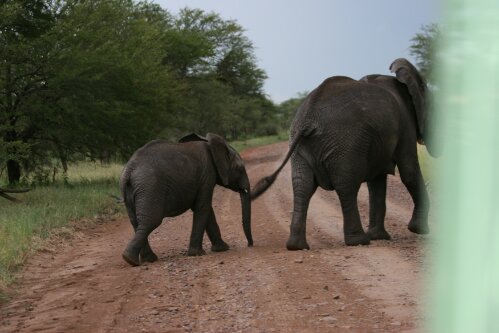
Baby and Mommy passing just behind our vehicle.

instinct had taken hold of me.  Needless to say, I was the butt of many good-natured jokes for the next couple of days. 
image
February 24, 2013

Wildebeests As Far As the Eye Can See!

by safarisogood
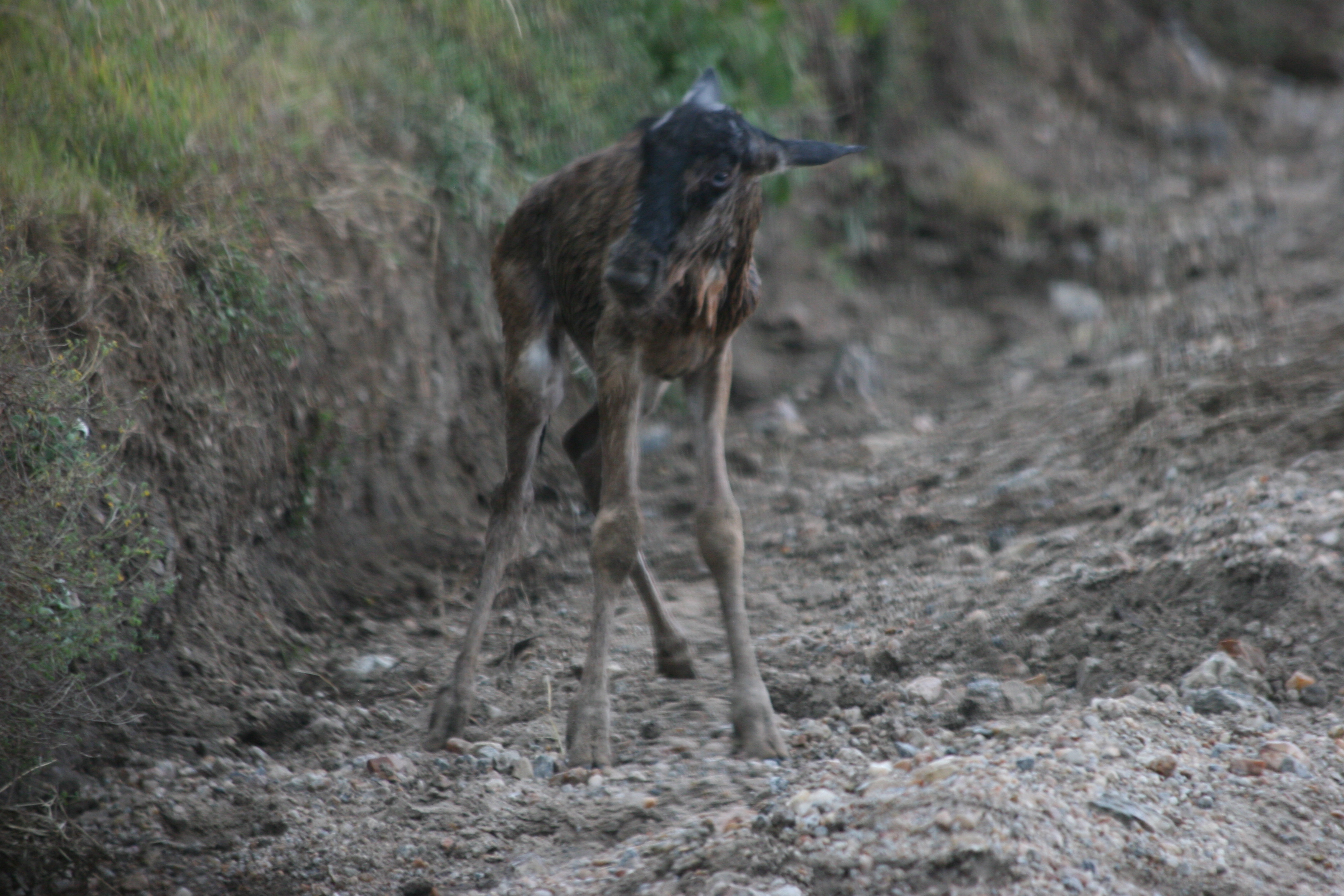
Newborn wildebeest taking his first steps.

Newborn wildebeest taking his first steps.

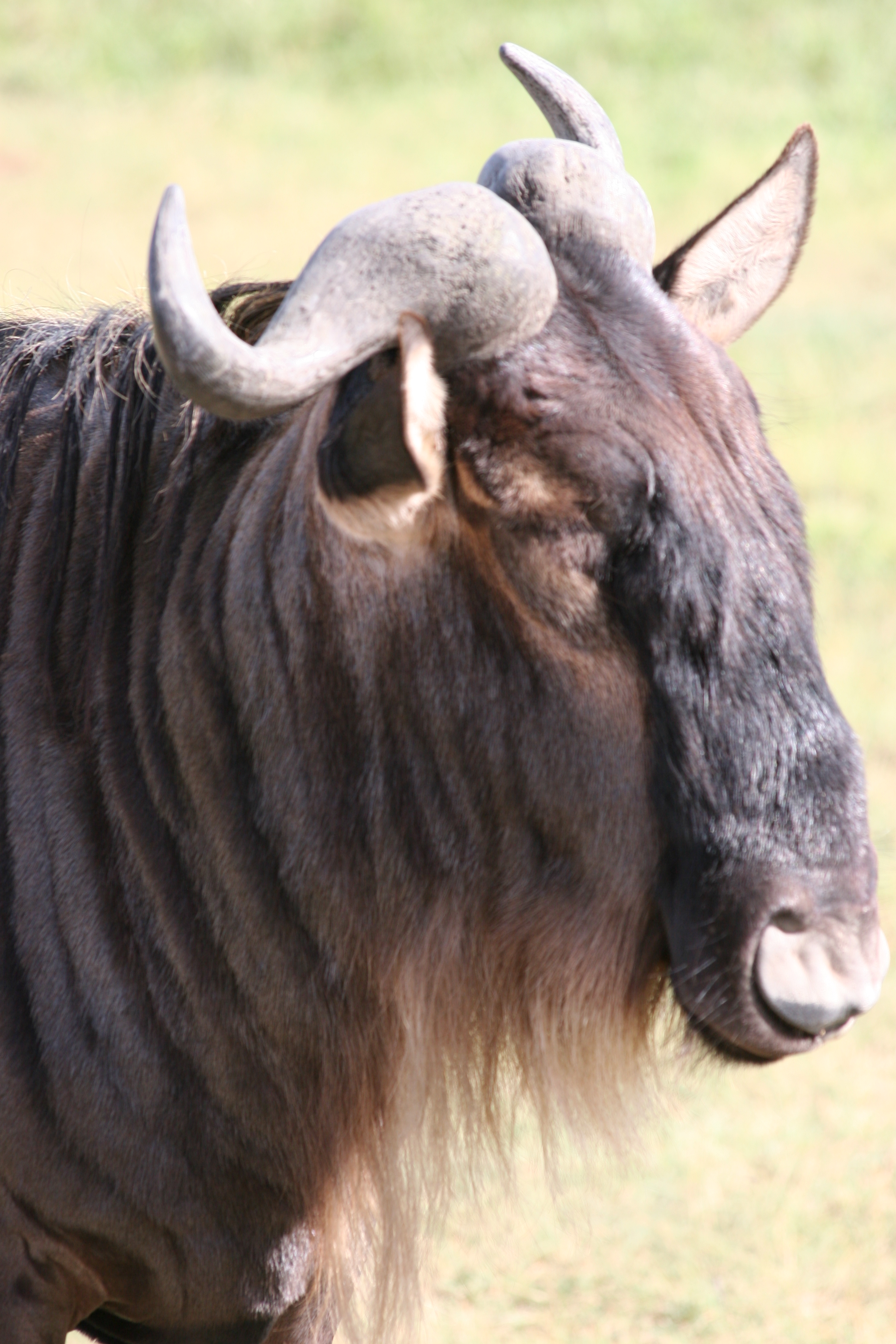
Isn't he a handsome fellow?

Isn’t he a handsome fellow?

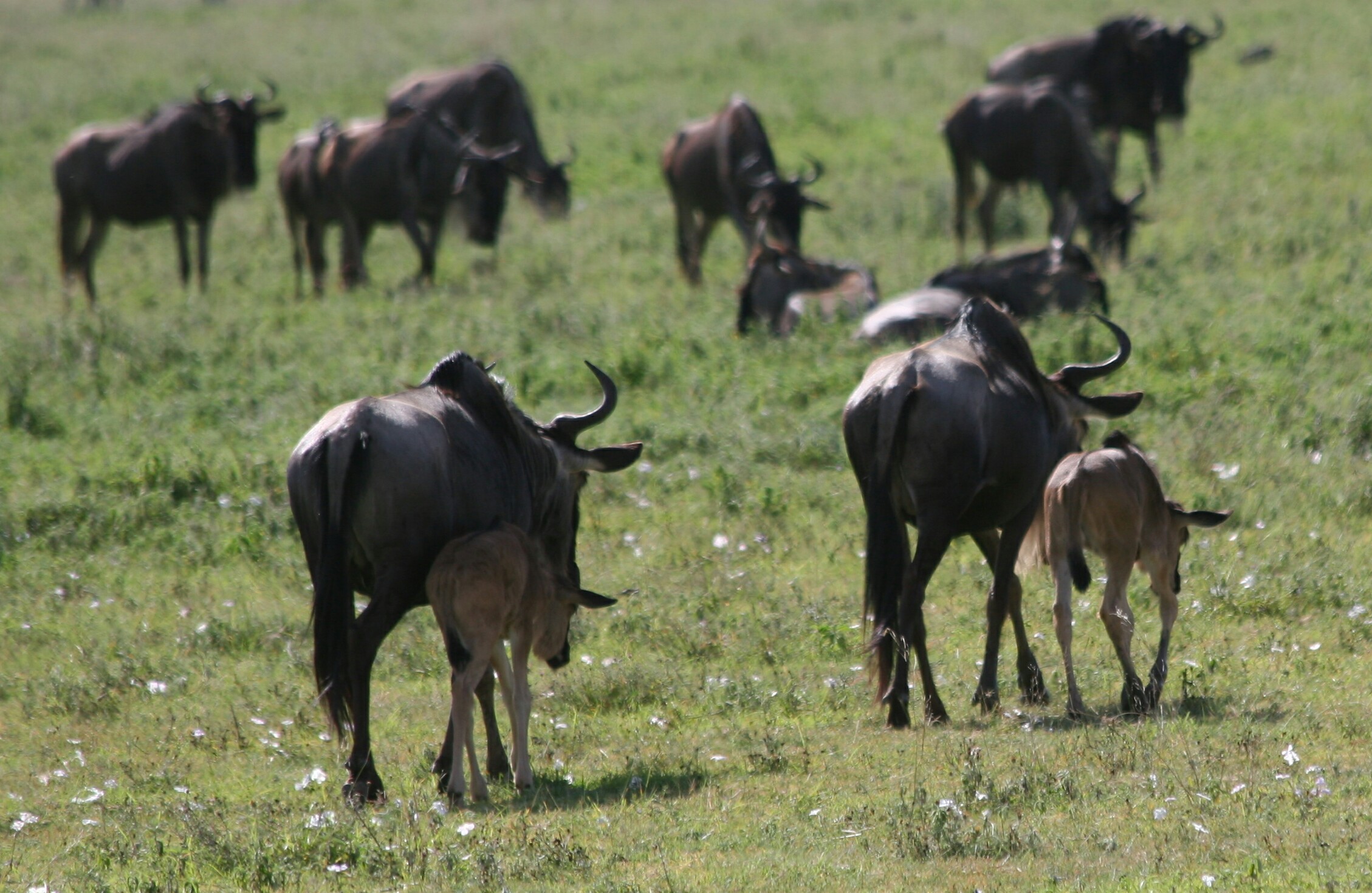
Babies staying very close to Mom.

Babies staying very close to Mom.

IMG_4167

Two hyenas resting in the road with very full tummies.

Two hyenas resting in the road with very full tummies.

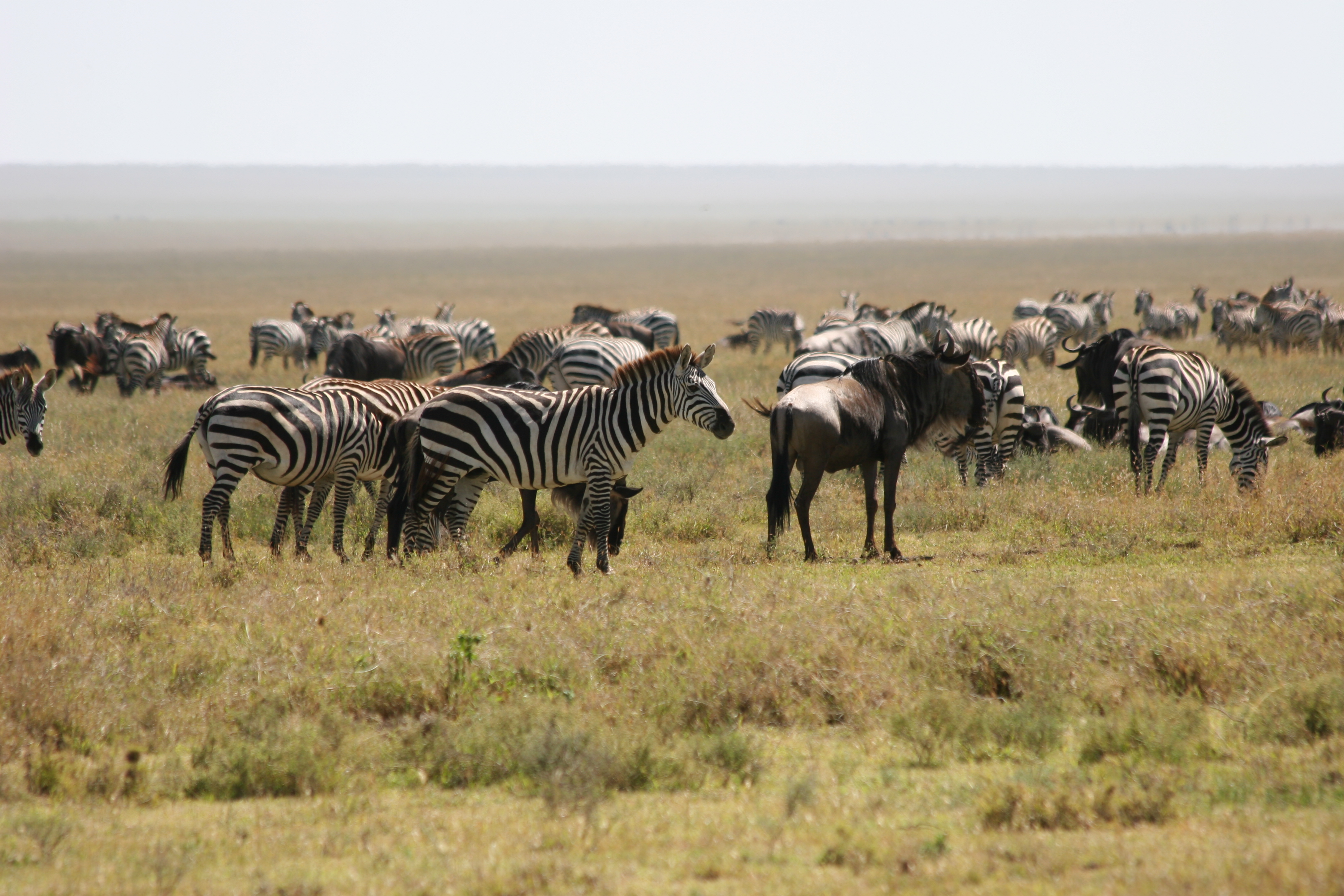
Zebras and Wildebeests hangin' together.

Zebras and Wildebeests hangin’ together.

IMG_4366Wildebeests are truly ugly animals — they resemble some sort of prehistoric bull.  Although we were not in Tanzania during the official migration, Masha pointed out to us that Wildebeests are always migrating — constantly moving from area to area.  
The sight of thousands (no exaggeration) of wildebeests walking across the plain is indescribable.  The highlight of our wildebeest experience was, of course, the newborn we saw on the side of the road.  In addition, we observed that the Mothers are excellent parents, keeping the babies close at their sides.  They even form what we termed “nurseries”, wherein the babies were gathered together inside the circle of Mothers, with a couple Moms on the edge of the circle keeping watch.  Even when on the move the babies were kept close enough that they sometimes ran into Mom.  We also saw a baby that was clearly afraid to cross the road with it’s Mom, due to the large strange metal animals parked along the road (i.e., vehicles).  Mom tried to convince baby to cross, baying at it, to no avail.  Finally, she patiently walked back across the road, almost gesturing “Come this way, it’s okay”.  The baby responded by running with all its might through a couple of vehicles, arriving safely on the other side with Mom.  It was an amazing thing to watch.  Zebras are often found with the wildebeests.  They graze in the same areas together, with the zebras eating the high grass and the wildebeests eating the low grass.  Gazelles, hartebeests, and impala also grazed with the group; the purpose being strength in numbers.

They all get along very well.
Another common sight is hyenas around the wildebeests.  They feed on the afterbirth, as well as on the newborns.  We came upon a small group of hyenas lying in the road — they were fat probably from having recently eaten a large amount of afterbirth.  Wildebeests have all their b

abies within a 3 week period, making migration and protection of the young easier.  We were very lucky to be in Tanzania during the birthing season.
On Saturday we were on an all-day game drive, so we had box lunches to eat.  Masha stopped in the middle of the Serengeti (which means endless plain) so that we could eat our lunch among the thousands of Wildebeests and Zebras.  We don’t remember what it tasted like, but it was the best box lunch we ever ate!