Archive for February 27th, 2013

February 27, 2013

The Maasai Village

by safarisogood

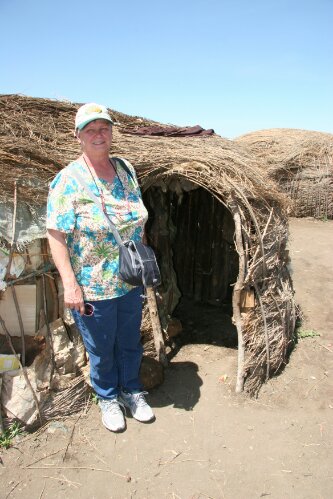
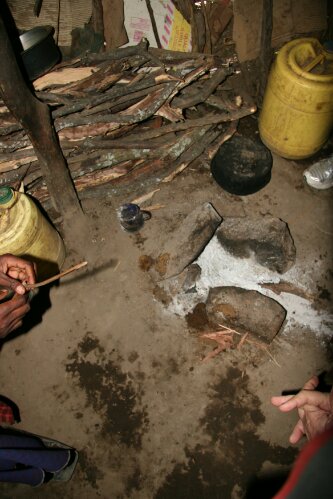
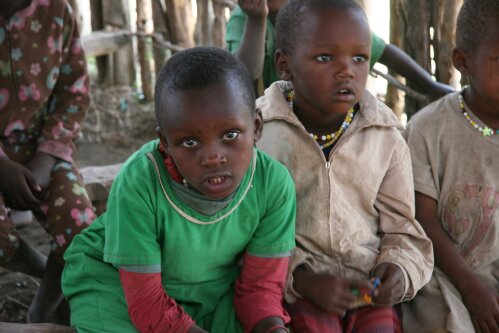
It is believed that the Maasai people originally came from Egypt or Sudan approximately 200 years ago, traveling into Northern Africa looking for water and greener pastures for their cows.  They are the only tribe that has maintained their original culture and customs, living in small villages with multiple wives and a specified hierarchy that includes a chief.  There is no electricity, plumbing, or running water and lodging consists of very small huts made of sticks, straw and any other material that is handy.  Think of a walk-in closet that is 5 feet tall.  They cook on small fires in the center of their hut in steel pots that look 20 years old.  We wondered how they tolerated the smoke from the fires, which must completely fill the small area whenever a fire is lit.  Michael observed that the walls were not solid, allowing some smoke to escape, but with no chimney, it had to be suffocating at times.  Their beds were off the floor (on sticks) made from tree branches covered in cow hide, flattened cardboard boxes or a combination of the two; with the adult bed being the size of a small twin bed and the chidren’s bed even smaller. A Maasai man can marry up to 10 wives; however he has fewer children these days as the government now mandates schooling for ALL African children.  Although public school is free, it is expensive to clothe the children and transport them the many miles into town.  Having said that, it is painfully obvious that this law is often not enforced, as there are school aged children tending herds and milling about during school hours. Masha indicated that educating the Maasai people is beginning to make some positive changes.  For example, castrating women has become rare.  Boys are still castrated during ceremonies and they are required to wear white face paint for three months, after which a huge celebration takes place welcoming them into manhood.  This ritual usually takes place between 12-15 years of age, but can occur as early as 8.  They used to go out and kill a lion at the end of the three-month period to prove their manhood; however, such killing is no longer allowed.  Now they wear red head covers and dreadlocks, which are meant to resemble the lion’s mane.  The Maasai own the land where tanzanite is mined so they are a wealthy tribe.  Basd on what we saw, it is a mystery where all the money goes.  The village we visited had a small, one room schoolhouse for the 5-6 year olds.  The children sang songs to us, including the ABC song.  They learn their ABCs and how to count to 100 in English.  They are very sweet, but are not clean and wear clothing that has clearly been donated (we saw a child with a sweatshirt on and one with what looked like a pair of pajamas, T-shirts, etc.).  They do not wear underwear, we presume to make elimination easier.  They sat in the dirt (we did not see one chair or other piece of furniture, except the “beds”) or on Mom’s hip.  They had no reaction to the flies that landed on their eyes, noses, or mouths.  The men get one hut for each wife and spends time with them in those huts.  They eat mostly beef and goat, and drink milk and blood.  They eat very little fruit or vegetables.  They are very tall and thin and their teeth are in terrible shape or missing altogether.  They walk miles to other villages and we would see them walking across the plain or in the hills, in their brightly colored ground-length robes.  They are partial to bright red.  When they want to move to another village (which happens often), they leave everything taking only the clothes on their back and their walking stick.  When they arrive at the new village, they are welcomed and given a hut to live in.  The hut they left is available for another traveler to occupy.      
image

Karlene in front of the entrance to a hut.
image

The fire pit for cooking inside the 10 foot diameter space.
image

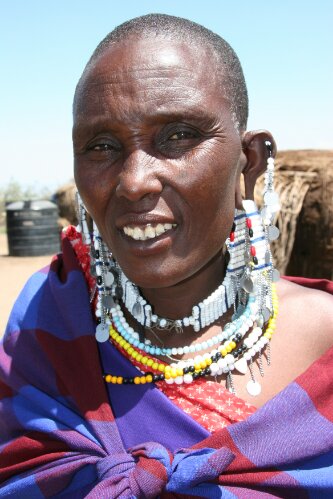
One of the chief's wives - note her elaborate jewelry.
image

In the school - this look says it all.
February 27, 2013

Jambo

by safarisogood

Jambo means hello in Swahili.  It is the first word one learns upon arriving.  Our tour group was very small.  In addition to Masha, our Driver/Guide, my sister Karlene, Michael and I, we were joined by two soon-to-be friends —  Meredith from Massachusetts and Benique from Australia (two lovely women traveling alone).  From the first introductions, we hit it off and were joking , laughing at silly things and making fun of each other’s accents and euphemisms.  All week we observed other groups that seemed uptight and sour-faced.  All five of us agreed that we were so lucky to have been grouped together.  Great companions equals great times. 

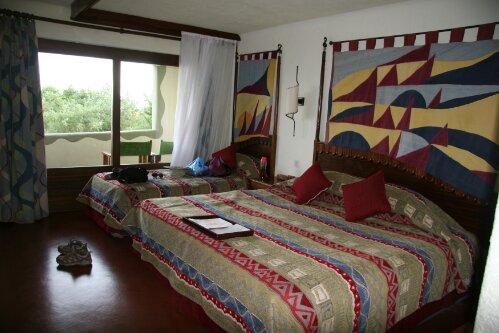
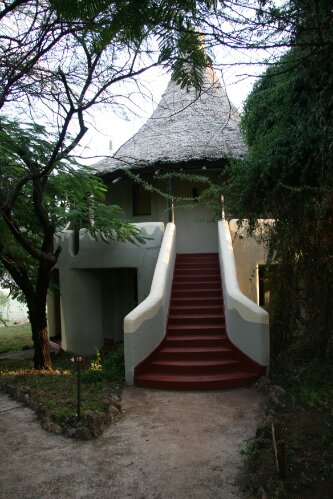
Our accommodations on this trip have been amazing.  Each lodge seemed even nicer than the one before (well, until we got to Stone Town in Zanzibar, but that’s another story).  The settings have been a coffee plantation (Arusha Coffee Lodge), at the edge of the plain (Serengeti), deep in the jungle (Ngorongoro), overlooking Lake Manyara, and on the beach (Mapenzi Beach, Zanzibar).  The staff have been incredibly helpful and they give new meaning to the term “customer service”.  At times, their English has not been perfect, leading to some pretty funny conversations, but as Michael pointed out, “Their English is a lot better than our Swahili”.  Most recent, the tour representative was going over our itinerary and said we would need to pick up our “toles” the night before we went on our snorkeling trip.  All three of us (Karlene, Michael, and I) were completely puzzled and kept making bad guesses as to what he was saying — “tours?”, “tools?”, “school?”  Karlene finally said “towels?”  His face lit up!  Yes, towels.
We all agreed that whoever trains them should come to the US and teach customer service classes.  No matter what we asked, the response was “no problem”. 

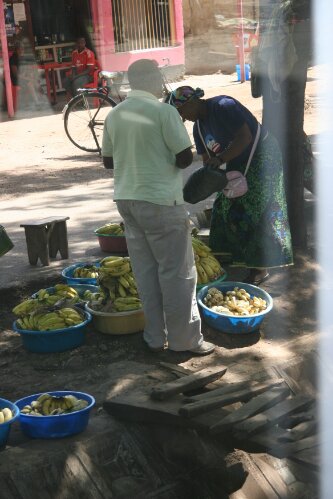
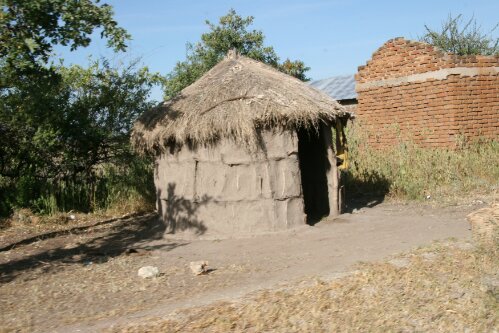
Our trip has involved a lot of driving, both game drives and transfers from lodge to lodge.  Tanzania is huge and we only covered the upper right portion.  But even when transferring from one place to the next, it has been fascinating to see the different towns, cultures, and living conditions.  Most of the people in this area of Africa live in small one room shacks or mud-roofed huts, with no running water and no plumbing.  While there are cars in the towns, most walk everywhere they go, often pulling large carts or carrying goods on their heads.  Motorbikes are very popular and can be seen with one driver and one or more passengers (often small children).  This is a beautiful country, but the living conditions for most are dismal.  Bicycles are also a common sight.  We passed a man on one yesterday and he had two small children on the back sitting in what looked like a large whicker basket.  Very young children (5 or 6?) can be seen tending herds of goats or cows at the side of the road and miles from any adults or assistance.  They carry drinking water in old jugs that were used for something else originally (like a Costco size oil jug).  Interestingly enough, in towns (and even sometimes out of towns) many, many people have cell phones.  It is not unusual to see a man with tattered, old clothes and broken sandals with a cell phone to his ear.  It is our guess that cell phone towers are easier to build than a land line infrastructure.  They also have no irrigation, which in my opinion is the key to creating an industrialized country.  Bananas appear to be their best crop and we have seen vendors on the side of the road with hundreds of bananas for sale — all kinds —  yellow, red, 3-inch to 7 or 8 inch.  I have always loved the US, with all its flaws and blemishes; but never more than right now.  

image

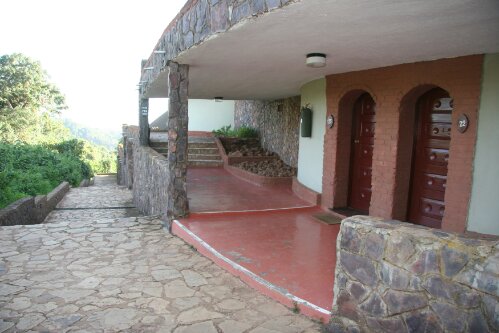
Stairs to our room at Lake Manyara.

image

View - Lake Manyara

image

Our room - Lake Manyara

image

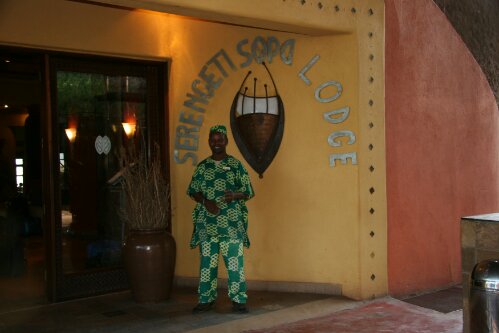
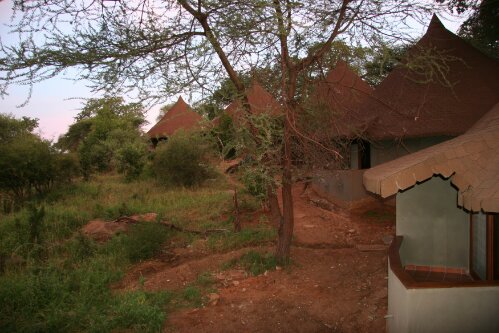
Serengeti Lodge

image

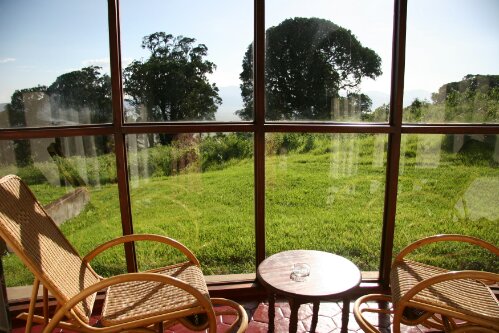
Sunroom and view - Ngorgorngoro Lodge.

image

The door on left is our room.

image

Tarangire Lodge grounds.

image

Our group: Michael, Karen, Karlene, Masha, Benique, Meredith.

image

Masha buying us bananas from a street vendor.

image

A common house in town.