Jambo means hello in Swahili. It is the first word one learns upon arriving. Our tour group was very small. In addition to Masha, our Driver/Guide, my sister Karlene, Michael and I, we were joined by two soon-to-be friends — Meredith from Massachusetts and Benique from Australia (two lovely women traveling alone). From the first introductions, we hit it off and were joking , laughing at silly things and making fun of each other’s accents and euphemisms. All week we observed other groups that seemed uptight and sour-faced. All five of us agreed that we were so lucky to have been grouped together. Great companions equals great times.
Our accommodations on this trip have been amazing. Each lodge seemed even nicer than the one before (well, until we got to Stone Town in Zanzibar, but that’s another story). The settings have been a coffee plantation (Arusha Coffee Lodge), at the edge of the plain (Serengeti), deep in the jungle (Ngorongoro), overlooking Lake Manyara, and on the beach (Mapenzi Beach, Zanzibar). The staff have been incredibly helpful and they give new meaning to the term “customer service”. At times, their English has not been perfect, leading to some pretty funny conversations, but as Michael pointed out, “Their English is a lot better than our Swahili”. Most recent, the tour representative was going over our itinerary and said we would need to pick up our “toles” the night before we went on our snorkeling trip. All three of us (Karlene, Michael, and I) were completely puzzled and kept making bad guesses as to what he was saying — “tours?”, “tools?”, “school?” Karlene finally said “towels?” His face lit up! Yes, towels.
We all agreed that whoever trains them should come to the US and teach customer service classes. No matter what we asked, the response was “no problem”.
Our trip has involved a lot of driving, both game drives and transfers from lodge to lodge. Tanzania is huge and we only covered the upper right portion. But even when transferring from one place to the next, it has been fascinating to see the different towns, cultures, and living conditions. Most of the people in this area of Africa live in small one room shacks or mud-roofed huts, with no running water and no plumbing. While there are cars in the towns, most walk everywhere they go, often pulling large carts or carrying goods on their heads. Motorbikes are very popular and can be seen with one driver and one or more passengers (often small children). This is a beautiful country, but the living conditions for most are dismal. Bicycles are also a common sight. We passed a man on one yesterday and he had two small children on the back sitting in what looked like a large whicker basket. Very young children (5 or 6?) can be seen tending herds of goats or cows at the side of the road and miles from any adults or assistance. They carry drinking water in old jugs that were used for something else originally (like a Costco size oil jug). Interestingly enough, in towns (and even sometimes out of towns) many, many people have cell phones. It is not unusual to see a man with tattered, old clothes and broken sandals with a cell phone to his ear. It is our guess that cell phone towers are easier to build than a land line infrastructure. They also have no irrigation, which in my opinion is the key to creating an industrialized country. Bananas appear to be their best crop and we have seen vendors on the side of the road with hundreds of bananas for sale — all kinds — yellow, red, 3-inch to 7 or 8 inch. I have always loved the US, with all its flaws and blemishes; but never more than right now.
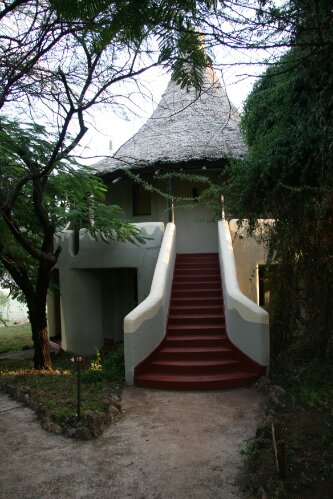
Stairs to our room at Lake Manyara.
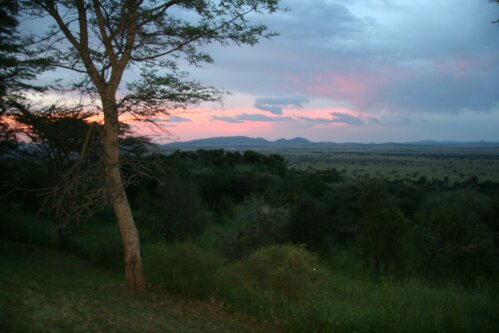
View - Lake Manyara
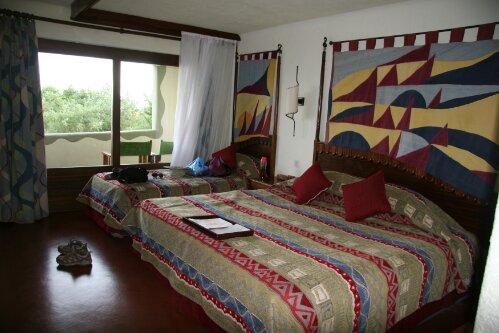
Our room - Lake Manyara
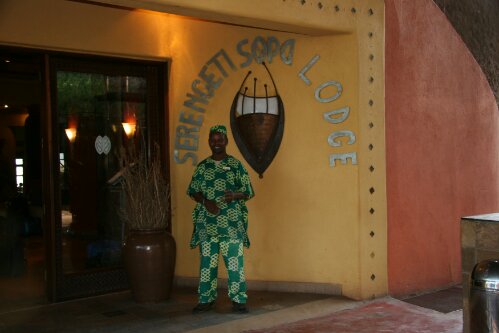
Serengeti Lodge
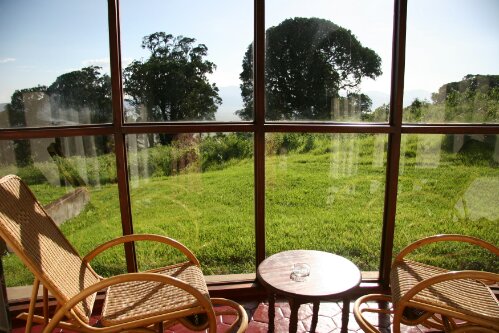
Sunroom and view - Ngorgorngoro Lodge.
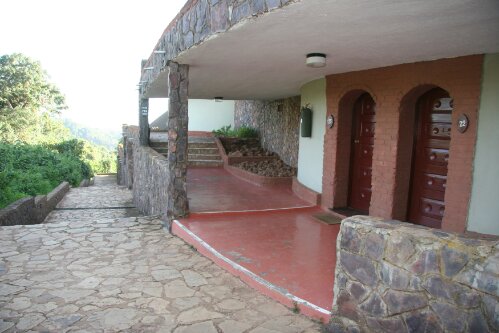
The door on left is our room.
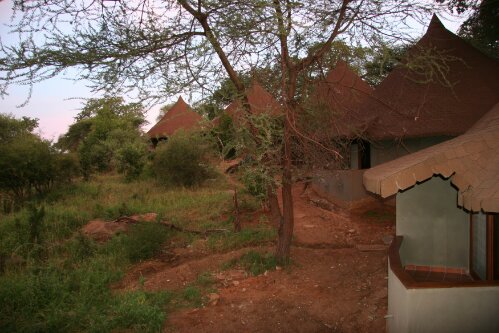
Tarangire Lodge grounds.

Our group: Michael, Karen, Karlene, Masha, Benique, Meredith.
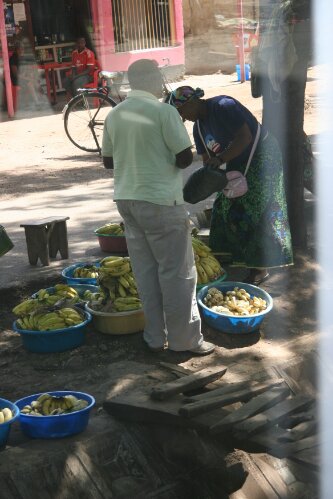
Masha buying us bananas from a street vendor.
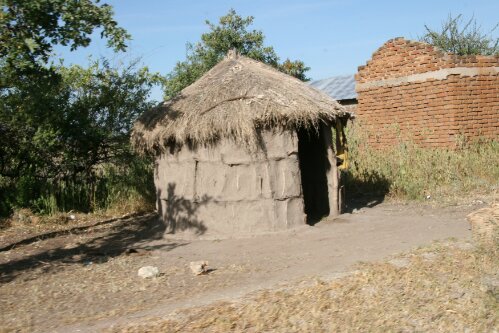
A common house in town.
 Safari So Good
Leave a comment