It is believed that the Maasai people originally came from Egypt or Sudan approximately 200 years ago, traveling into Northern Africa looking for water and greener pastures for their cows. They are the only tribe that has maintained their original culture and customs, living in small villages with multiple wives and a specified hierarchy that includes a chief. There is no electricity, plumbing, or running water and lodging consists of very small huts made of sticks, straw and any other material that is handy. Think of a walk-in closet that is 5 feet tall. They cook on small fires in the center of their hut in steel pots that look 20 years old. We wondered how they tolerated the smoke from the fires, which must completely fill the small area whenever a fire is lit. Michael observed that the walls were not solid, allowing some smoke to escape, but with no chimney, it had to be suffocating at times. Their beds were off the floor (on sticks) made from tree branches covered in cow hide, flattened cardboard boxes or a combination of the two; with the adult bed being the size of a small twin bed and the chidren’s bed even smaller. A Maasai man can marry up to 10 wives; however he has fewer children these days as the government now mandates schooling for ALL African children. Although public school is free, it is expensive to clothe the children and transport them the many miles into town. Having said that, it is painfully obvious that this law is often not enforced, as there are school aged children tending herds and milling about during school hours. Masha indicated that educating the Maasai people is beginning to make some positive changes. For example, castrating women has become rare. Boys are still castrated during ceremonies and they are required to wear white face paint for three months, after which a huge celebration takes place welcoming them into manhood. This ritual usually takes place between 12-15 years of age, but can occur as early as 8. They used to go out and kill a lion at the end of the three-month period to prove their manhood; however, such killing is no longer allowed. Now they wear red head covers and dreadlocks, which are meant to resemble the lion’s mane. The Maasai own the land where tanzanite is mined so they are a wealthy tribe. Basd on what we saw, it is a mystery where all the money goes. The village we visited had a small, one room schoolhouse for the 5-6 year olds. The children sang songs to us, including the ABC song. They learn their ABCs and how to count to 100 in English. They are very sweet, but are not clean and wear clothing that has clearly been donated (we saw a child with a sweatshirt on and one with what looked like a pair of pajamas, T-shirts, etc.). They do not wear underwear, we presume to make elimination easier. They sat in the dirt (we did not see one chair or other piece of furniture, except the “beds”) or on Mom’s hip. They had no reaction to the flies that landed on their eyes, noses, or mouths. The men get one hut for each wife and spends time with them in those huts. They eat mostly beef and goat, and drink milk and blood. They eat very little fruit or vegetables. They are very tall and thin and their teeth are in terrible shape or missing altogether. They walk miles to other villages and we would see them walking across the plain or in the hills, in their brightly colored ground-length robes. They are partial to bright red. When they want to move to another village (which happens often), they leave everything taking only the clothes on their back and their walking stick. When they arrive at the new village, they are welcomed and given a hut to live in. The hut they left is available for another traveler to occupy.
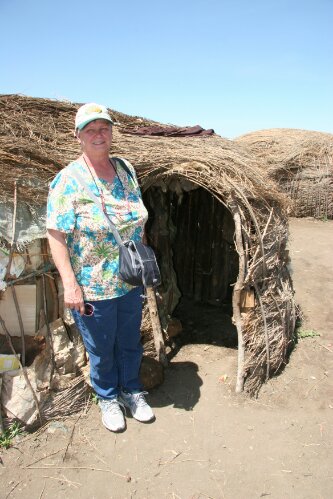
Karlene in front of the entrance to a hut.
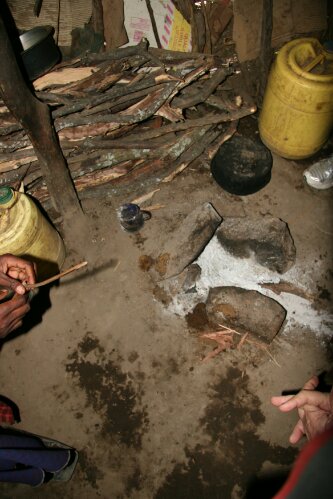
The fire pit for cooking inside the 10 foot diameter space.
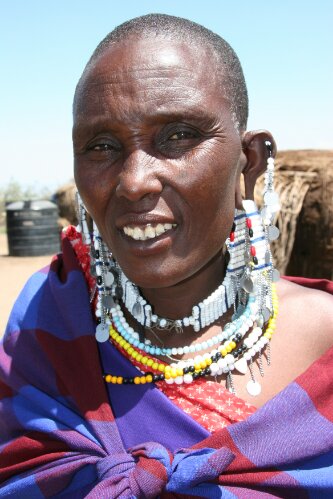
One of the chief's wives - note her elaborate jewelry.
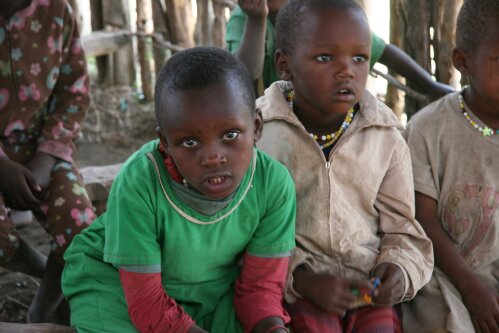
In the school - this look says it all.
 Safari So Good
Leave a comment