“Let the Beauty of What You Love be What You do”
Rumi
Dustin Aherin, owner of Idaho River Adventures has a large crew of guides that work with him on various trips down the river. We were lucky to have Tom, Lara, Tim, Joseph, Greg, and Drew along with us on our trip. I was a manager for 35 years and never have I seen a group of people work harder than the guides that work for Idaho River Adventures.
The evening before our trip on the river, we stayed in the small town of Stanley, Idaho. We met before dinner for orientation. We introduced ourselves and Dustin delivered the orientation, showed us the large Red Bags (that would hold our sleeping bags, pillows, and any clothes or supplies we would need at the end of each day), the smaller clear dry bags (for all our gear that we wanted to have access to during the day), and gave us a coffee cup compliments of Idaho River Adventures to use each morning for our coffee. He also went over what to expect on a typical day — 7:30 to 8 a.m. breakfast; on the river around 10 or so each day; stop for lunch; back on the river; stop in the late afternoon at camp. We would be traveling approximately 70 miles on the Middle Fork of the Salmon River, a part of which is known as the River of No Return. He said we may encounter bears, rattlesnakes, and bull snakes (which eat the rattlers). He said no snacks in the tents due to the fact that the rodents will come in to get them and eat through whatever bags they are in (but no worries, they won’t bite you). With regard to going to the bathroom – liquids go in the river and solids go in the outhouse that they would assemble each afternoon at camp. He suggested we put things like rain jackets, extra socks, sunscreen, water bottle and other things we might need during the day in the small dry bags, which we would keep with us. The large Red Bags would be packed onto the Granny Boat, which would leave each morning to go ahead to that day’s camp where one or two guides would set up tents, tables and chairs, and the Groover (outhouse).

The Hotel in Stanley where we spent the first night and had orientation.
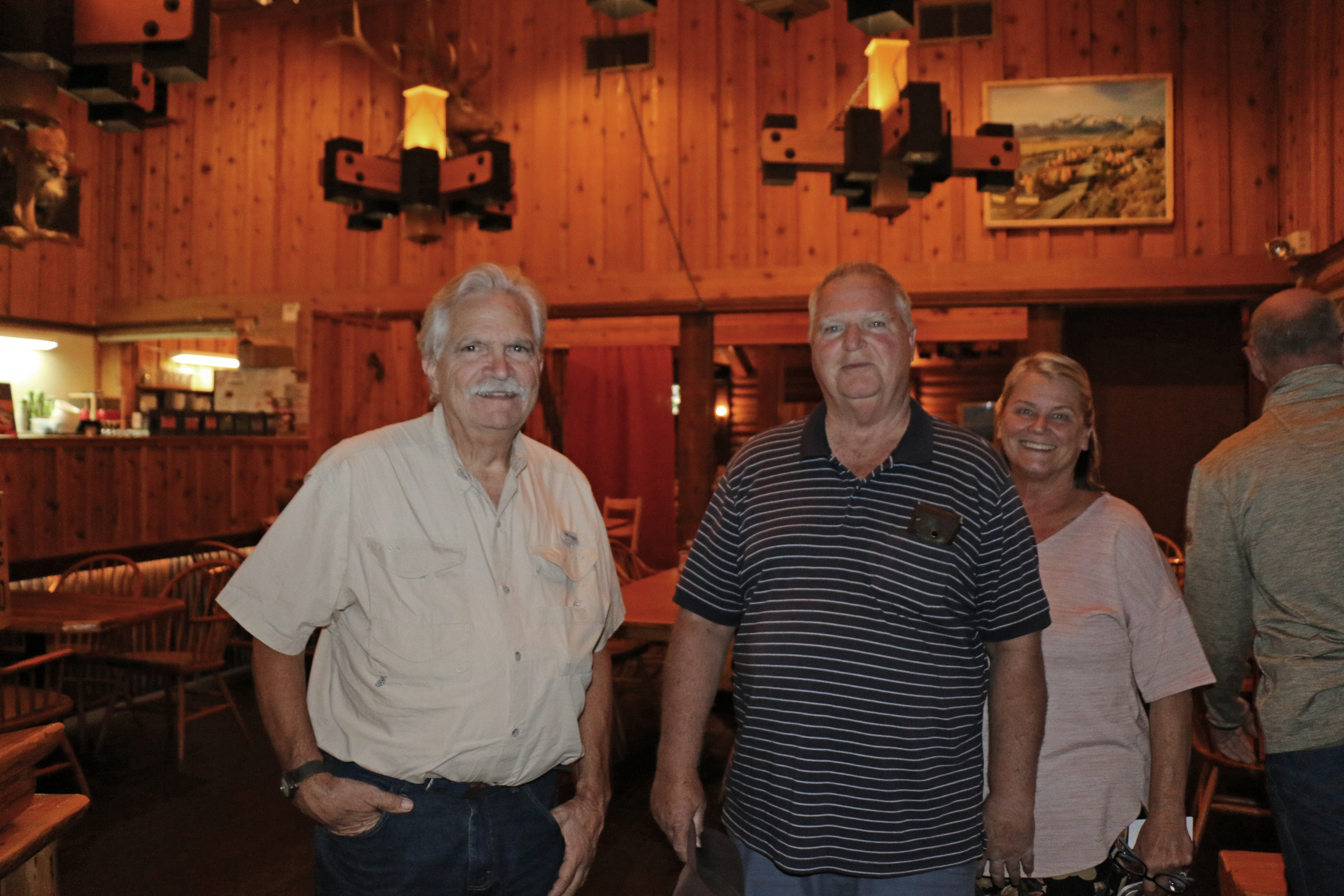
Michael, Chuck and Karlene at the restaurant (next door to the Hotel) where we ate dinner and breakfast the next morning.
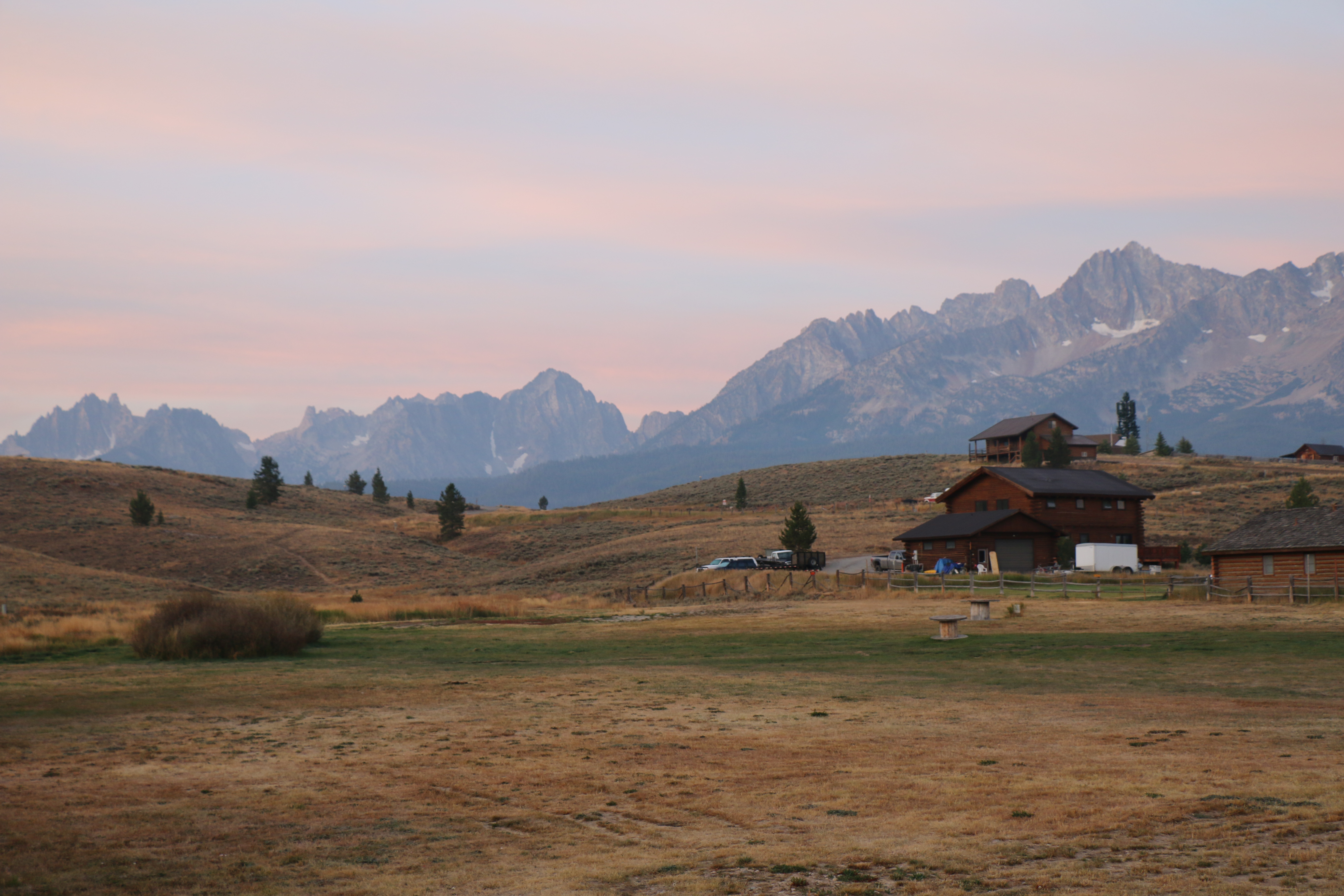
A view of the Sawtooth Mountain Range from Stanley.

An evening view of Stanley from our Hotel, with the mountain range in the background.
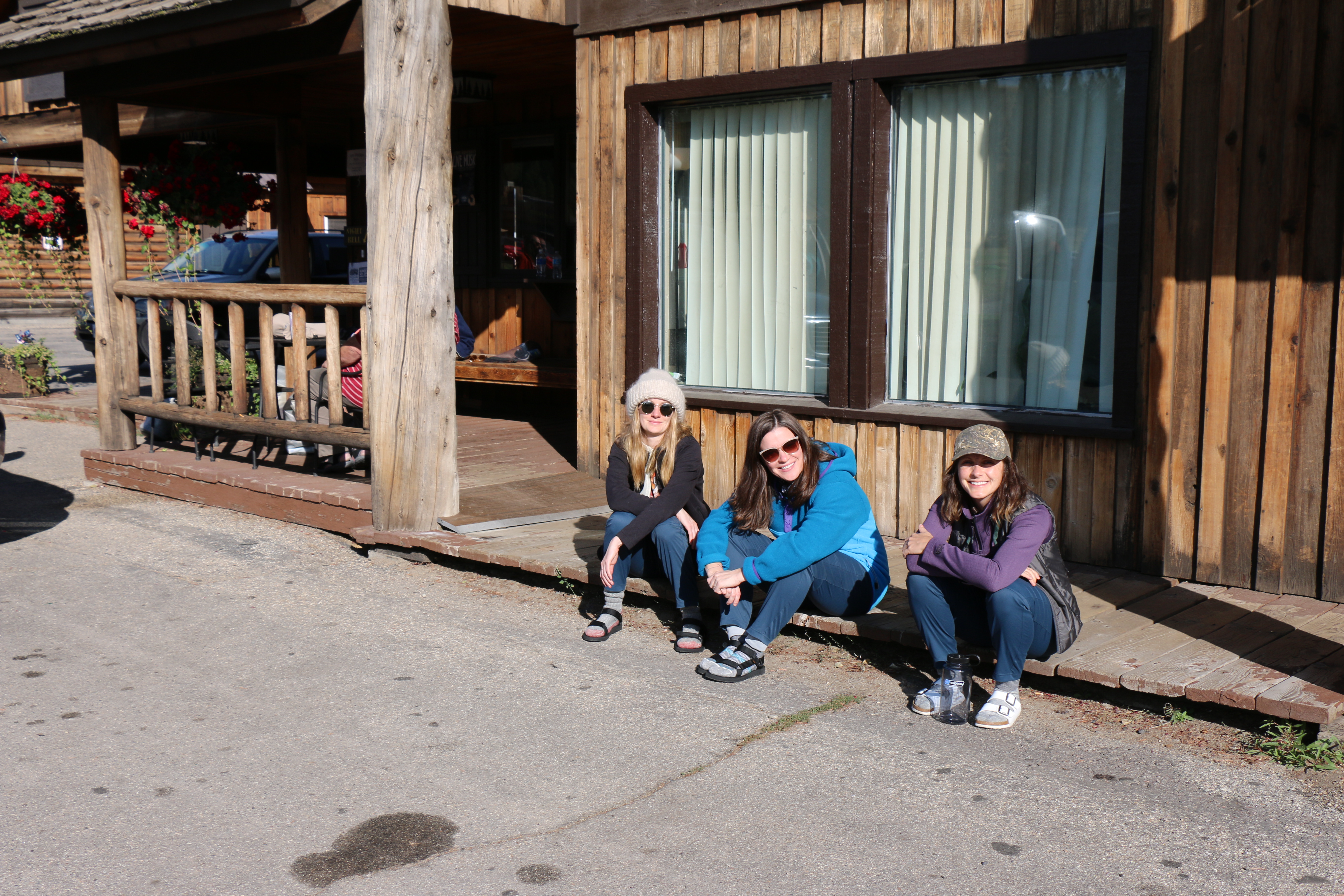
The ladies from New York (Crystal, Hillary, and Stephanie) wait to board the vans to the airport.
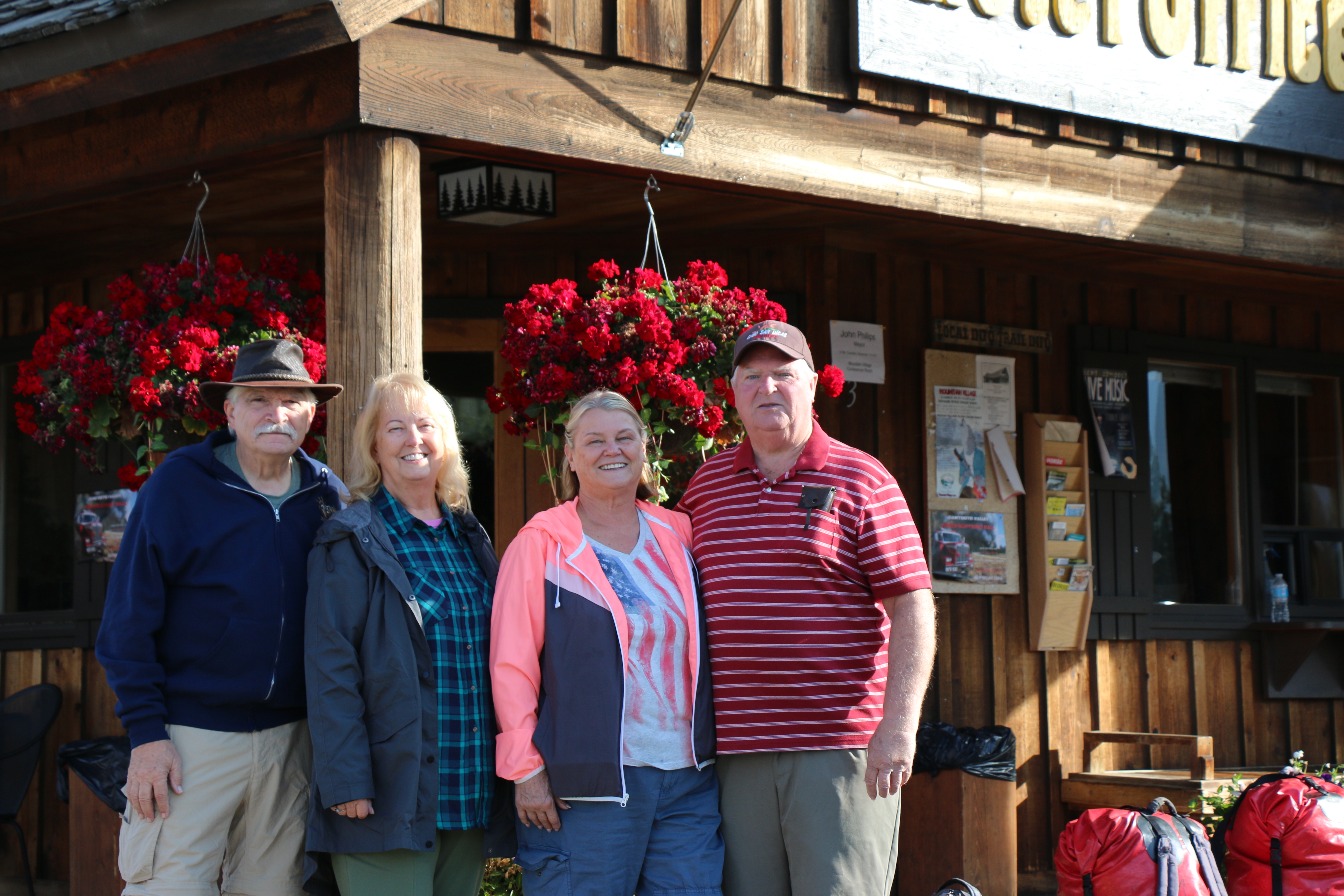
Michael, Me, Karlene and Chuck – ready to go!
Our first day on the river began with instructions on how to survive the rapids, life vest usage, how to help get someone in the raft after they fell out, and how the individual kayaks were handled (more on that later). The guides who were not providing instructions were preparing lunch for us which included guacamole tacos, cookies, peanut butter and jelly with bread (in case we wanted to make a sandwich instead or with tacos), cut up fruit, carrots and hummus. They then packed all our red bags, sleeping pads, food, cooking prep tools, supplies and the tables on which lunch was served into the large barge-like raft, which was called “Granny”. One or two guides then headed down river to get to our evening camp site before the rest us; so the tents, tables and chairs, and water station could be set up and waiting for us when we arrived.
They started work before we even climbed out of our tents in the morning. There was coffee and hot water waiting first thing each morning as the guides prepared breakfast for us. They carried pots and pans and tables and chairs and food in and out of Granny, up and down hills, each afternoon and every morning. They rowed rafts every day, all day, except when they were carrying gear, preparing food, or cleaning up afterwards. They worked every evening (usually after sunset, with lights on headbands so they could see what they were doing) — washing dishes, putting away food, and packing stuff into metal bins to protect them from critters during the night. They even made dessert — EVERY night and it was delicious.
Guide Joke — “Do you know the difference between a Fairy Tale and a Raft Tale?” “No, What?” “A Fairy Tale starts, Once Upon A Time…a Raft Tale starts, No shit, there I was…”
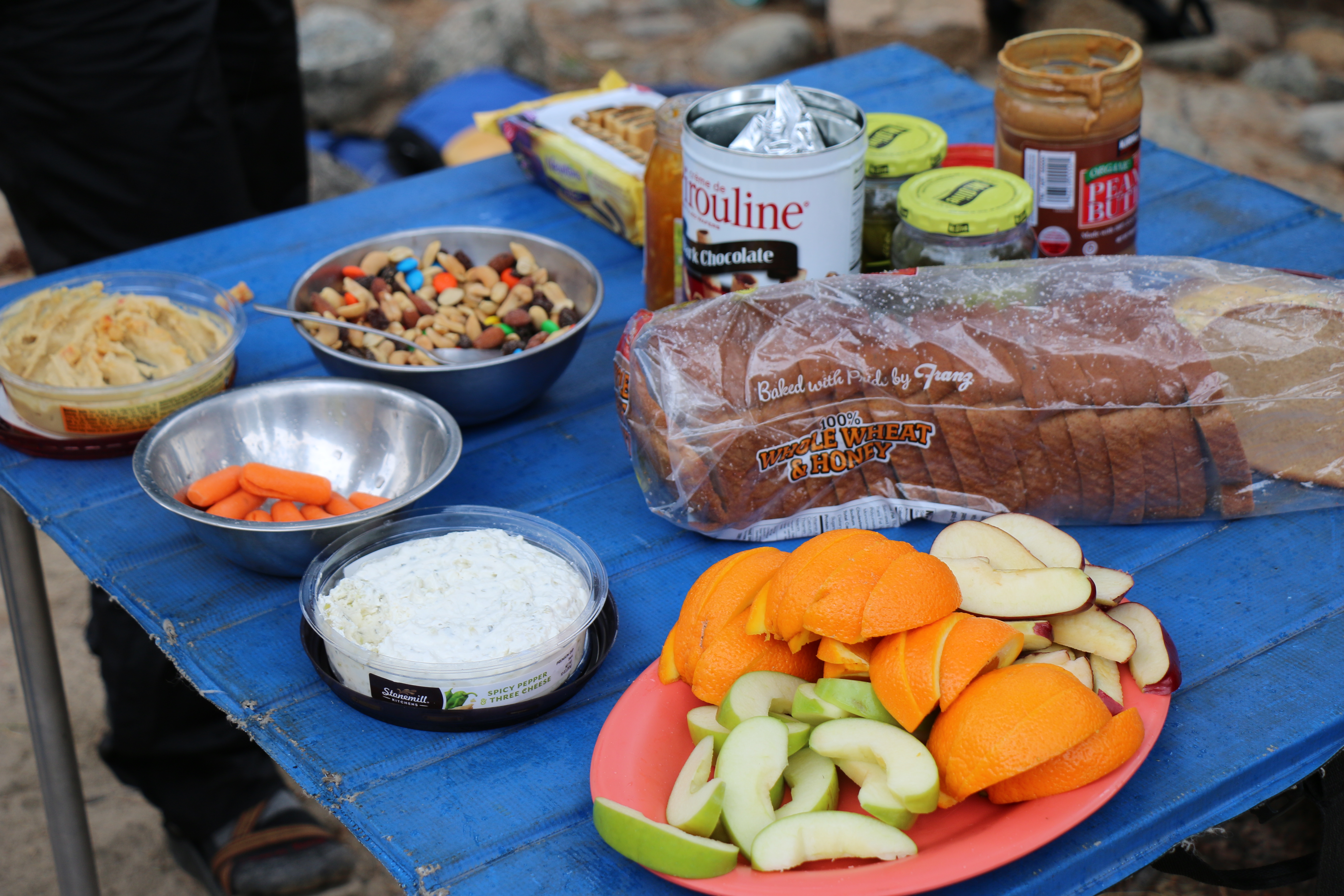
A table covered in lunch time snacks.
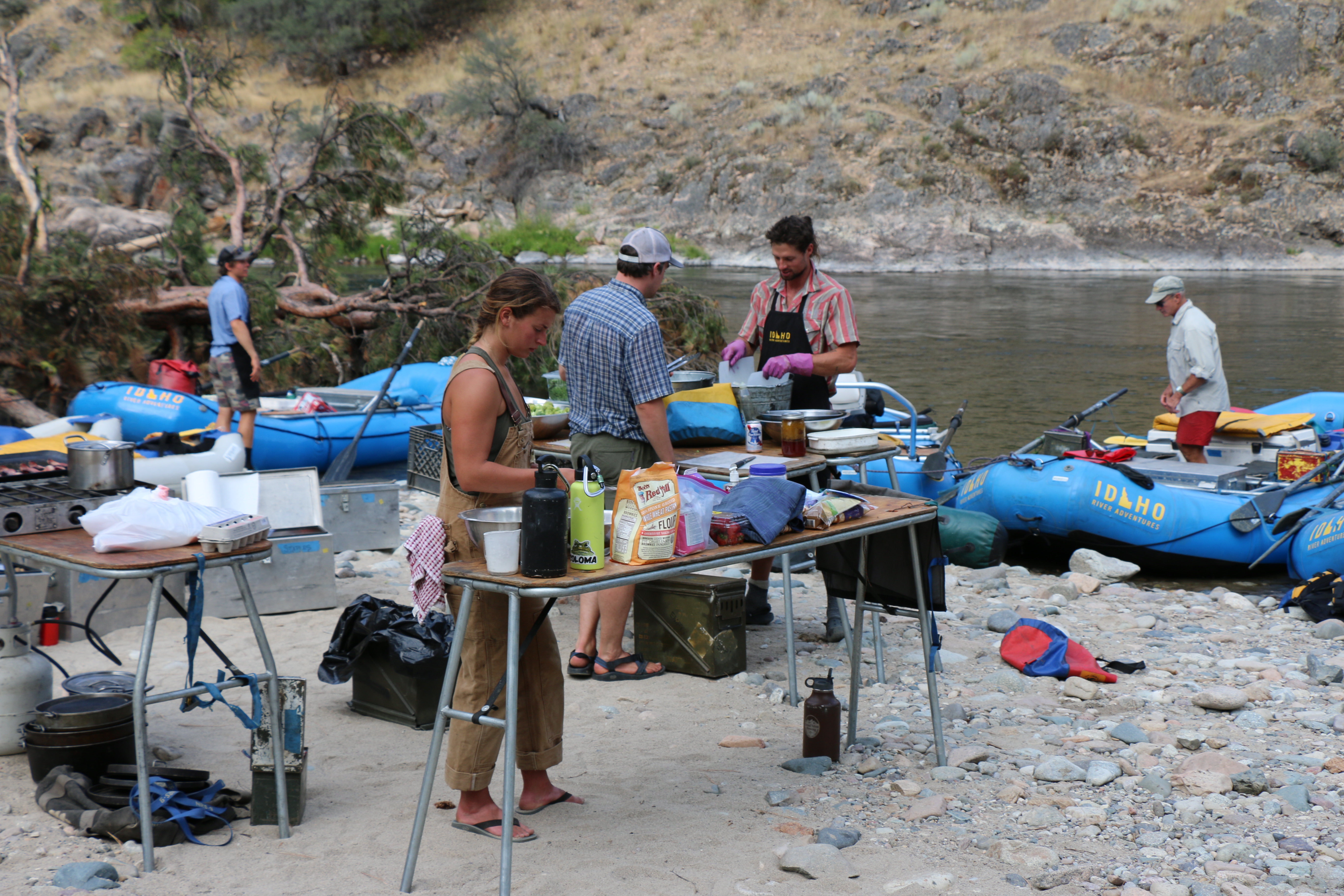
The guides prepare our fabulous dinner in less-than-ideal conditions.
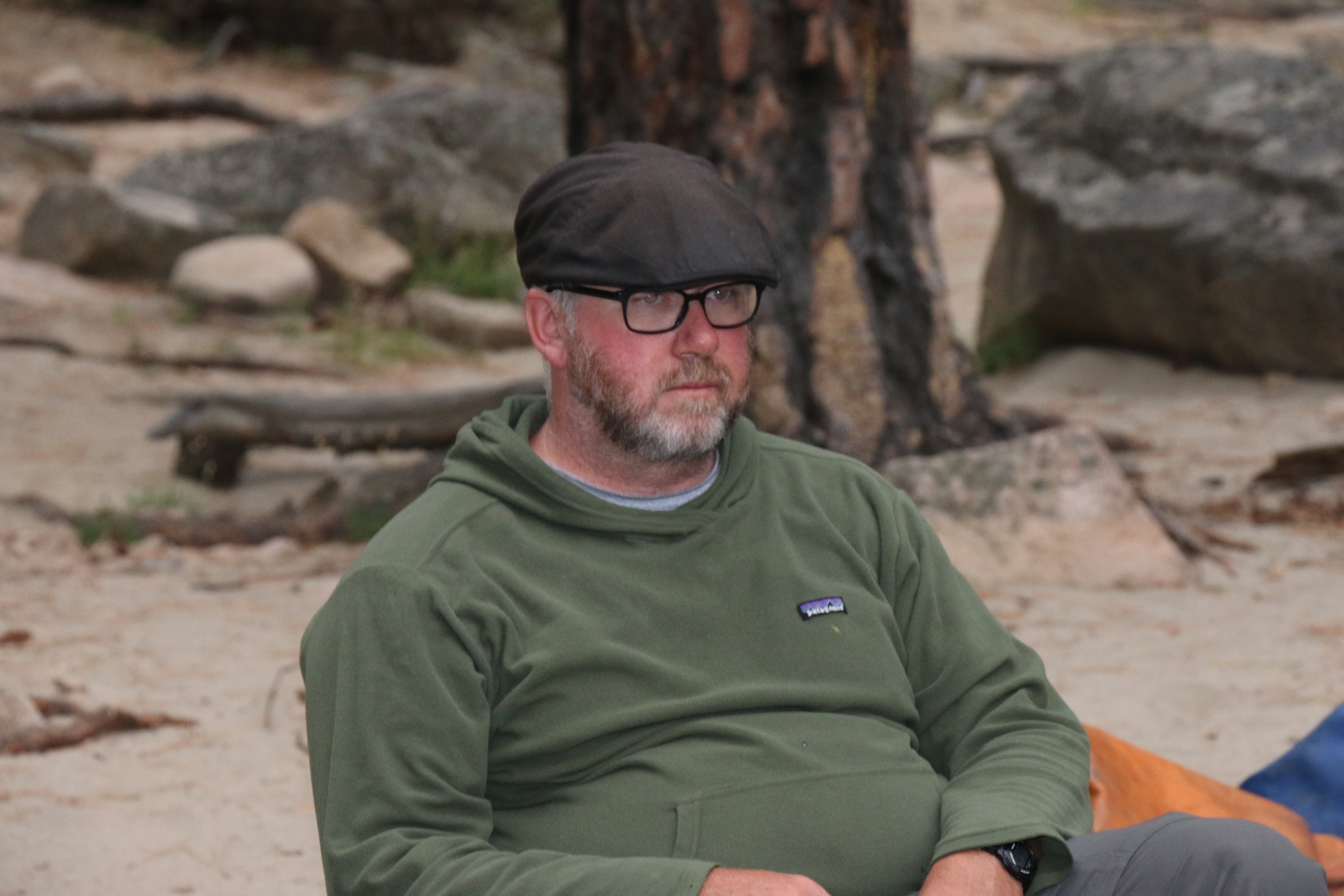
Dustin in his serious mode.
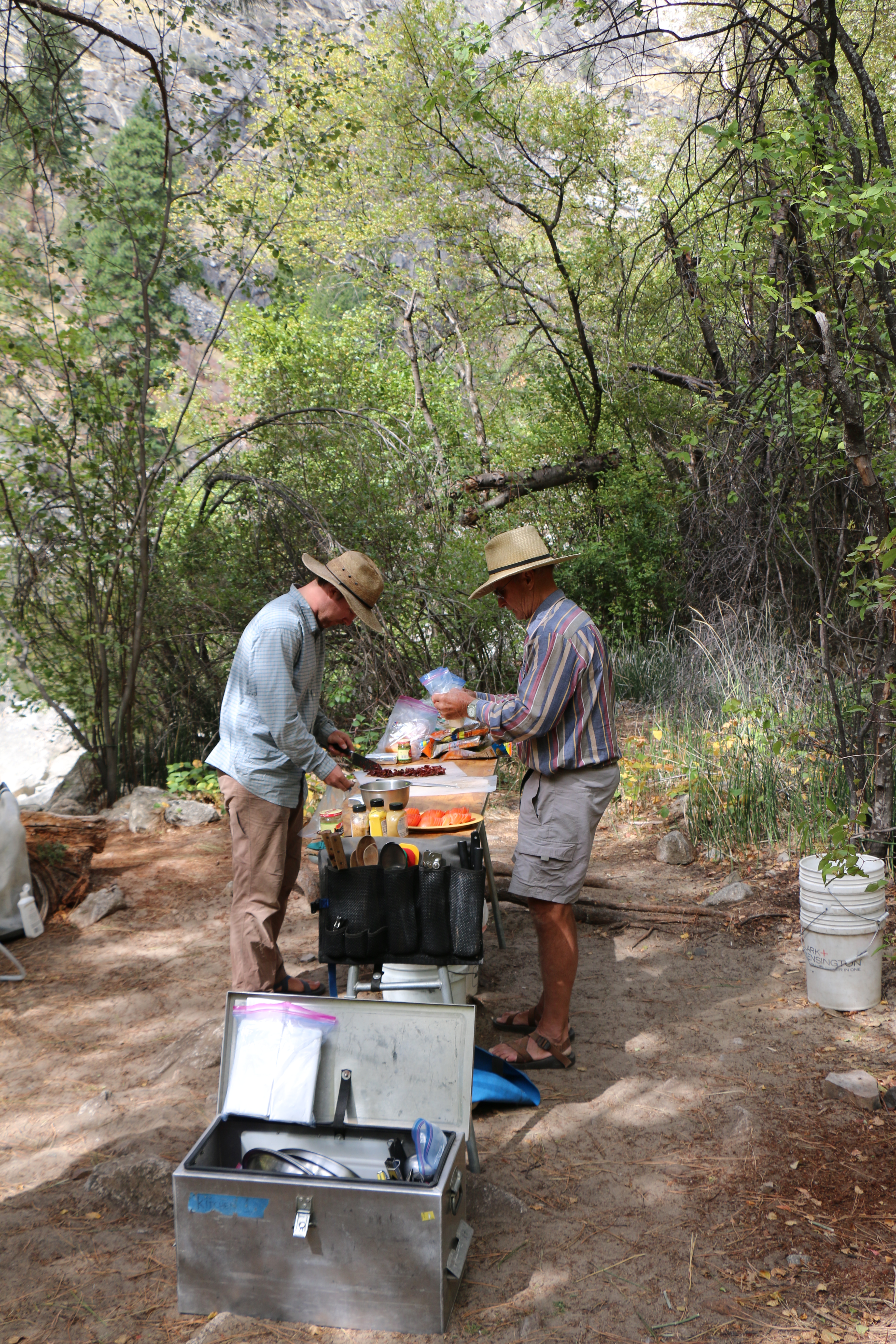
Lunch is prepared on the hillside. This stuff was all carried up a rocky shoreline.
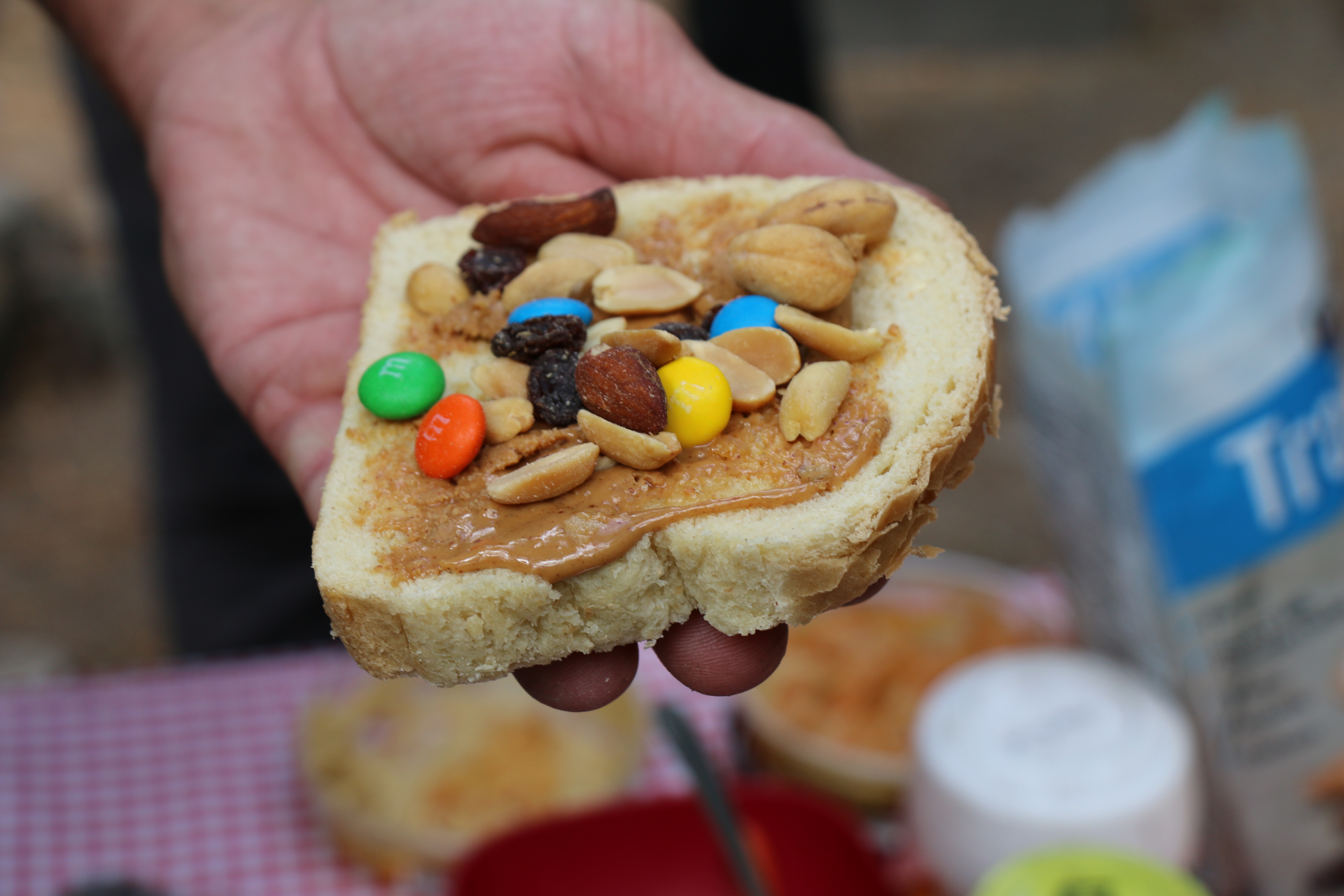
A trail-mix sandwich. A new invention by one of the rafters.
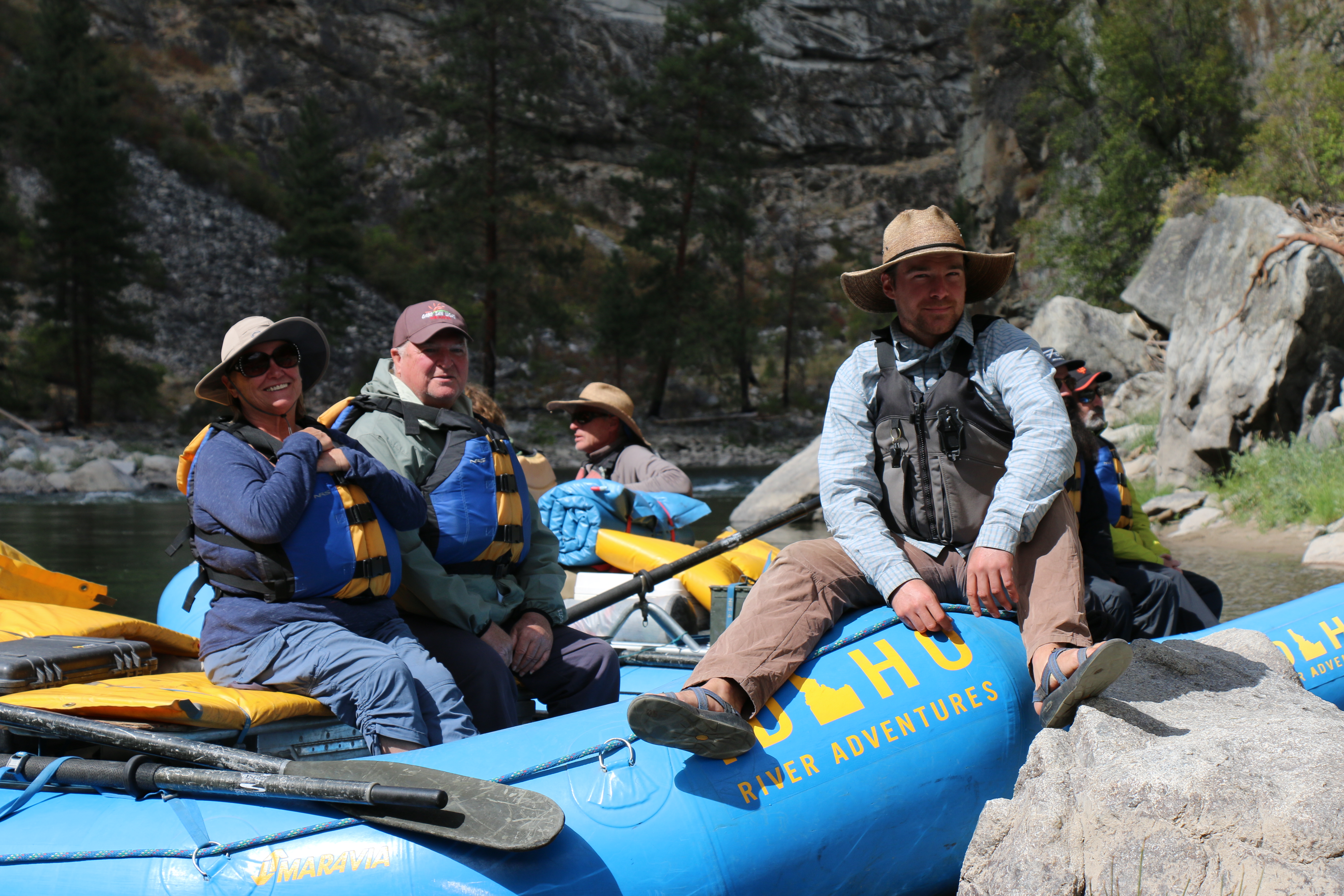
Greg ‘Montana’ – with Karlene and Chuck – waiting for the “go” signal.
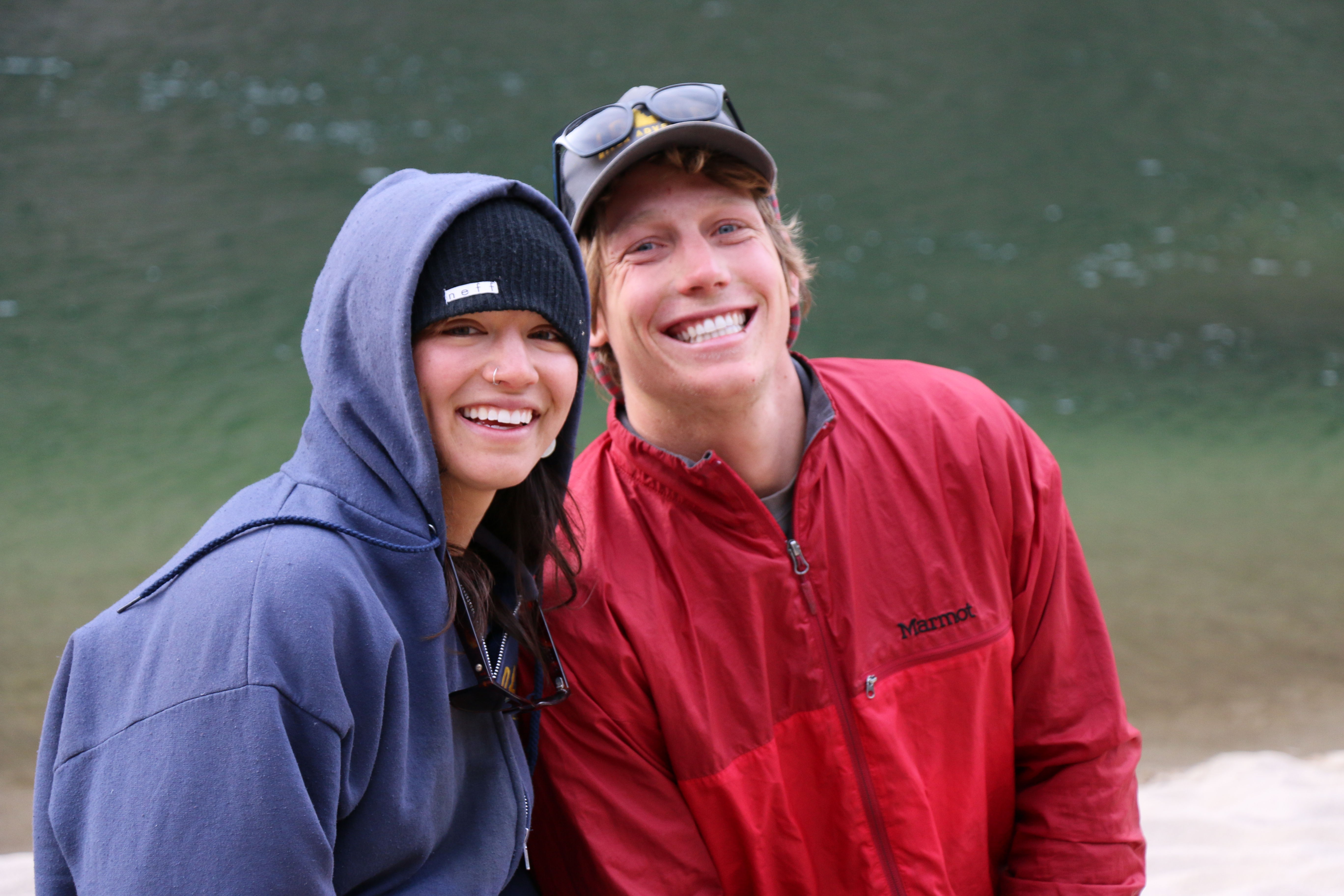
Drew with his girlfriend, Emily, who came along and helped out.
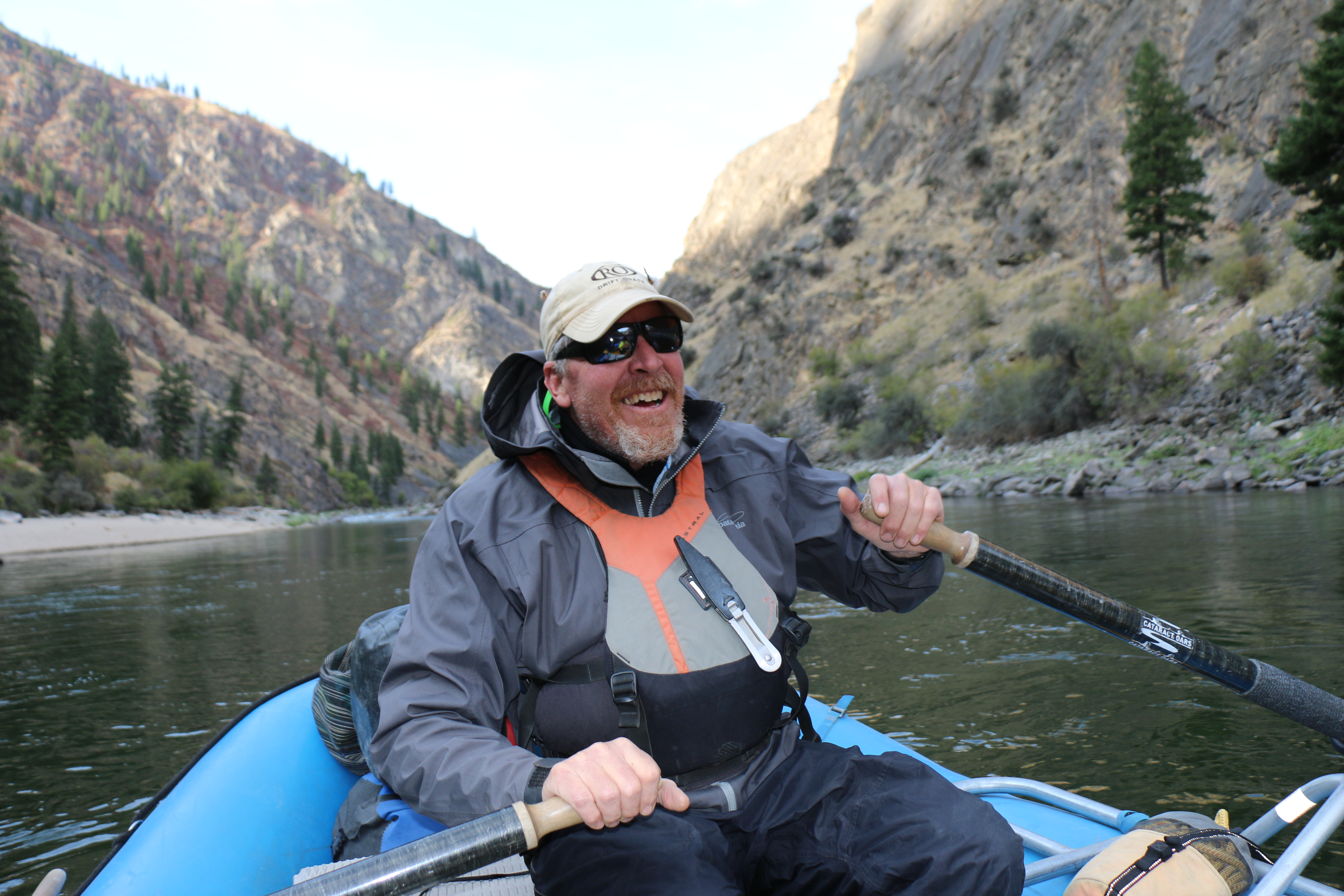
Tim – the funny guy.
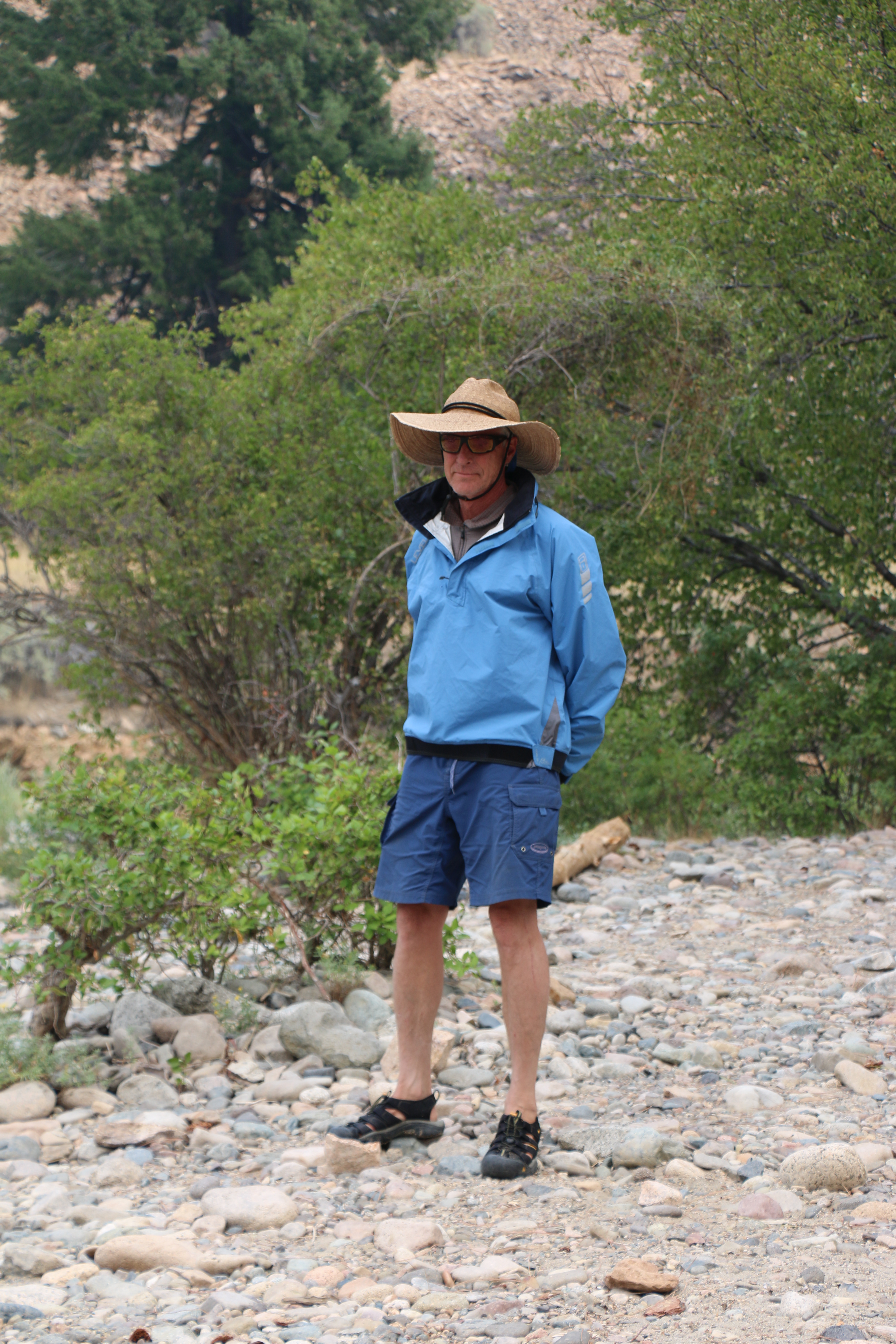
Tom – the quiet guy.
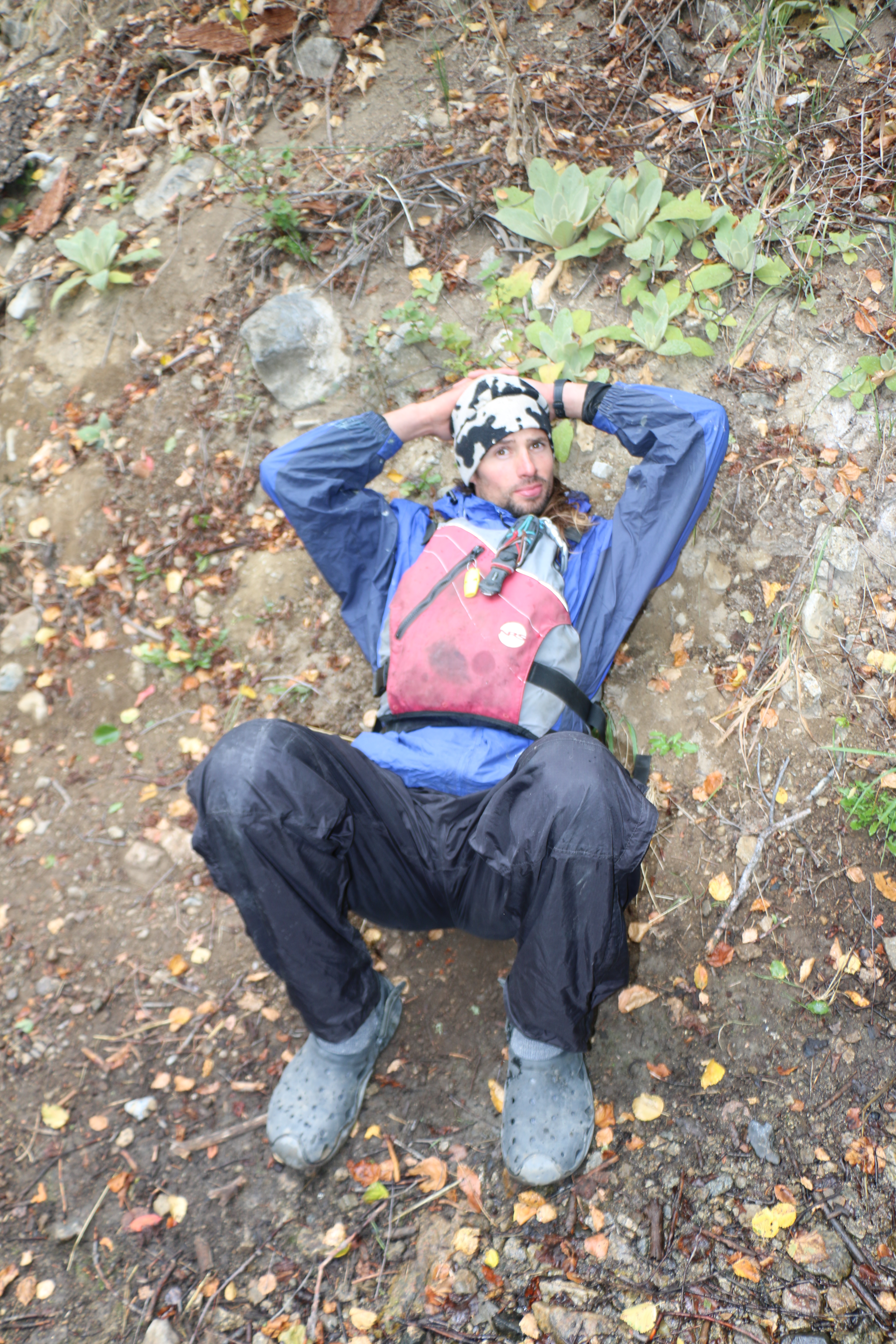
Joseph (or GQ as I called him)
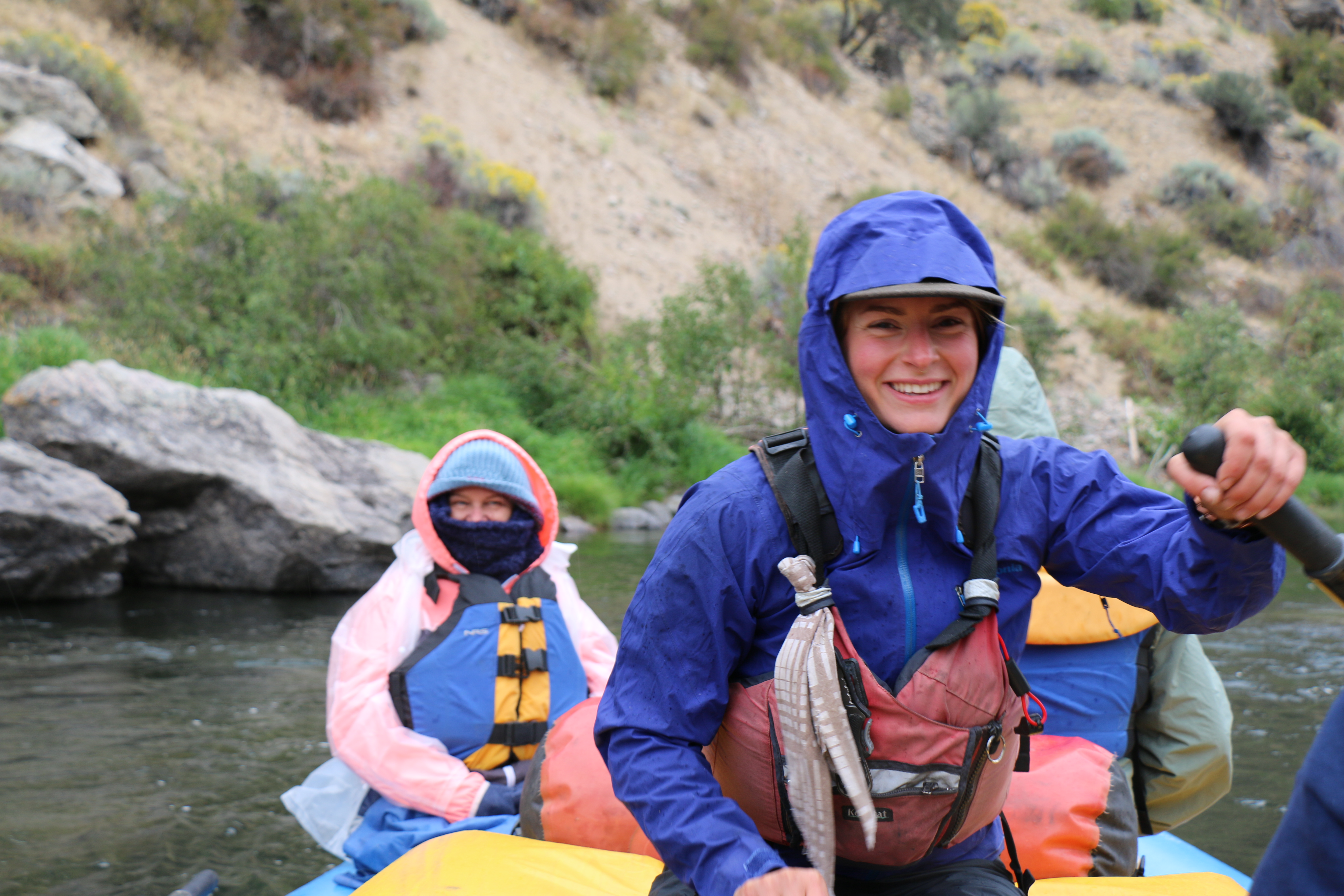
The only female guide – Lara! She was adorable, but held her own with all those male guides.
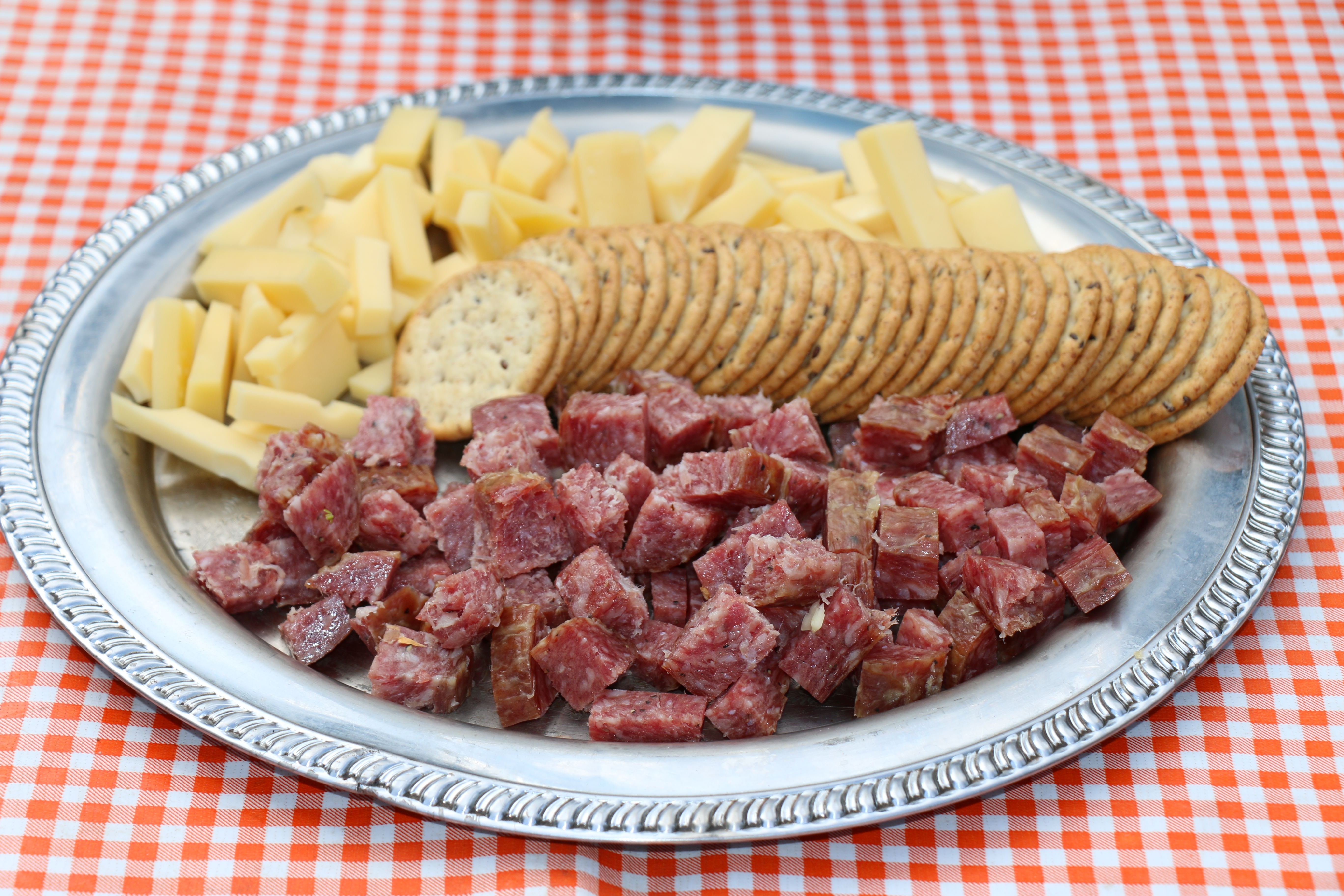
An evening snacks – while we wait for dinner. No kidding!!!
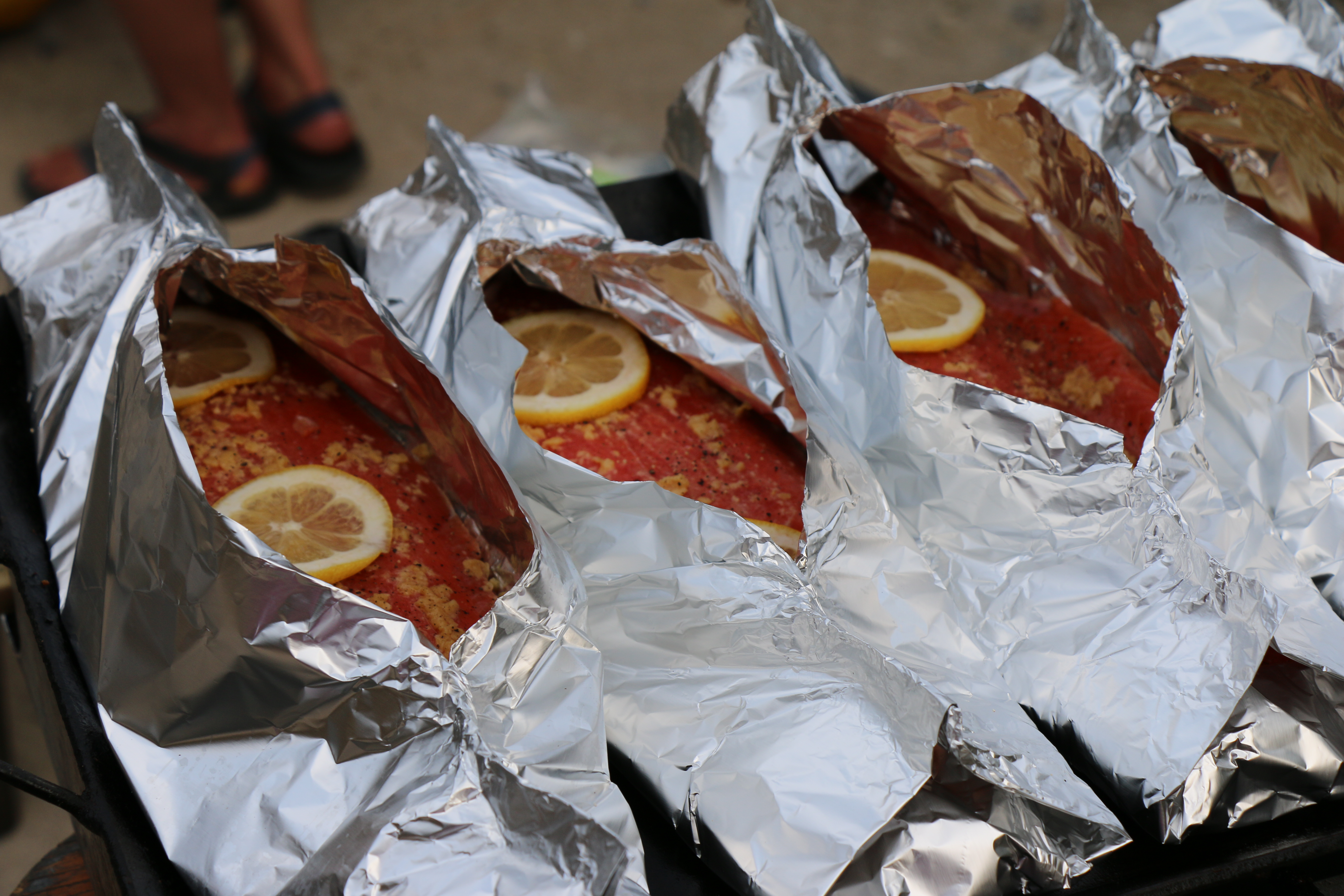
Salmon for dinner – delicious!
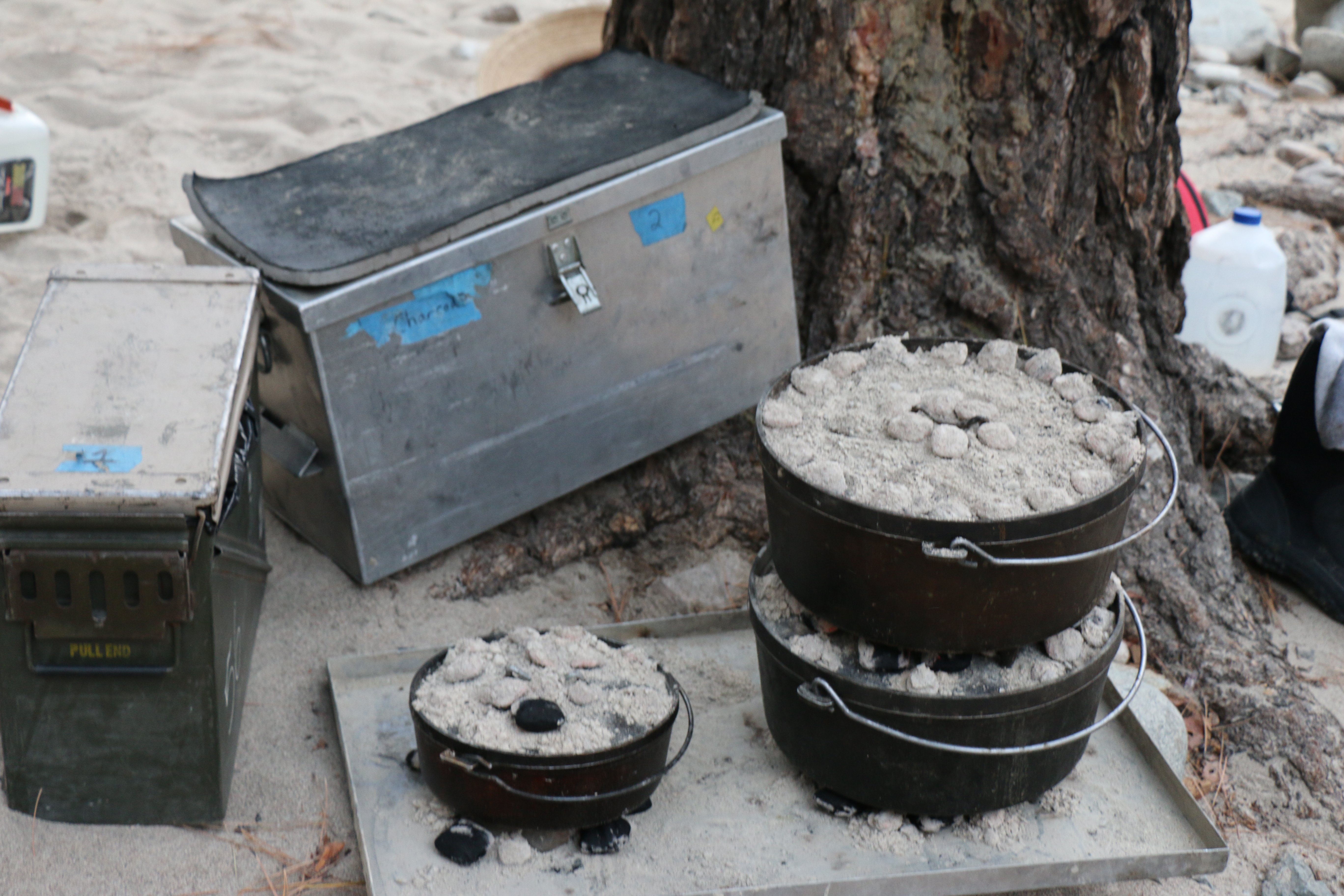
Check it Out! It’s a dutch oven. This is how they cooked biscuits and chocolate cake!
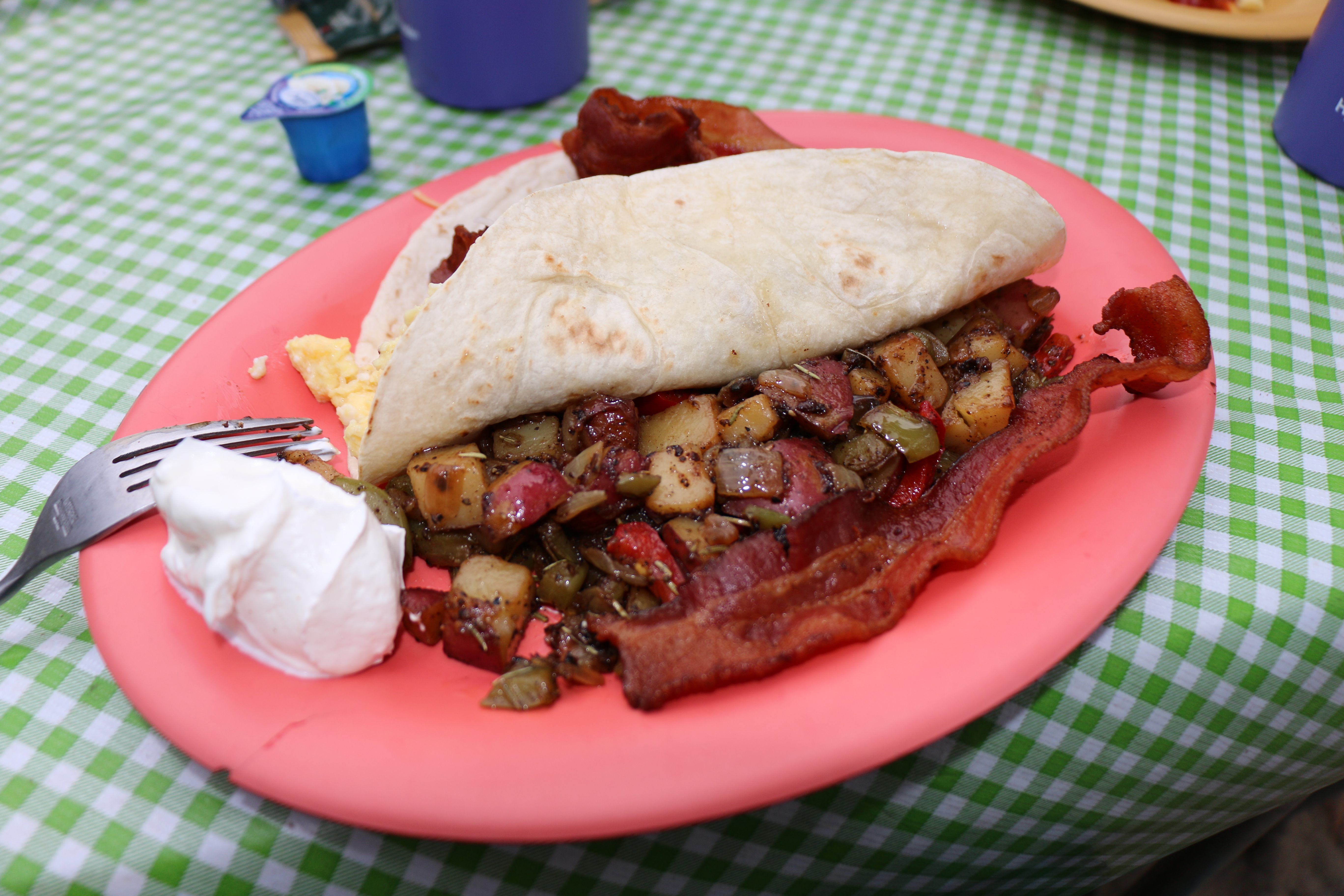
Breakfast burrito with potatoes.
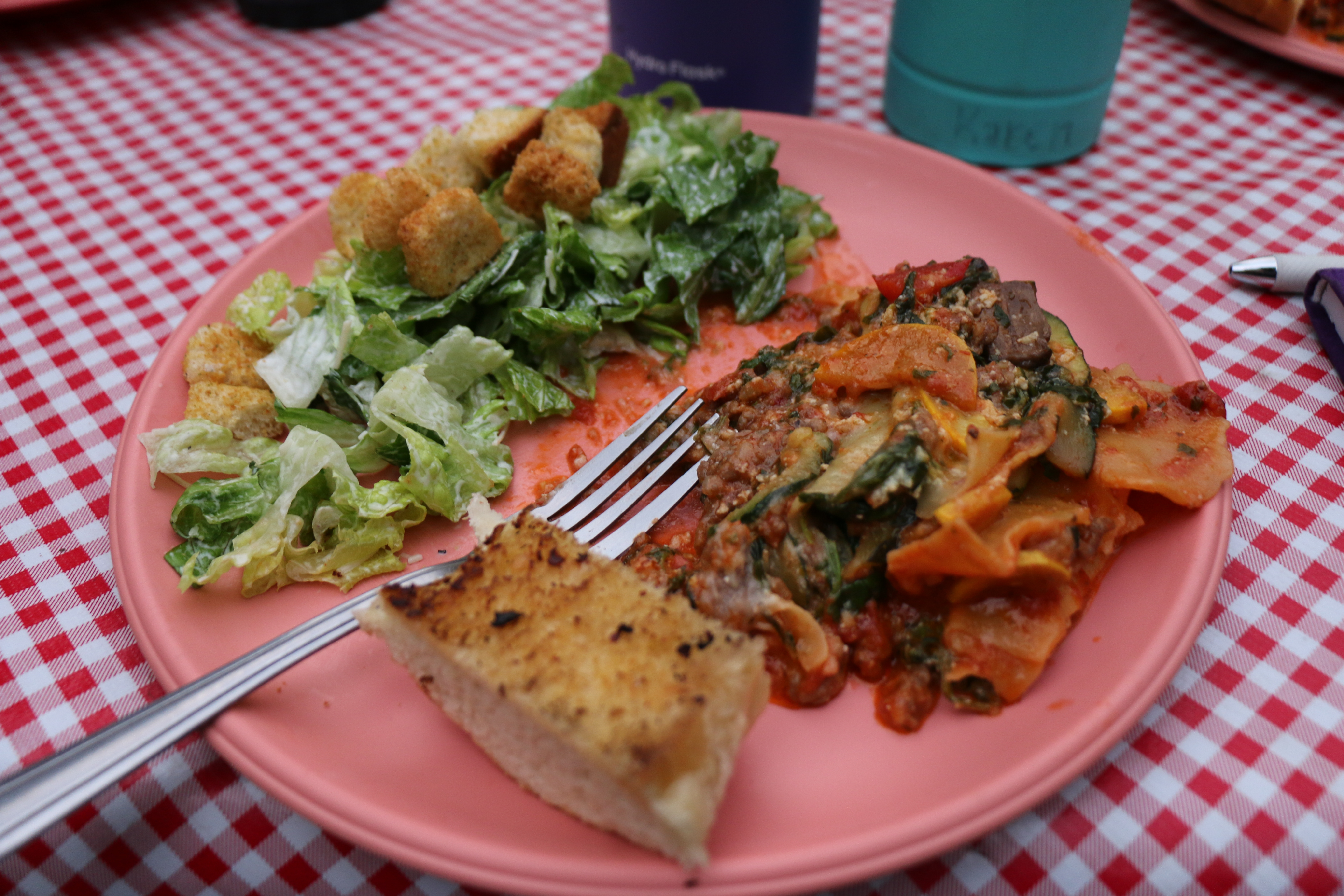
Lasagna, grilled bread, and Caesar salad.
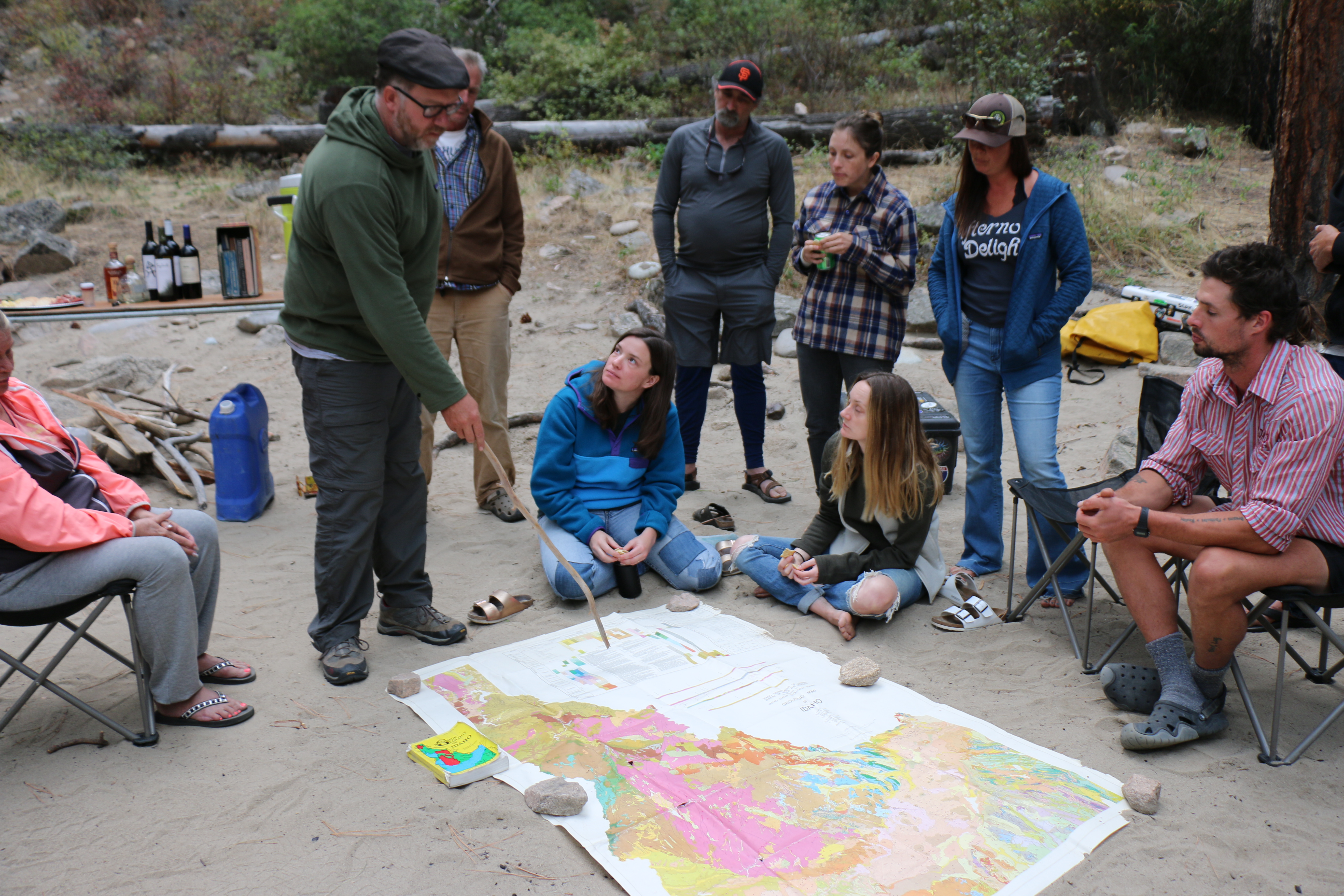
Dustin gives us geology lessons about Idaho – very interesting!
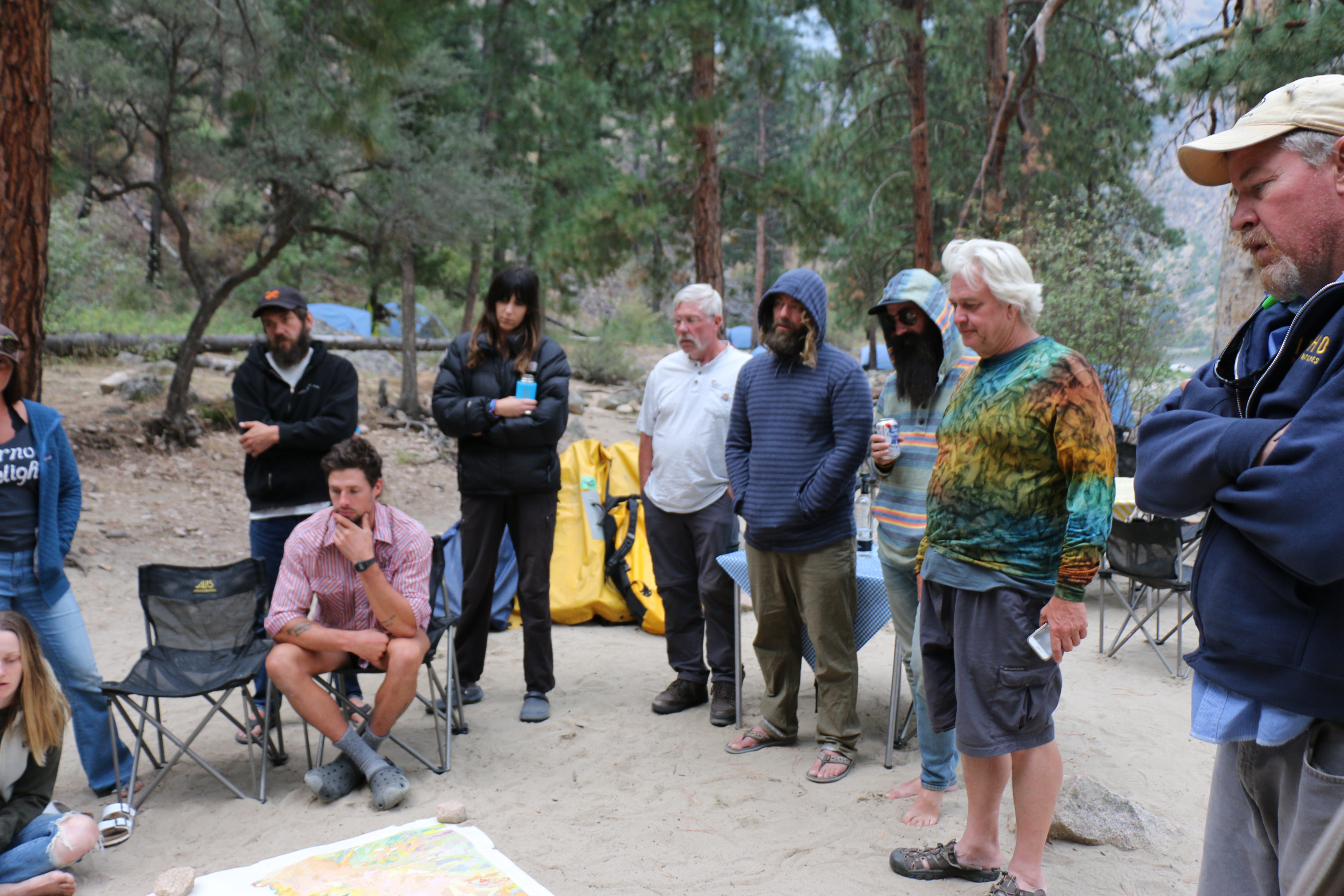
Rafters and guides listening as Tim (far right almost out of picture) and Dustin (out of picture) school us.
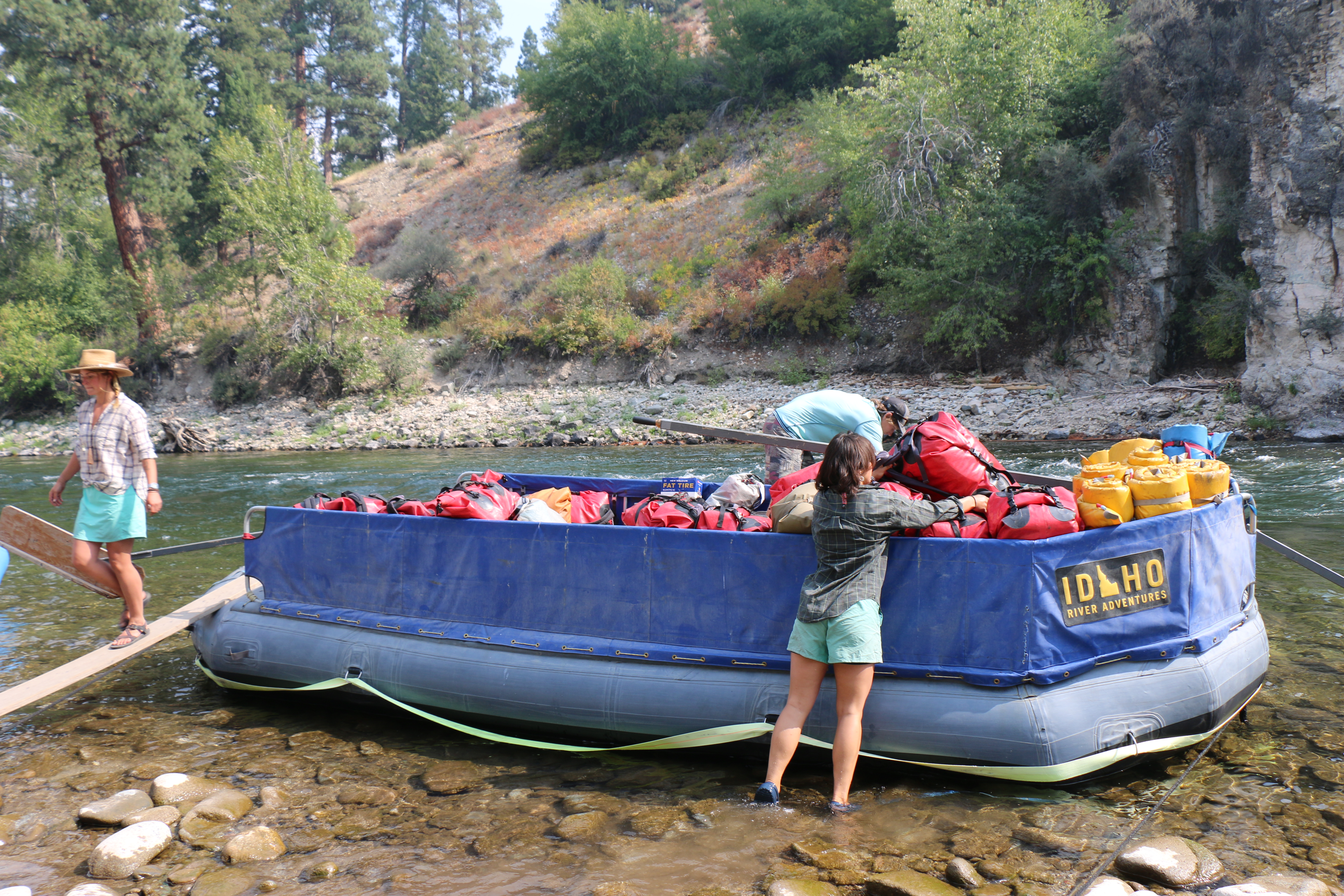
Granny Boat – named for Dustin’s Grandmother, filled with Red Bags, food, supplies, etc.
Each afternoon, the guide who went ahead with the tents and supplies, set up the outdoor toilet – or “Groover” about 50 yards from out tents and tables. About 20 yards from the Groover was a washing station and the “key” which was actually an ammunition box with extra toilet paper. When you went to the Groover, you would take the box so that everyone would know it was occupied. You brought it back when you returned, to let others know the Groover was open for business once again. The Groover was also set up with the door facing the river, so one always had a lovely view while taking care of business. It was called the Groover because it used to not have a seat on it, so when you sat it would make grooves in your behind – hence, the Groover!
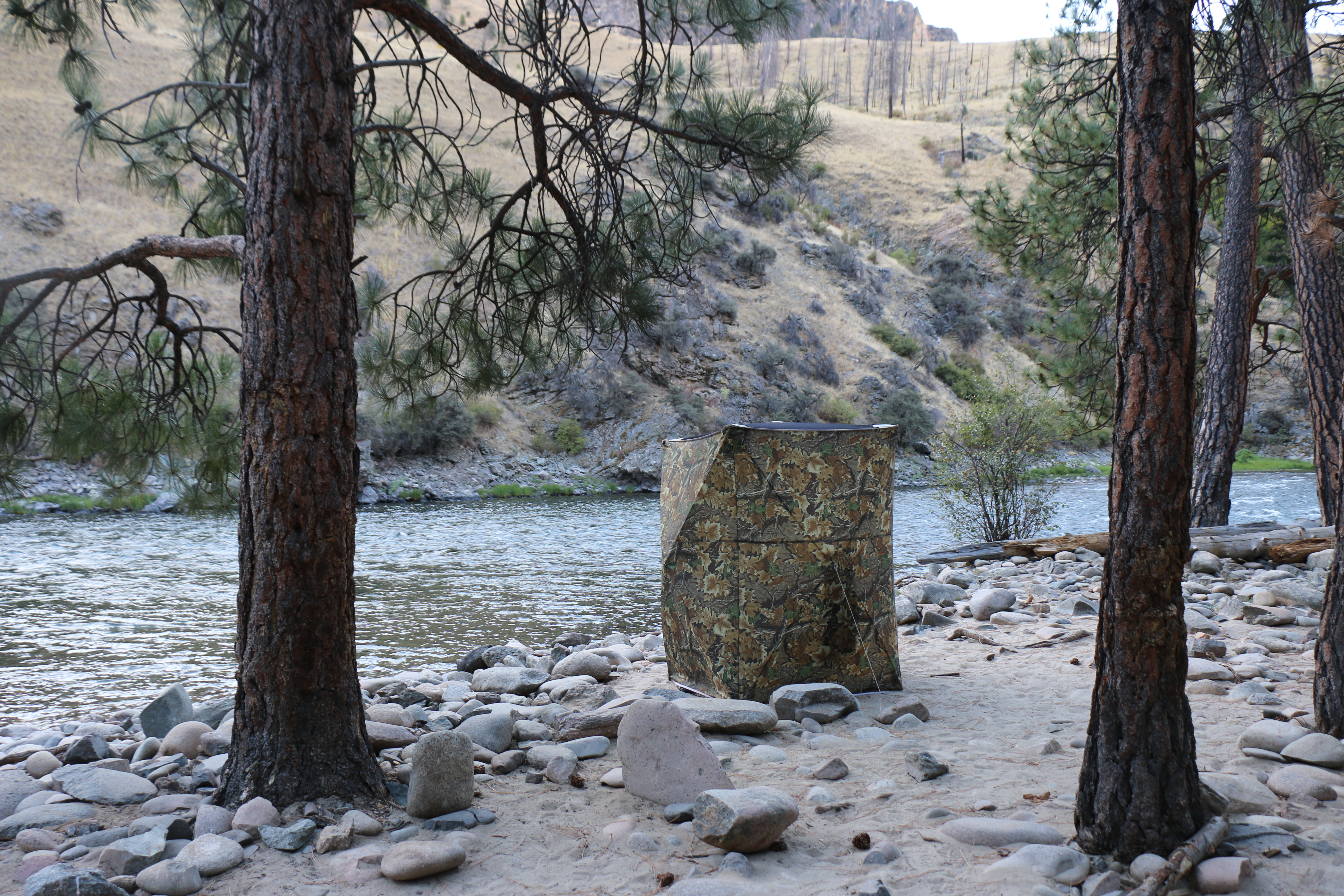
A photo of the Groover from the back.
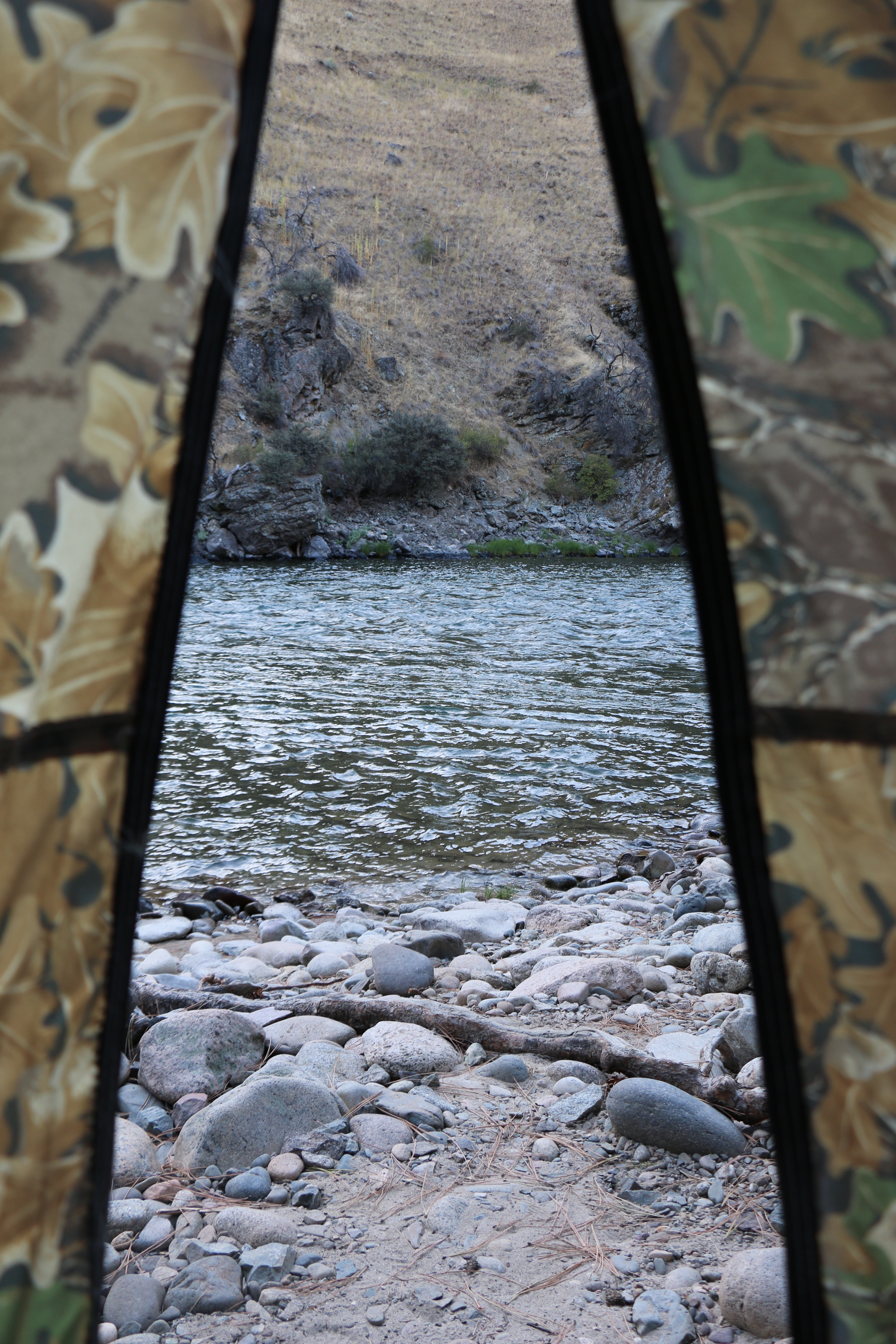
What a lovely view from inside the Groover.
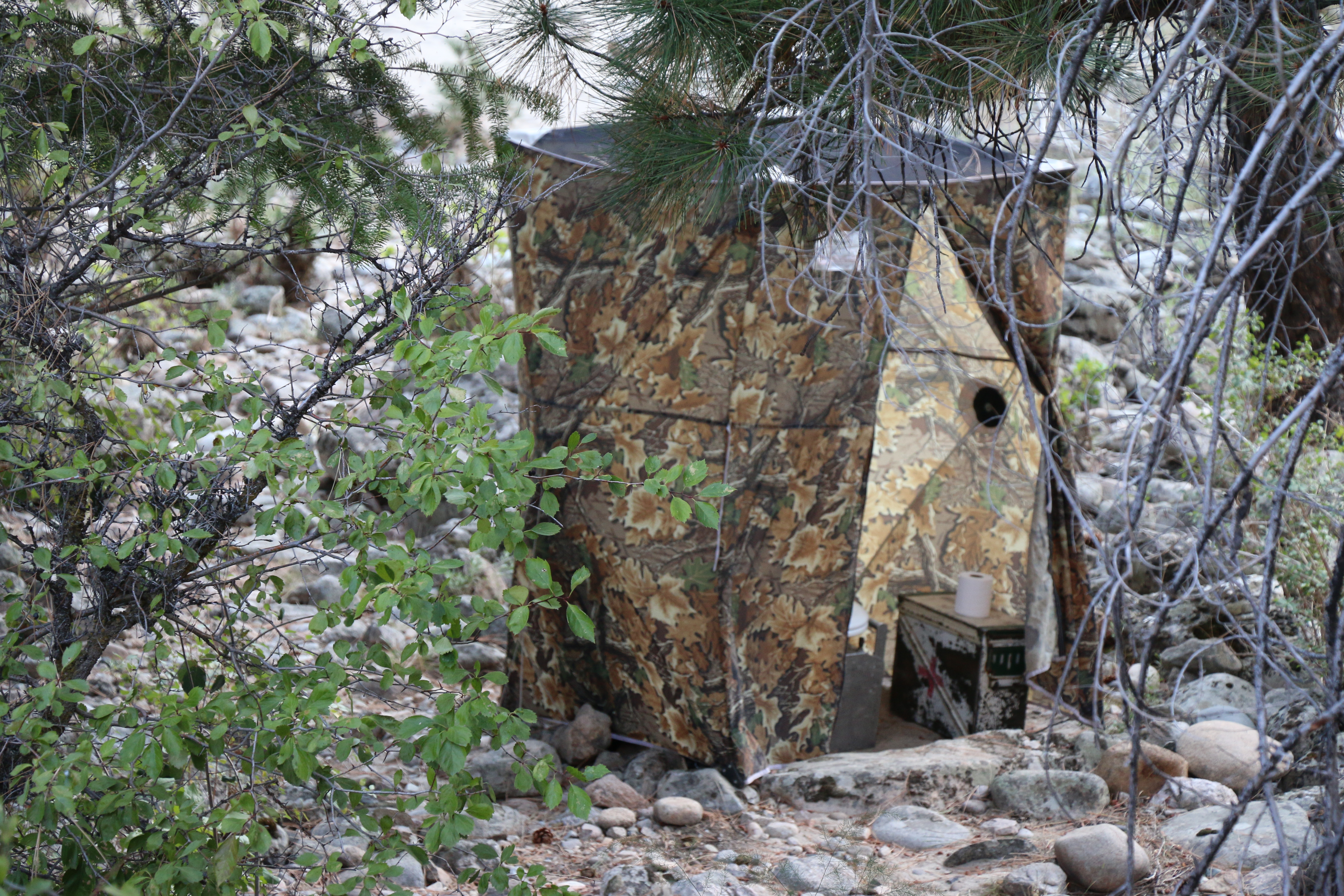
Another camp site with the Groover surrounded by trees (but still facing the river)!
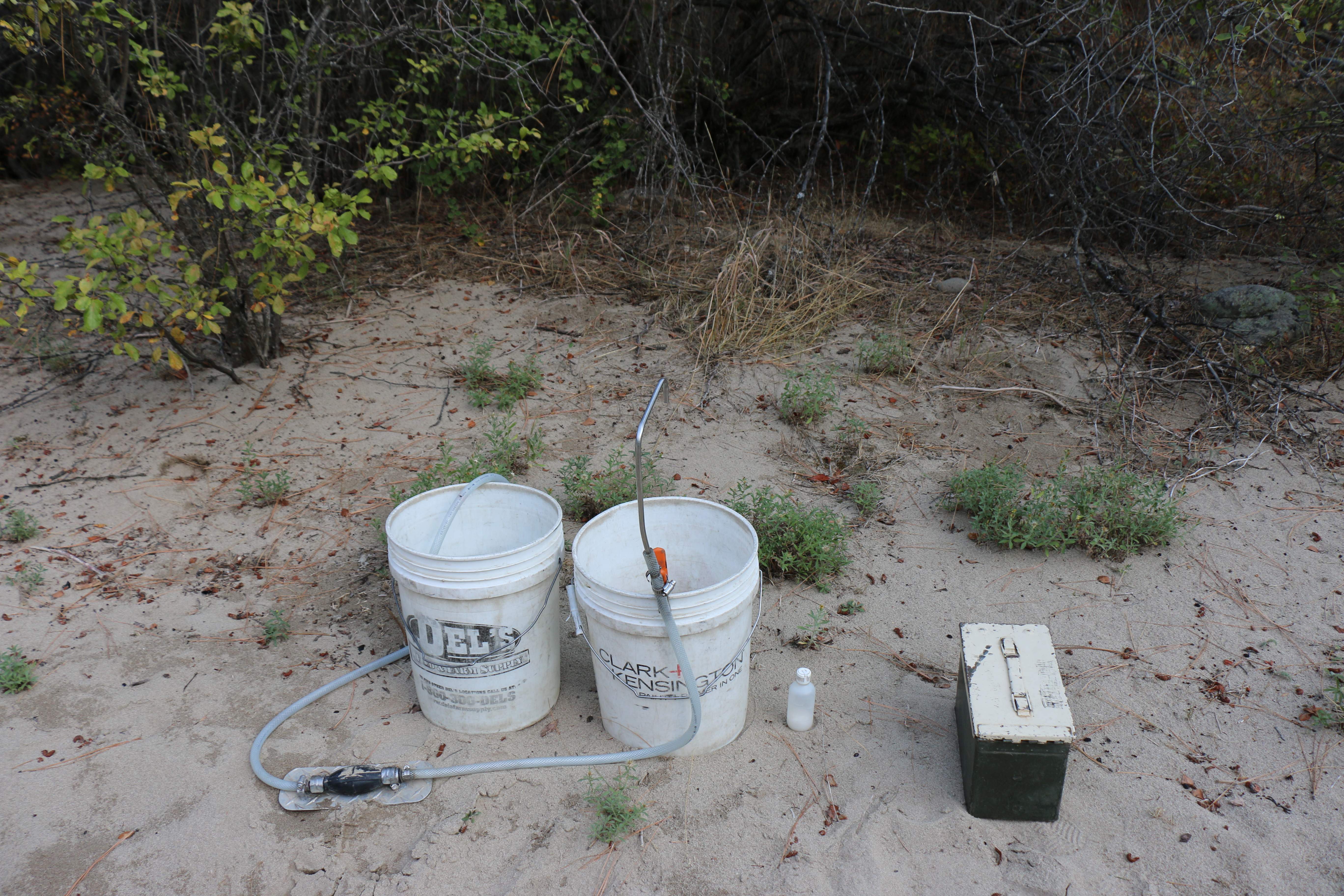
The wash station with the key to the Groover.

 Safari So Good