February 24, 2013

Wildebeests As Far As the Eye Can See!

by safarisogood
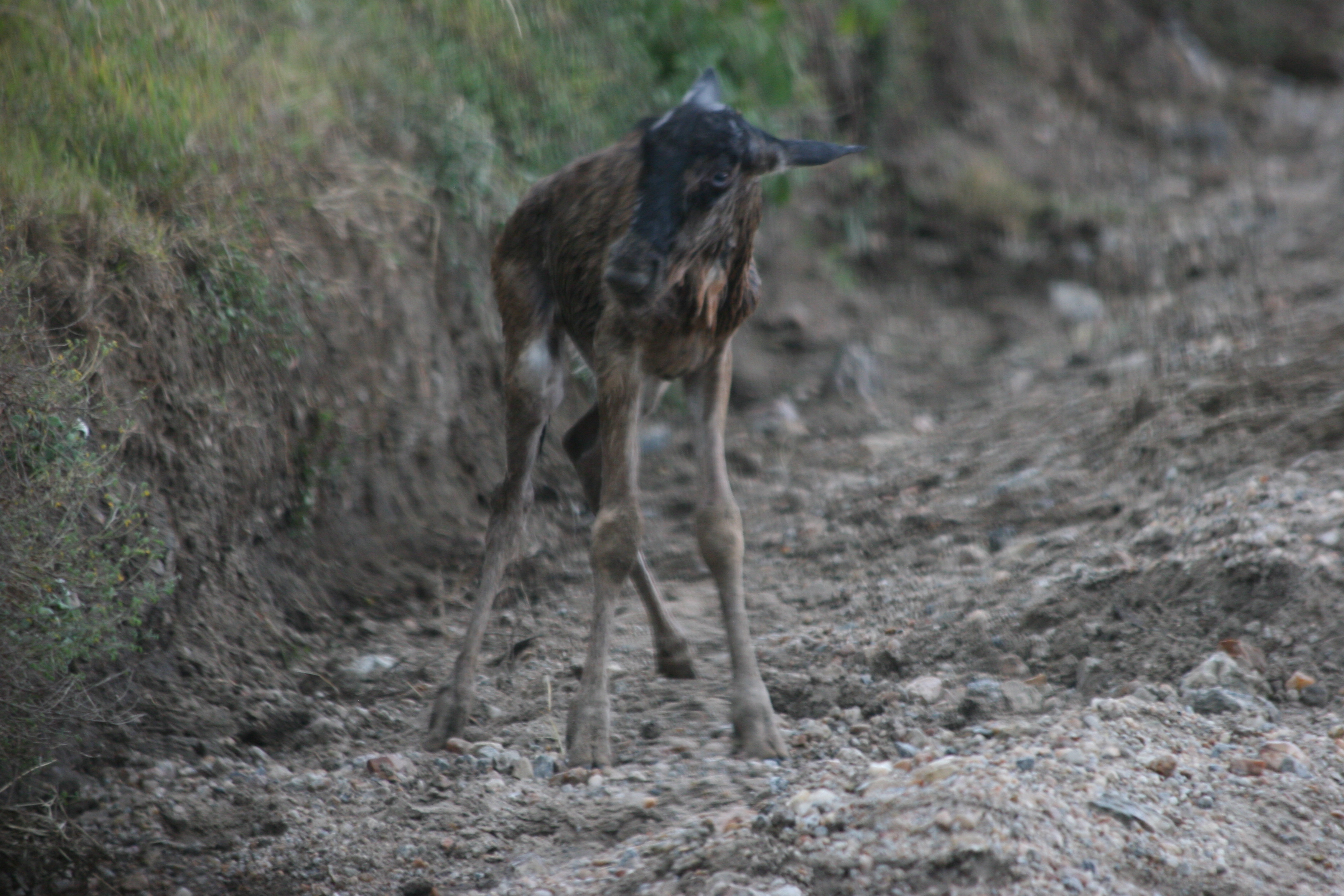
Newborn wildebeest taking his first steps.

Newborn wildebeest taking his first steps.

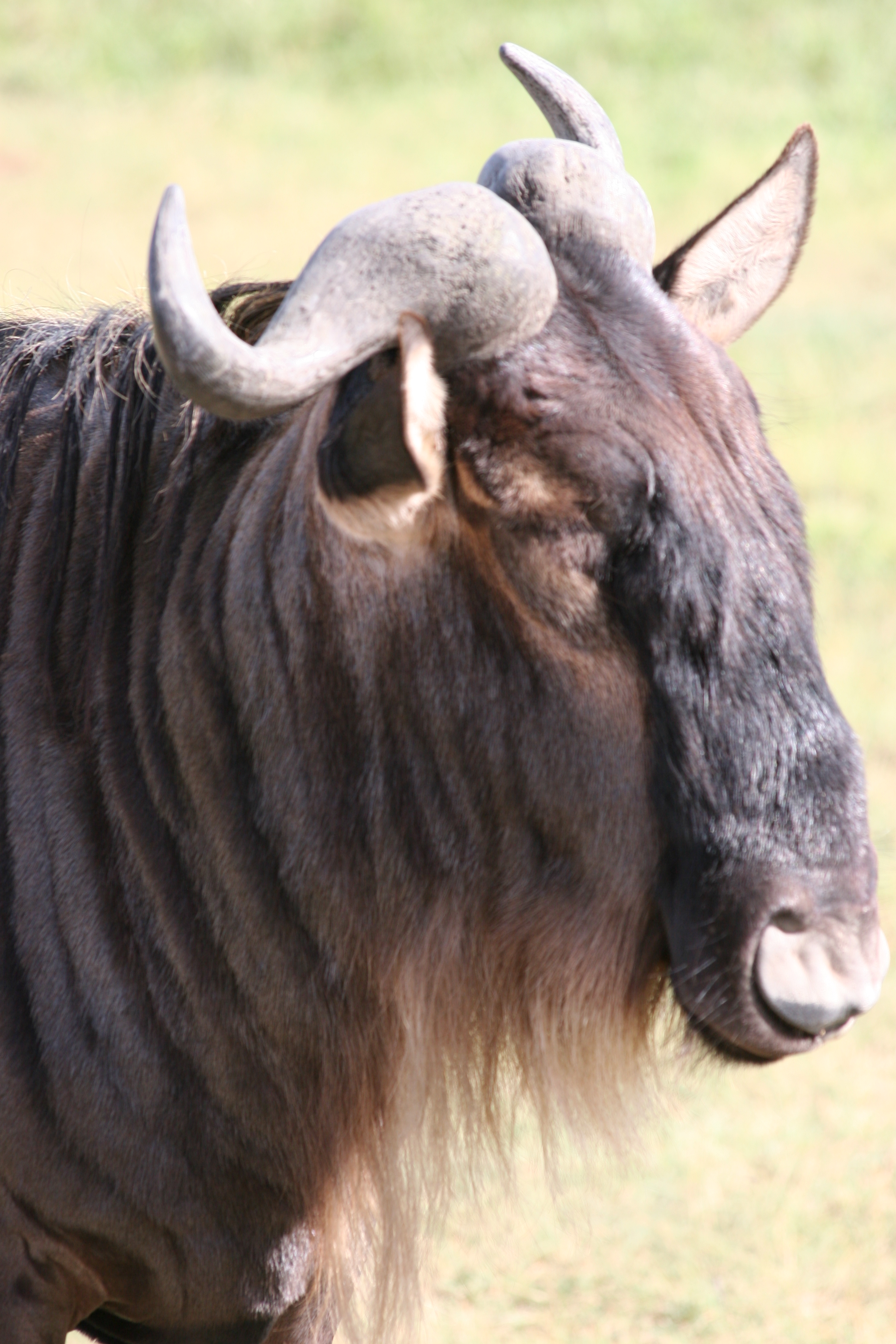
Isn't he a handsome fellow?

Isn’t he a handsome fellow?

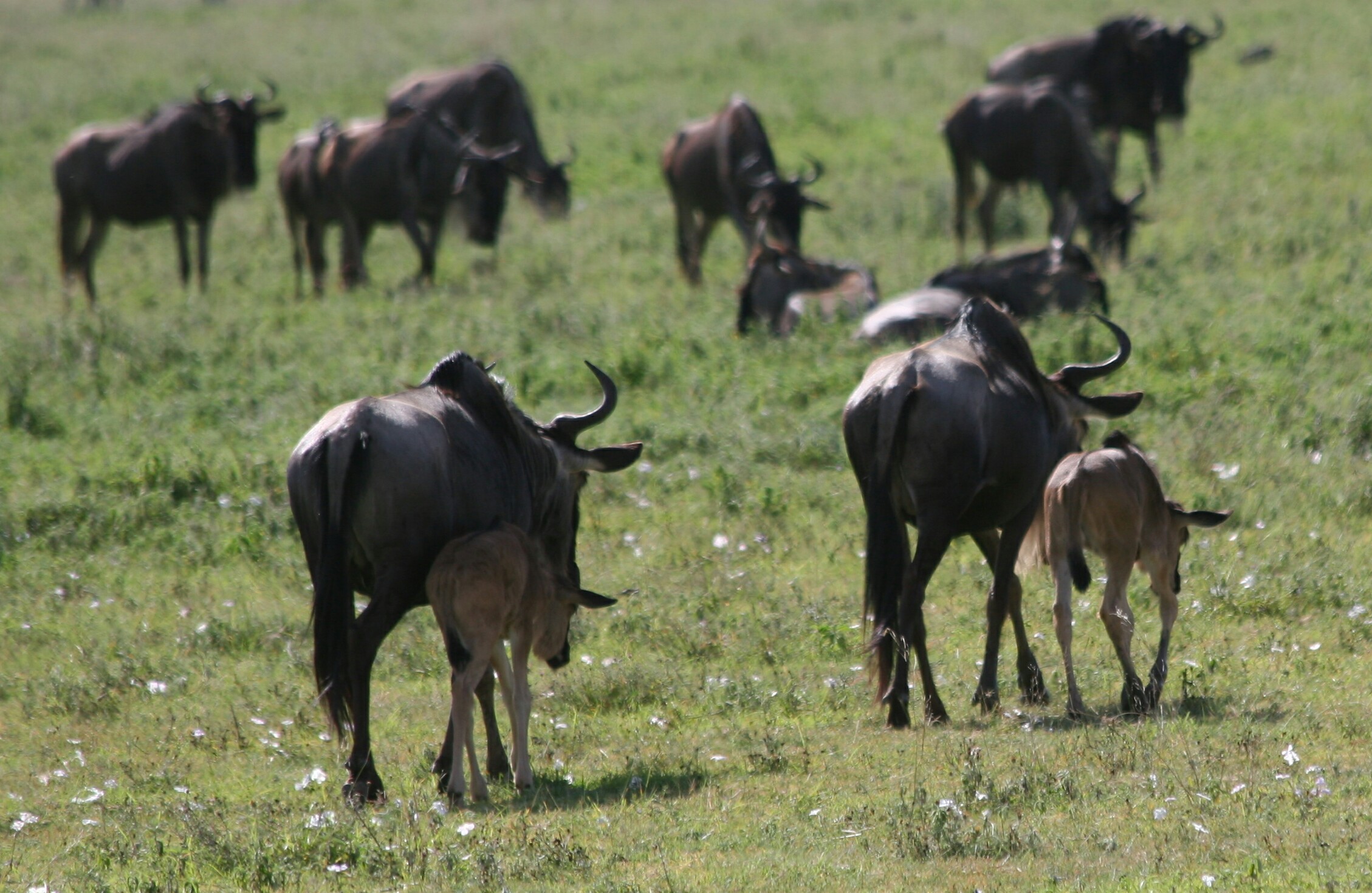
Babies staying very close to Mom.

Babies staying very close to Mom.

IMG_4167

Two hyenas resting in the road with very full tummies.

Two hyenas resting in the road with very full tummies.

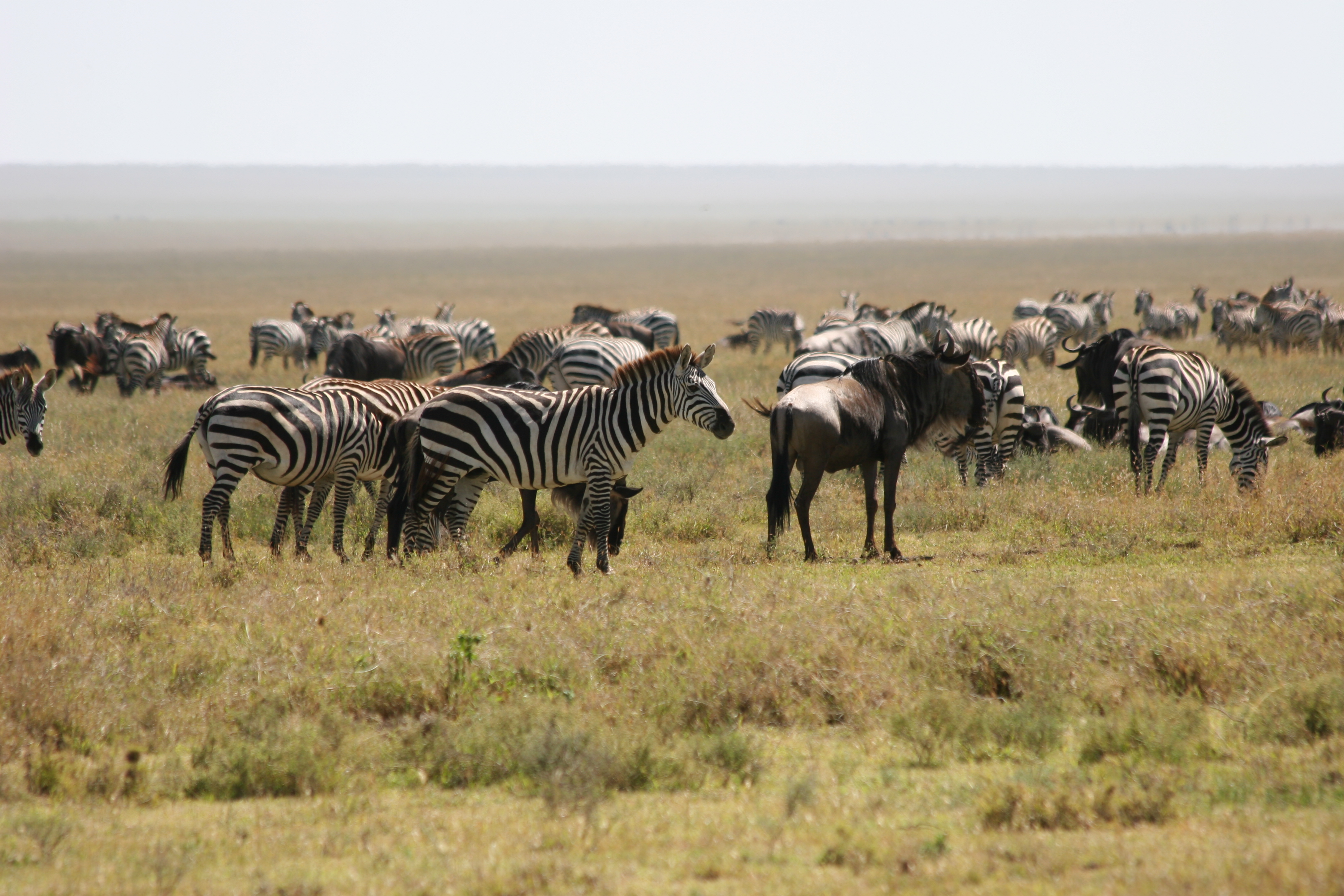
Zebras and Wildebeests hangin' together.

Zebras and Wildebeests hangin’ together.

IMG_4366Wildebeests are truly ugly animals — they resemble some sort of prehistoric bull.  Although we were not in Tanzania during the official migration, Masha pointed out to us that Wildebeests are always migrating — constantly moving from area to area.  
The sight of thousands (no exaggeration) of wildebeests walking across the plain is indescribable.  The highlight of our wildebeest experience was, of course, the newborn we saw on the side of the road.  In addition, we observed that the Mothers are excellent parents, keeping the babies close at their sides.  They even form what we termed “nurseries”, wherein the babies were gathered together inside the circle of Mothers, with a couple Moms on the edge of the circle keeping watch.  Even when on the move the babies were kept close enough that they sometimes ran into Mom.  We also saw a baby that was clearly afraid to cross the road with it’s Mom, due to the large strange metal animals parked along the road (i.e., vehicles).  Mom tried to convince baby to cross, baying at it, to no avail.  Finally, she patiently walked back across the road, almost gesturing “Come this way, it’s okay”.  The baby responded by running with all its might through a couple of vehicles, arriving safely on the other side with Mom.  It was an amazing thing to watch.  Zebras are often found with the wildebeests.  They graze in the same areas together, with the zebras eating the high grass and the wildebeests eating the low grass.  Gazelles, hartebeests, and impala also grazed with the group; the purpose being strength in numbers.

They all get along very well.
Another common sight is hyenas around the wildebeests.  They feed on the afterbirth, as well as on the newborns.  We came upon a small group of hyenas lying in the road — they were fat probably from having recently eaten a large amount of afterbirth.  Wildebeests have all their b

abies within a 3 week period, making migration and protection of the young easier.  We were very lucky to be in Tanzania during the birthing season.
On Saturday we were on an all-day game drive, so we had box lunches to eat.  Masha stopped in the middle of the Serengeti (which means endless plain) so that we could eat our lunch among the thousands of Wildebeests and Zebras.  We don’t remember what it tasted like, but it was the best box lunch we ever ate!

February 22, 2013

We’re Not in Oz Either

by safarisogood

The last two days have been unbelievable.  Wednesday afternoon we were driven to the Serena Lodge at Lake Manyara.  We had a great buffet dinner, sat by the pool and were entertained by a local group of dancers.  The lodge is on the rim of the Great Rift Valley, and the view is absolutely amazing.

The next morning we went on our first game drive around Lake Manyara.  On the way down to Lake Manyara National Park, we saw several herders, each with his small group of cows and/or goats. The hillside is very steep, and some of us were worried that the livestock would slip and roll to the valley floor, hundreds of feet down.

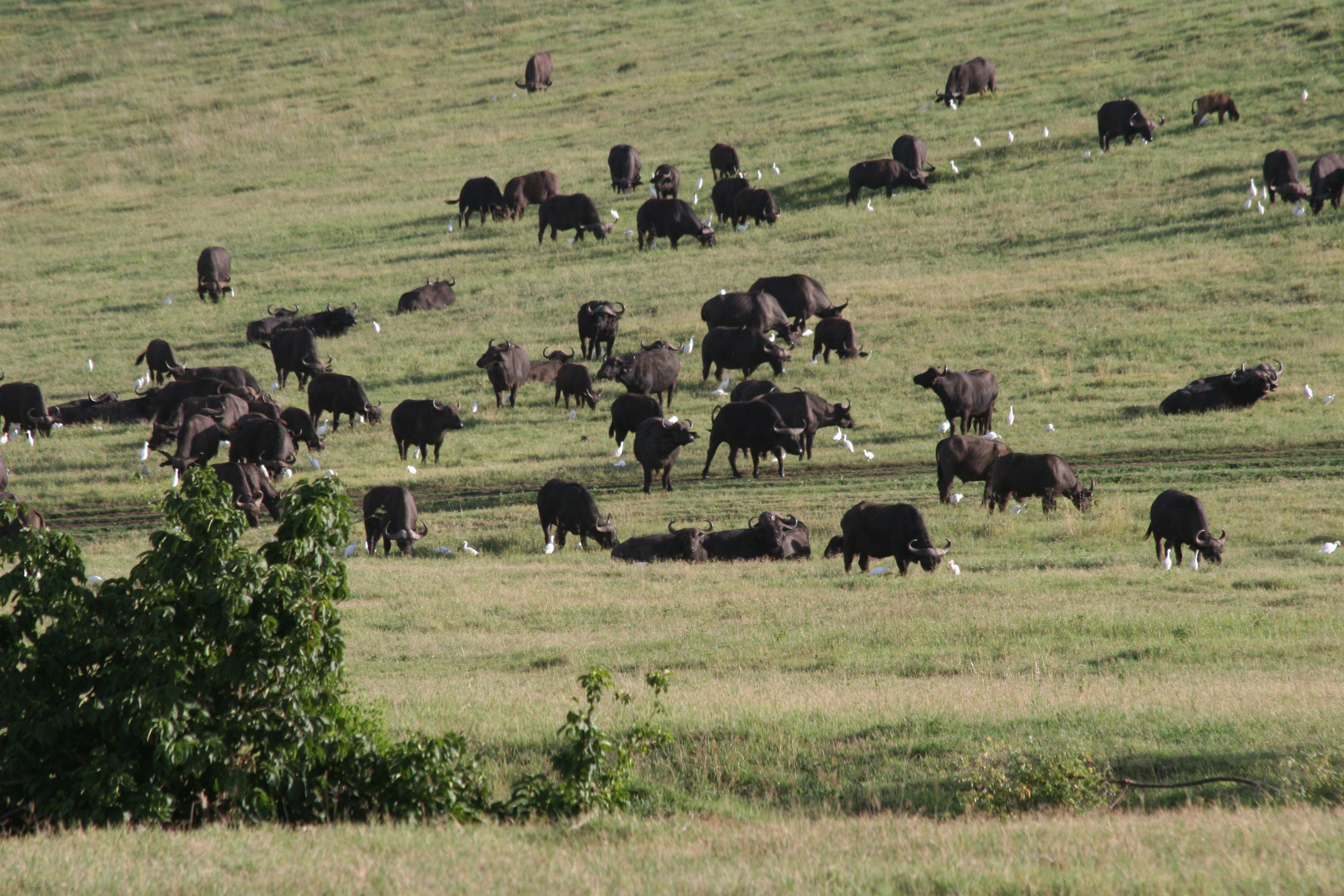
Once in the park, we saw blue monkeys, vervet monkeys, baboons, a lone elephant, some water buffalo from a distance, zebras, gazelles, and hippos in a pond. Our Driver/Guide is Masha and he stays with us for the entire time we are in Tanzania! He is very knowledgeable and is intent on showing us the game we want to see. After our morning game drive and lunch at the lodge, we started the transit drive to the Serengeti Lodge, where we spend the next two nights. Next year, they’re going to have a great, smooth, paved highway from Manyara to Serengeti. We know, because we drove on the dirt road detour next to it for six hours.

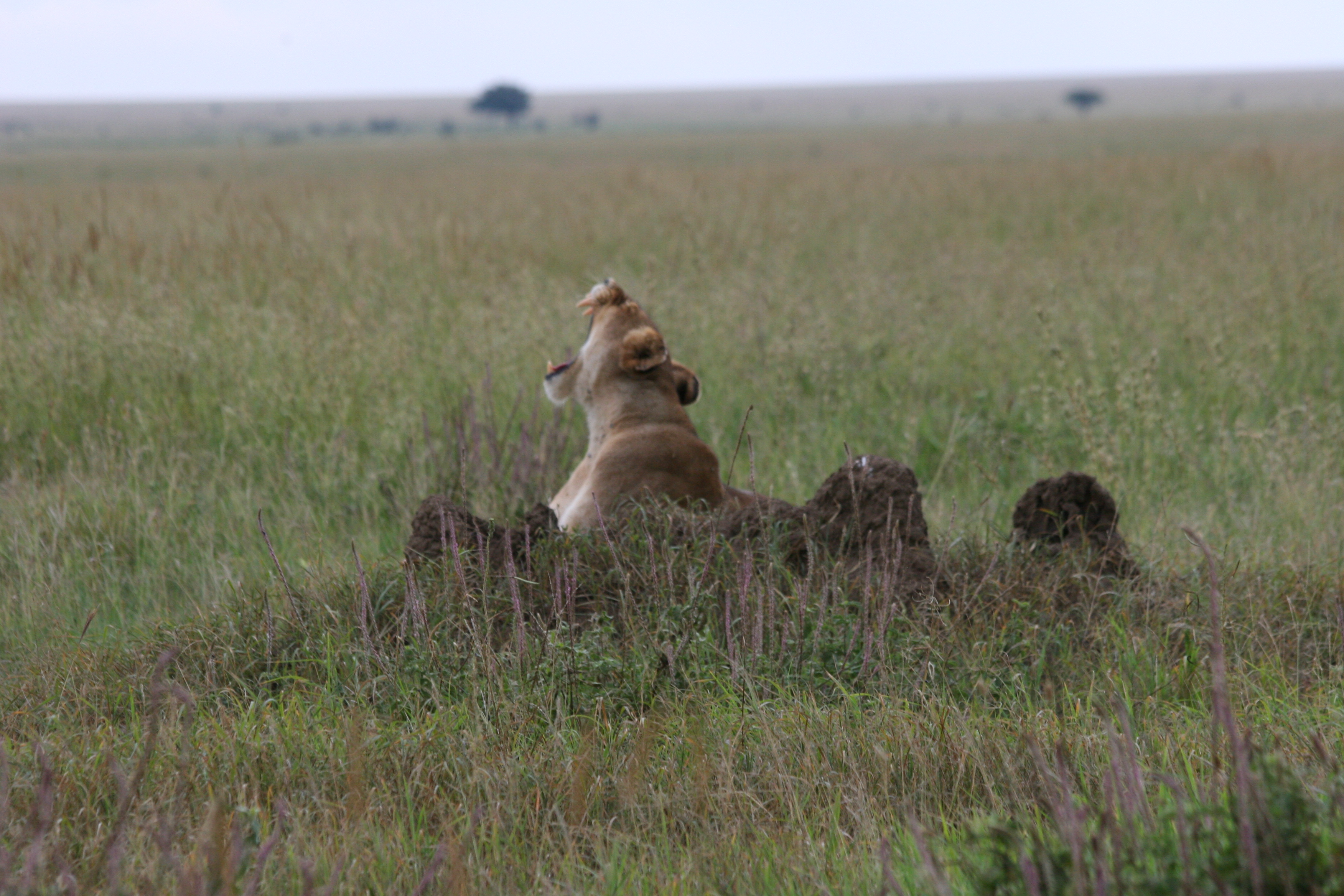
Ironically, we saw more game on the transit drive in the afternoon than on the morning game drive. Lots of wildebeest, though the migration is north of here right now. As a result, we only say groups of a few hundred instead of the uncountable thousands in the migration. One highlight of the drive were a lioness about 5 yards off the road who let us stare and take pictures for quite a while before disappearing into the grass. The other, more amazing, event was our encounter with a newborn wildebeest. We saw the mother just standing up, and the calf at the edge of the road, still covered with … well, you know. We watched the calf get up take its first steps, which happens about three minutes after birth. The group of half a dozen or so wandered off, their newest member a little unsteady, but keeping up.

We won’t try to name all the animals we saw, and really won’t attempt to get the order right. The whole experience is just incredible. Random memories:
Corey’s bustard is the heaviest flying bird. (Michael’s response: That thing can fly?!)
Thompson’s gazelle has a stripe on its side and a white rump below the tail. Grant’s gazelle has no stripe and a white rump that extends above the tail. (Common comment at the end of the day: Wait, I see something! Never mind, just more gazelles.)
Baby zebras are born without stripes. They just look like fuzzy brown horses.
Road crews are the same everywhere. Smoothing pavement takes one man driving a roller and five men watching him.

Finally, with everyone sore and exhausted, we pulled into Serengeti Lodge at 7:30 p.m. The good news is that the hot water stays on until 9:00. In fact, there is hot water from 6 pm until 9 pm — plenty of time for everyone to shower!

The next day (Friday) started bright and early with a 4:00 wake-up call. There are no phones in the room. Someone comes and knocks on your door. We got dressed and went to the lobby for coffee (instant) and tea before climbing into vans for the one hour drive to the balloon ride. You forget how dark it is when there are absolutely no street lights or other cars. There were only two hold-ups on the drive. First, we saw a hippo grazing by the size of the road, and had to stop and watch until it wandered off. Next, we came upon ten or twenty piles of dirt dumped intentionally in the precise center of the road. Apparently, they’re planning to grade it sometime this week. As a result, the drivers had to go completely off the road (which is not only dangerous, but illegal) for a couple hundred yards. It is important to point out here that the “road” is not like the roads you and I are familiar with — most of the roads are one or barely two lanes and not paved. Fortunately, we were in the van with the best driver, because he was the one who pulled up next to the other vans to tell them how to get unstuck. Ours was the only van that had no problems.

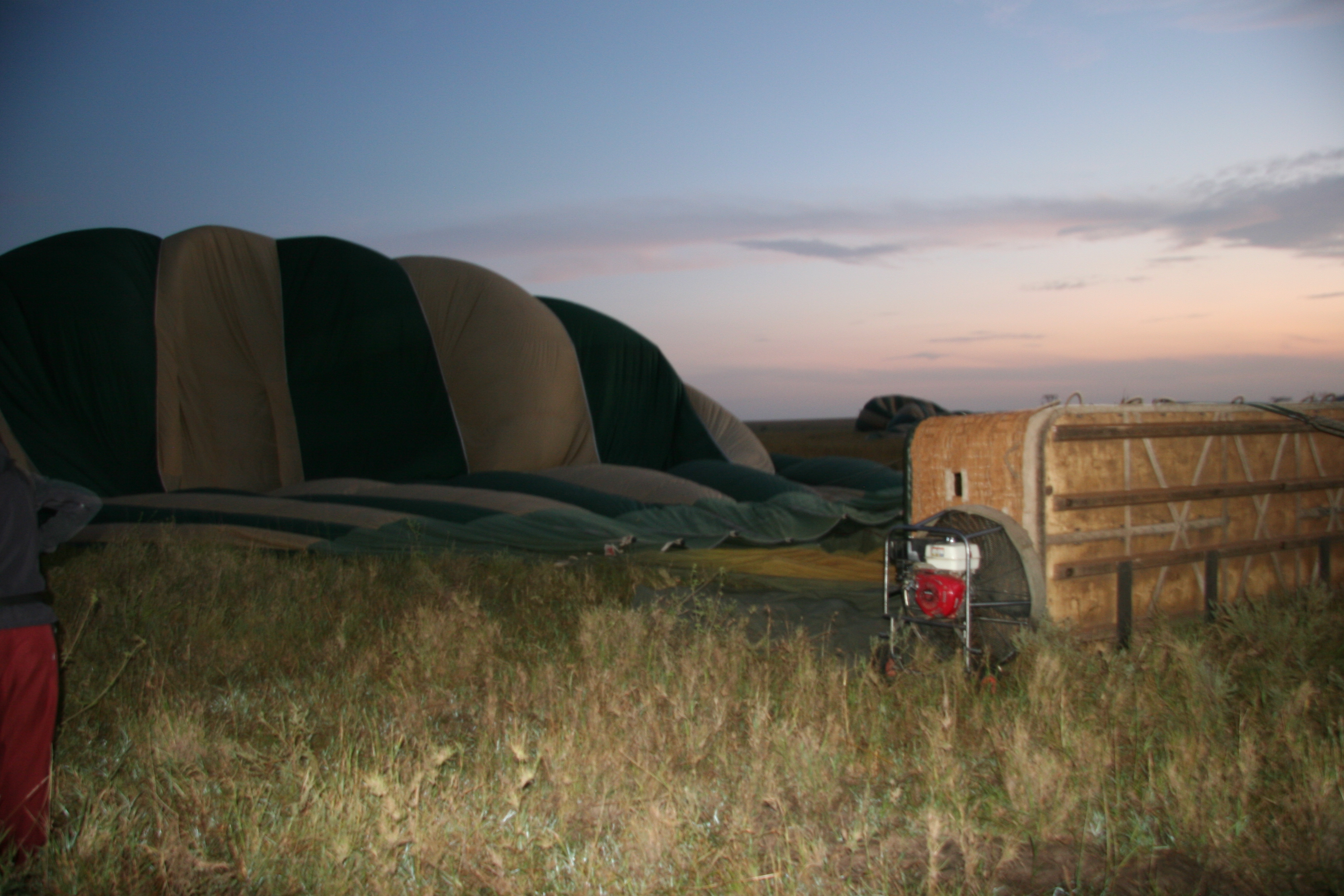
We got to the launch site to find four huge balloons being filled by large fans. I learned later that the balloons are 450’s (450,000 cubic feet of air). Attached to each balloon was a very large basket for the sixteen passengers and the pilot. The baskets were lying on their sides. During the preflight, we were instructed on hopping into the balloon while it was on its side. The basket was like a weaved picnic basket, separated into 4 sections — 4 people fit into each section. Think of a rectangle sliced into 4 even sections. The 2 sections on top (as the basket lay on it’s side) required those 4 people to hop into them. Needless to say, our pilot (Dan) took one look at Michael, Karlene, and I and said you 3 (plus our Australian friend) on the bottom. That still required us to basically lay on the ground and scootch into our tight spots. Once in, we were laying on our backs in a sitting position. The position you would be in if you tipped over backwards in a straight-backed chair. We were instructed to clip our seat belts (really, belts that looked like car seat belts) onto the strap connected to the bottom of the basket. That’s so you don’t fall out on take-off or landing. Once all in – like eggs in a carton — the pilot starts the fire which fills the balloon further and the basket straightens out (with help from the ground crew, who are pulling on the side of the basket). We were up!!! We didn’t see a lot of animals, but the view was breathtaking, nonetheless. It was too wonderful to be scary. The entire flight was perfect, as was the landing! We all have a new-found respect for balloon pilots – who have very challenging jobs.

image


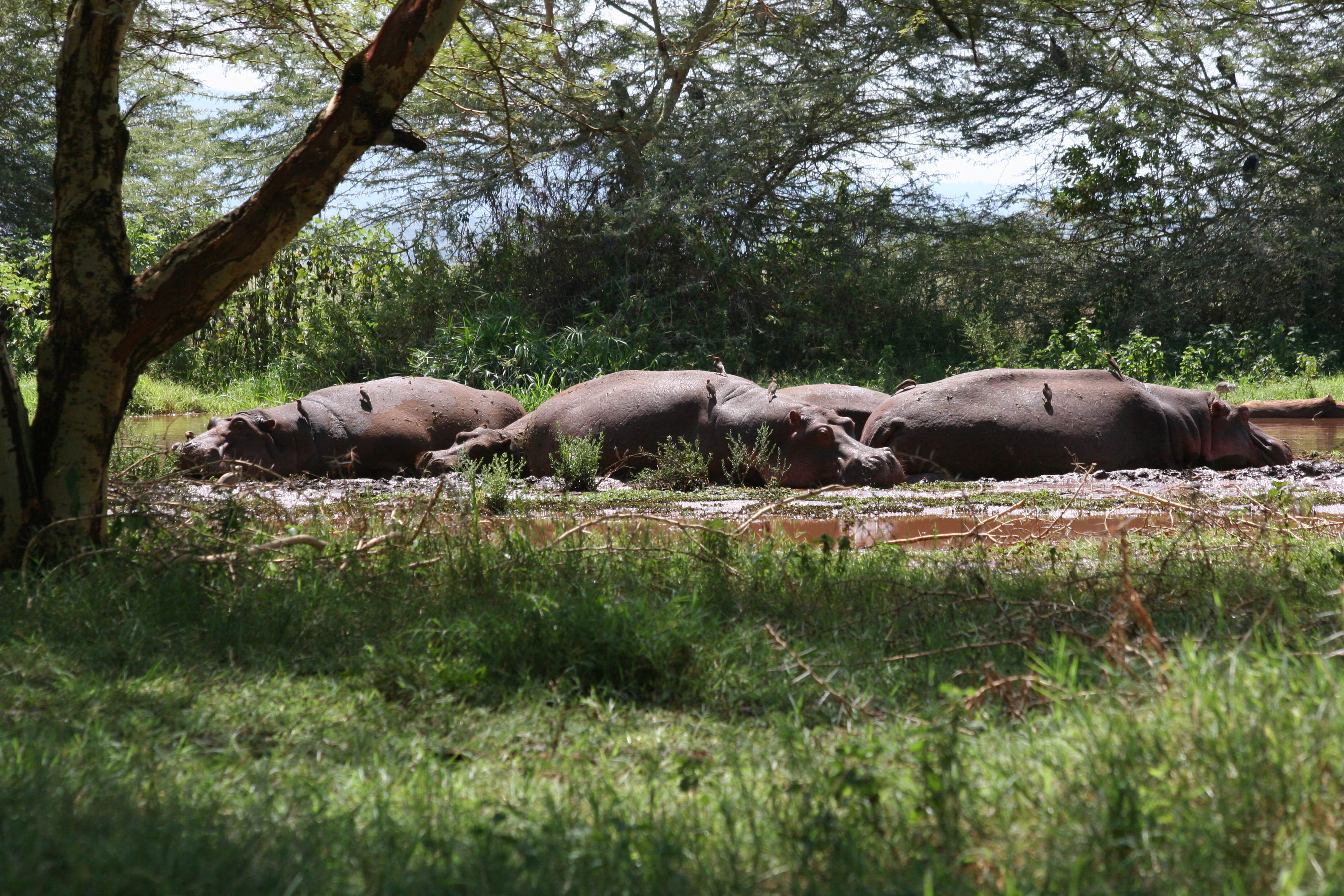
Hippo Pool

Hippo Pool


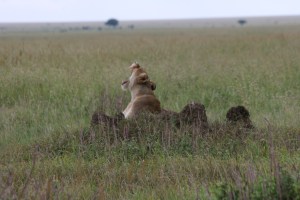
Our first Lion(ess)!

Our first Lion(ess)!

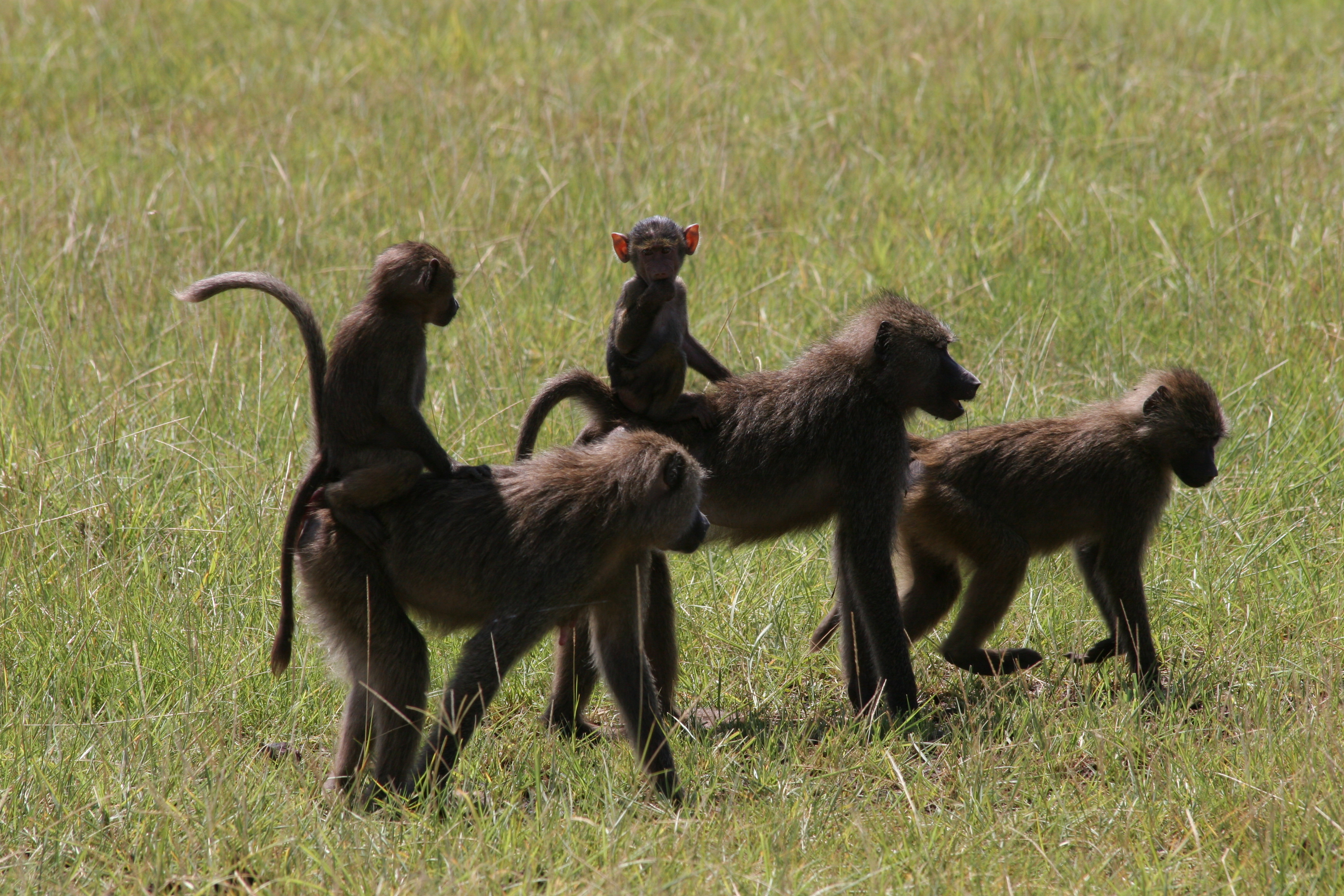
Talk about "Monkey on Your Back" (Baboon)

Talk about “Monkey on Your Back” (Baboon)
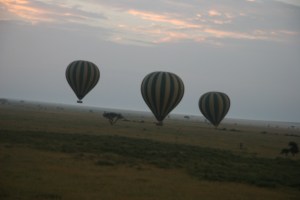
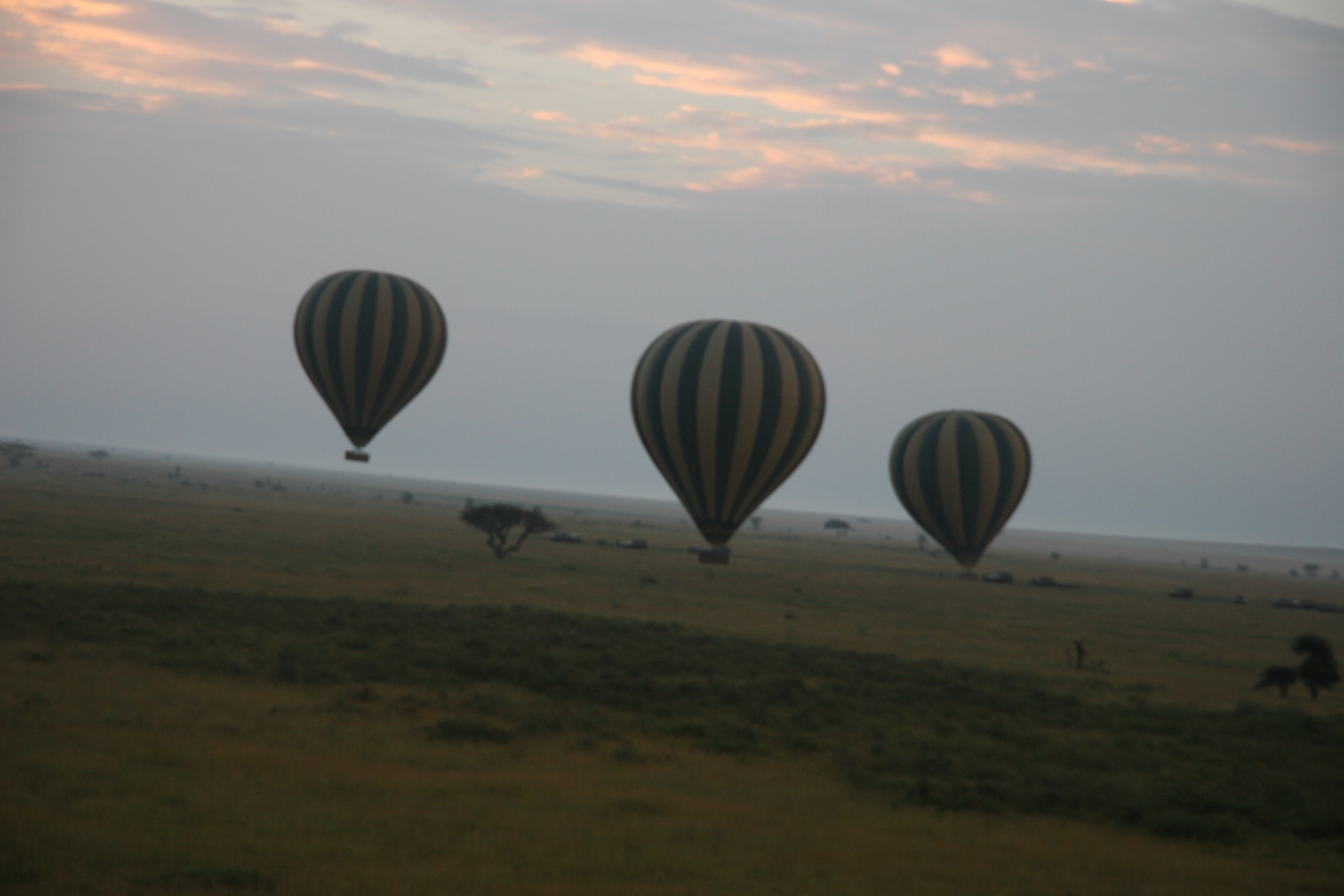
A view of the other balloons from our balloon.

A view of the other balloons from our balloon.

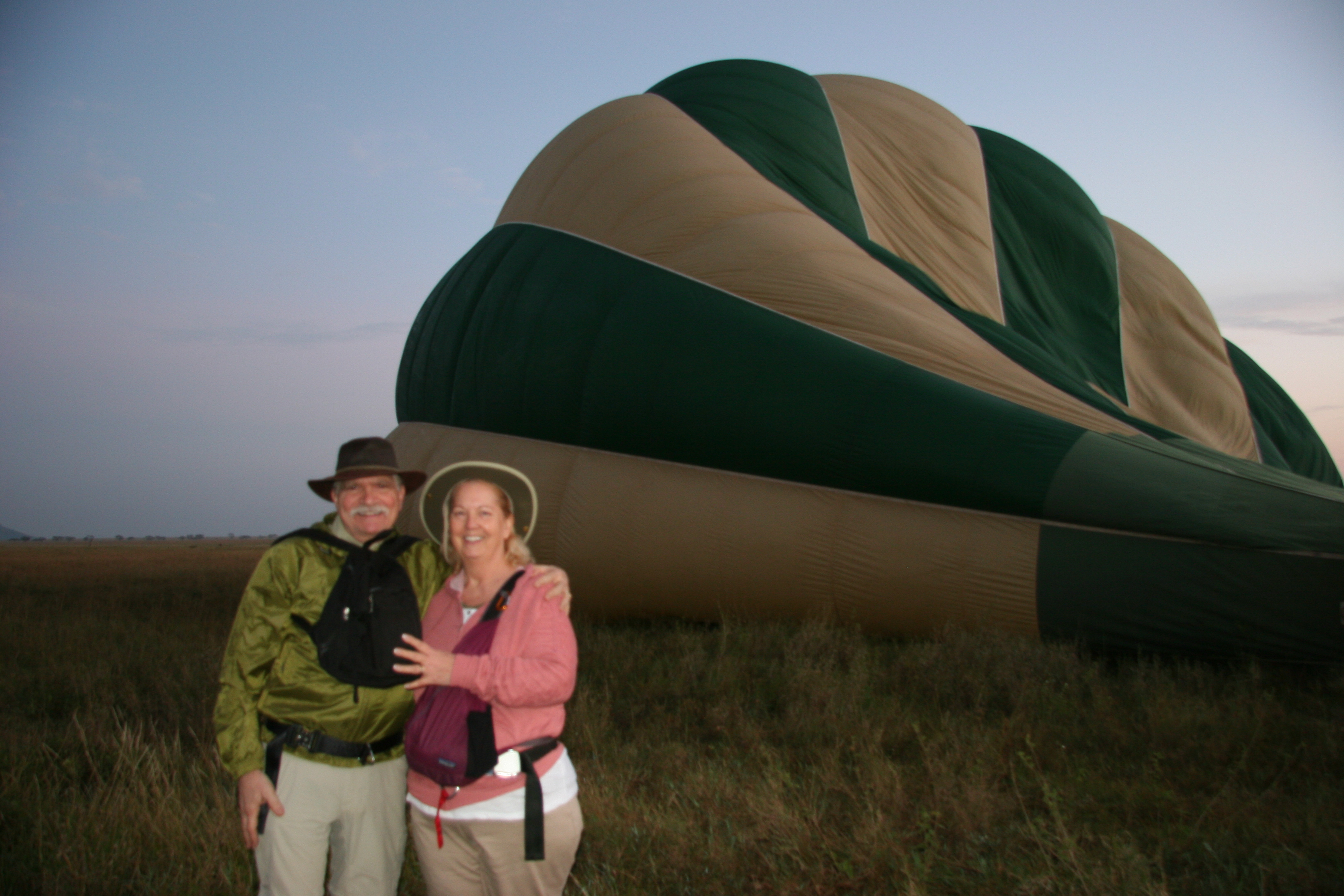
We're ready to go!

We’re ready to go!

The basket on its side waiting for us to climb aboard.

The basket on its side waiting for us to climb aboard.


February 22, 2013

It`s a Long Way to Tanzania!

by safarisogood

We are 45 minutes from landing at the Kilimanjaro Airport.  It feels like we have been flying for days (oh, wait, we kind of have been).  We watched the sun rise and then set again while en route.  We will be landing at about 8:30 pm, then head to our lodge in Arusha, very tired and ready for a good night’s sleep in a comfortable bed.  More tomorrow…

February 21, 2013

We’re, Not in KansasAnymore.

by safarisogood

You may have noticed that four days worth of posts went up all at once. Turns out that wifi service is less than perfect in Tanzania. Who knew that a third world country would not have the level of infrastructure we are so spoiled by?

February 21, 2013

Mr. Toad’s Wild Ride

by safarisogood

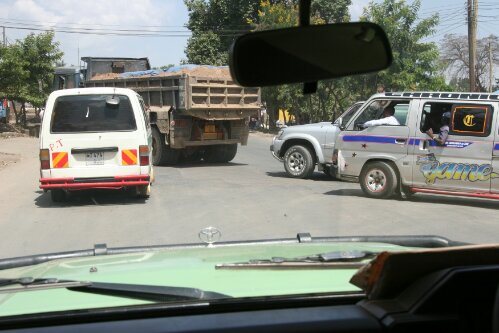
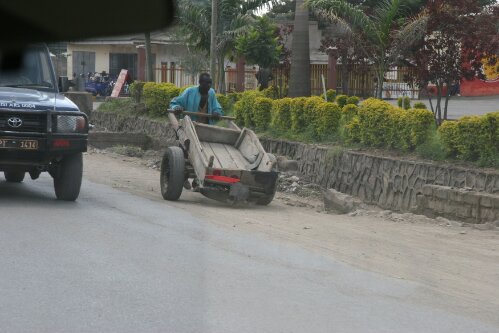
We had dinner with a cop from Australia tonight who wondered what the traffic officers in the white uniforms did. Tanzania has a complete vehicle code, including helmet and seatbelt laws, but they don’t appear to be enforced. We passed a small (150cc) motorbike, and none of the three passengers was wearing a helmet. Lanes are rarely marked, and when they are, it doesn’t matter anyway. Right of way is determined by who wins the game of chicken. Add to that a lot of jaywalkers and hand-pulled carts laden with anything from a couple yards of hay to a large curio cabinet. If, when we say “cart” you think “shopping,” think again. The carts are about the size of the bed of a mid-sized pickup.
To add to the entertainment, they use 3 wheeled vehicles in town similar to a smartcar, only smaller. We passed one that had at least seven children in it. Clearly this is Africa’s version of a clown car.

image

image

February 21, 2013

Monkey Business

by safarisogood

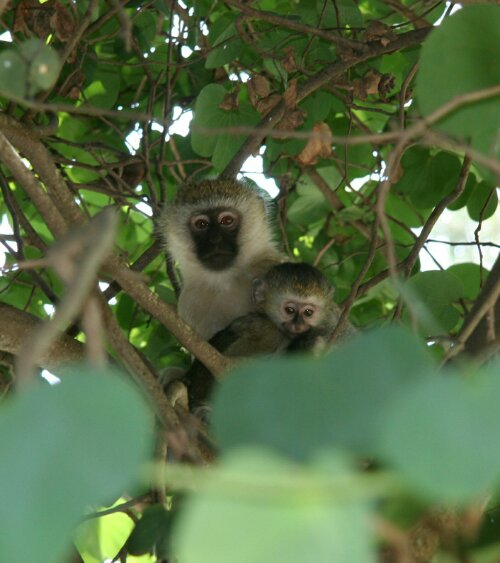
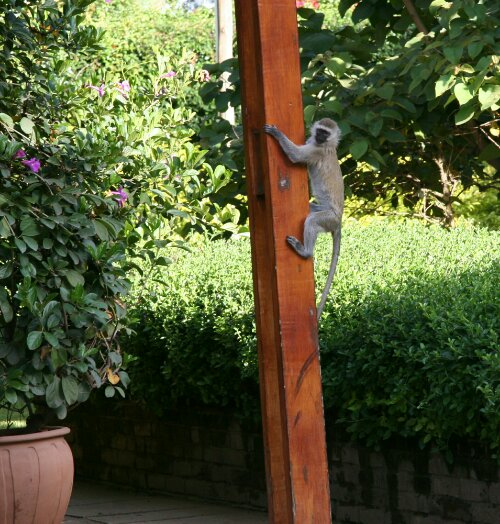
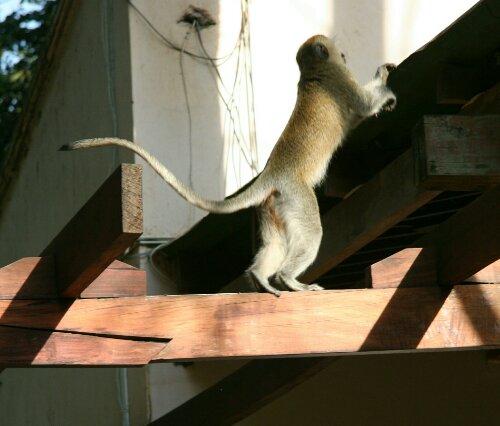
We woke to a beautiful morning.  As we headed to the restaurant, we spotted a monkey on the roof of the building — we were so excited!  After trying to get some pictures, we went around the corner only to find several monkeys, playing on the roof of the restaurant and in the trees overhead.  There were grown ones and baby ones.  We found empty banana peels on the ground near the monkeys, realizing the lodge must feed the monkeys in order to get them to come entertain the guests and entertain us they did.  Once the bananas were gone, the monkeys moved to the lawn and wrestled for a while.  They got into the garbage and climbed all over the cars in the lot.  They were so cute!

image

Michael and me in front of the restaurant.

image

Mommy monkey watching me very carefully as I get a picture of her baby.

image

image

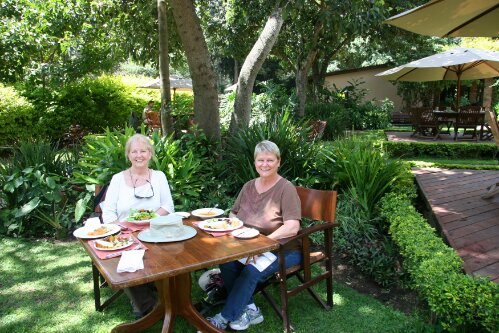
Me and my sister at lunch at the Arusha Coffee Lodge.

image

image

February 21, 2013

We’re Here!

by safarisogood

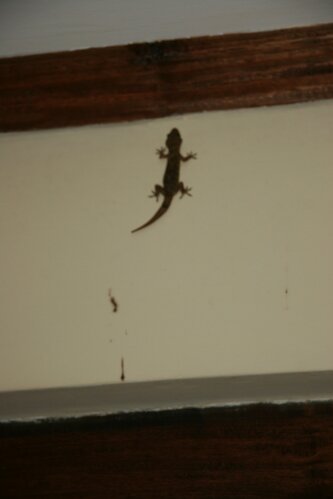
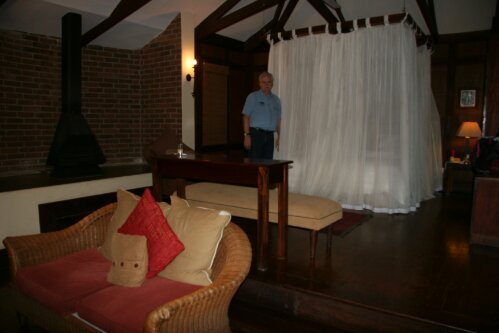
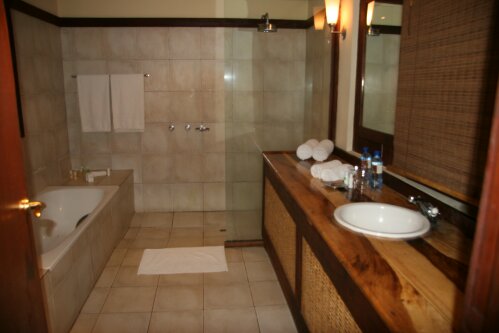
After a gazillion hours of flying, we finally arrived in Kilimanjaro.  We purchased travel visas (for $100 each) and waited for our transfer driver, Macdonald, to get all our paperwork squared away.  Once done, we climbed into his not-so-new land cruiser and rode for another hour to get to the Arusha Coffee Lodge.  By now it`s 10 at night and we are tired but excited to finally be in Tanzania.  The rooms are wonderful, staff friendly and accommodating, and the grounds of the lodge are beautiful (although it is very dark out).  Michael and I are in cabin 1  (replete with geckos inside and out) while Karlene is in the adjoining cabin 3.  Can’t wait for morning when we can take pictures!!

image

Gecko in the bathroom.

image

Michael in front of the screened bed.

image

Big bathroom with a rain shower!

February 18, 2013

Are we there yet?~

by safarisogood

Well, we are on a small Q400 prop plane headed to our first stop in Portland.  We have been flying for about 70 minutes (30 more to go) and I feel like I’ve been on this plane forever!  Not a good sign, given that we have two  more flights (10 and 8 hours respectively). Here’s the plan:  lunch in Portland, sleep most of the flight between Portland and Amsterdam (next stop), then wake up and stay awake from Amsterdam to Kilimanjaro, at which time it will be approximately 8 pm Tuesday.  At the Kilimanjaro Airport, we are met by the African Adventure rep, and take some kind of land vehicle to get to our first destination – Arusha and a real bed to sleep in!  So, so excited…

February 16, 2013

Sakurity!!!

by safarisogood

What do barking dogs, house sitters, and a new security system have in common?  They will all be in place at our house while we are soaring over the Serengeti in a hot air balloon!  Michael has wanted to have a security system installed for some time now, but I have had a couple of bad experiences with alarms, so I was reluctant.  A few recent burglaries in the neighborhood encouraged me to reconsider.  So fair warning burglars and squatters — a visit to our house will result in Sakurity being called by Bon Qui Qui.  If you aren’t familiar with the reference, check out “Bon Qui Qui at King Burger” on YouTube.

January 5, 2013

Thank you, Jack Kilby and Robert Noyce

by safarisogood

Packing for a trip has challenges beyond clothes and toiletries to fit in a 33 pound weight limitation. We also need to pack entertainment, communications, and a way to keep mementos. On earlier trips, that meant a couple of books each, ipods, journals, and a laptop with enough DVDs to back up all our pictures. But that won’t fit within either the weight or size limits. Our solution is to go all electronic. We already have ipods, and Michael got a Kindle a couple Christmases ago from his wonderful wife. To round things out, we bought an Android tablet (ASUS Transformer TF300 if you care), a keyboard for the tablet, two 32GB memory cards to back up pictures, and two pair of noise canceling headphones. The plan is to download a few movies to the tablet to watch on the plane, put books that Michael wants to read on his Kindle, books that Karen wants to read on the tablet, and an audio Swahili course on the ipods. We’ll journal either on this blog or on a separate document with the word processing program on the tablet. The keyboard has a USB port and a card reader, so we can back up pictures every night from the cameras (using a card reader on the USB port) to the backup cards (using the card reader slot).
At any rate, that’s the plan. We know that things will go wrong, but we’ll adapt and learn. We’ll let you know what works, what doesn’t, and how we adjusted. The main challenge will be keeping all the electronics charged with only two power adapters that fit Tanzanian plugs. (The real main challenge will probably be something we haven’t even thought about. It usually is.)
For those who’ve made it this far: Jack Kilby and Robert Noyce invented the integrated circuit. This led to microprocessors, high-density memory, and digital cameras.