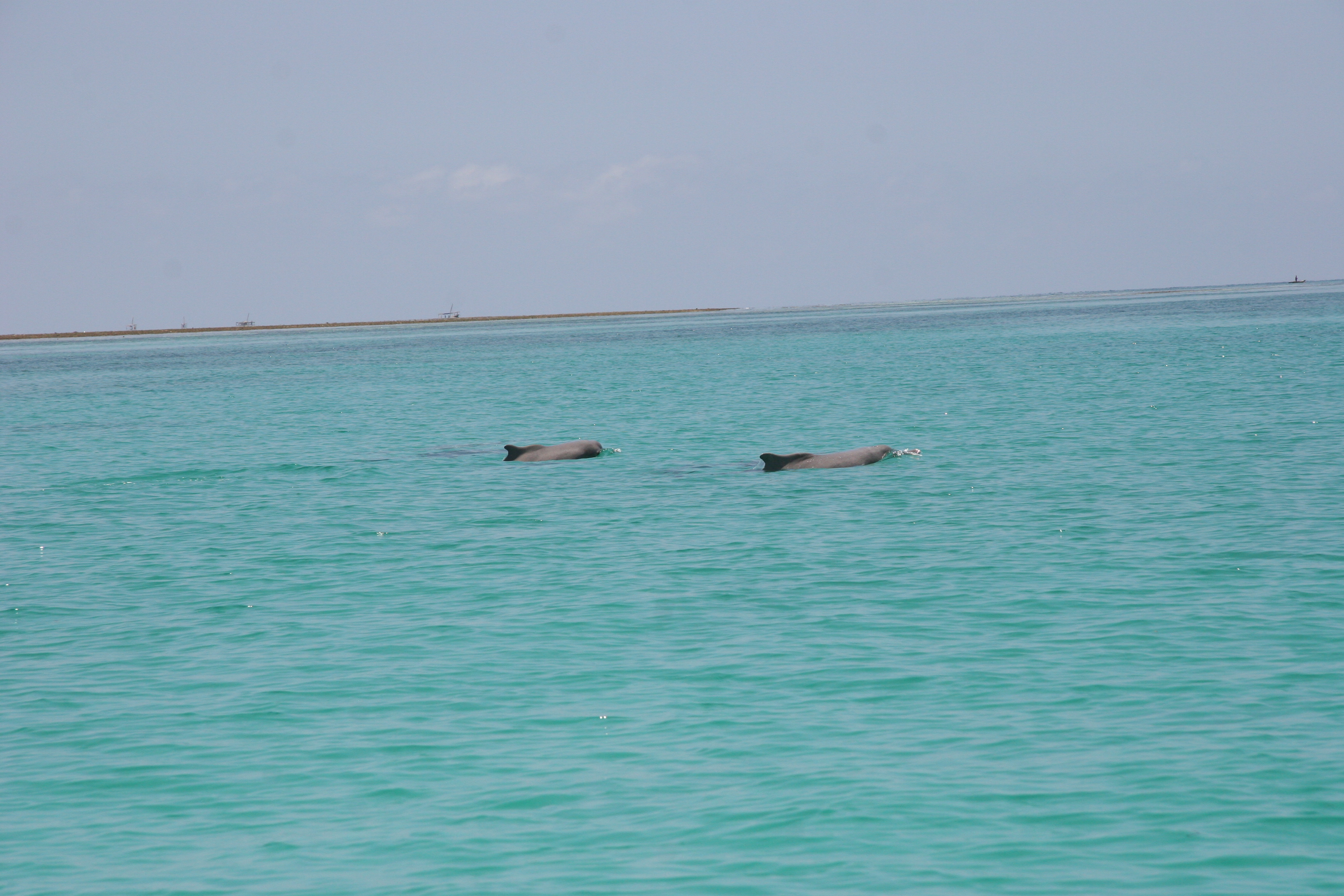
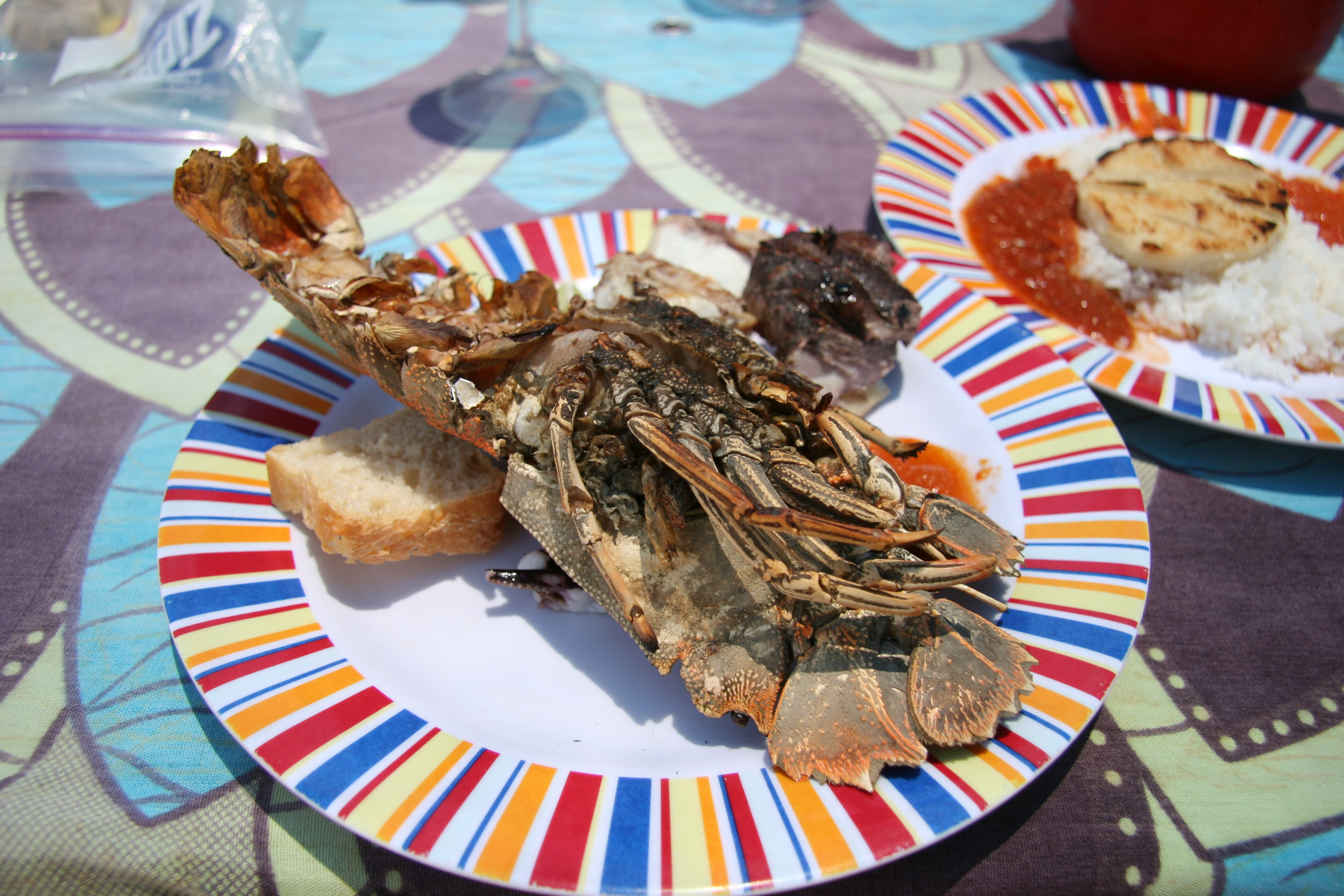
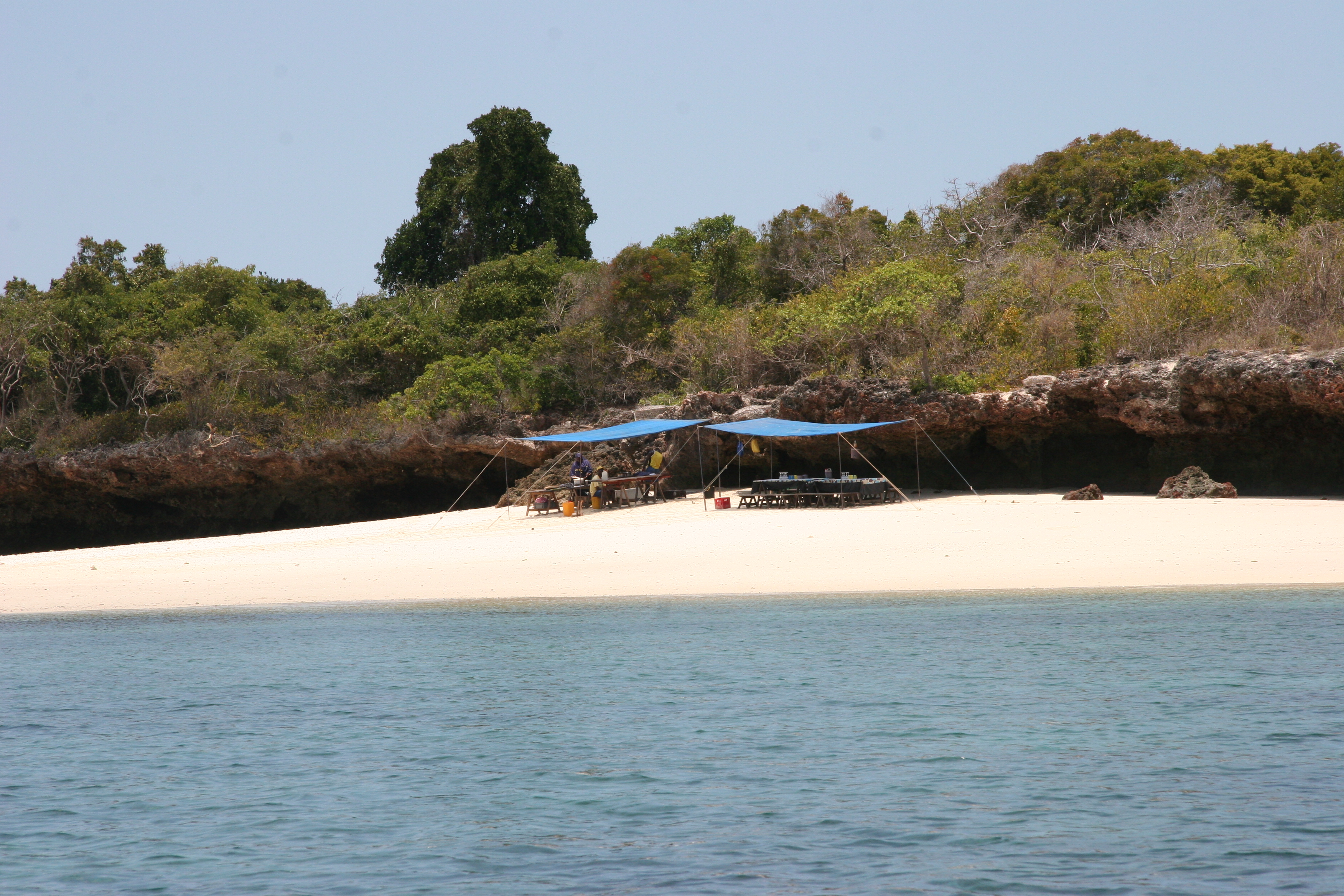
We spent the day yesterday boating and snorkeling off the southern coast of Zanzibar. We were in a dhow (a wooden boat with both a motor and a sail). We arrived at the launch site to find no facilities whatsoever and had to change into our suits in a somewhat secluded area behind some bushes. After boating at a leisurely pace, we stopped to snorkel for a while. The water was warm, the tropical fish plentiful, but the most amazing thing was the coral — so many species and more beautiful than I have ever seen before. We snorkeled for about 40 minutes then headed to a very small, uninhabited island to have lunch. When we climbed aboard after snorkeling, the crew gave each of us a fresh coconut with the top cut off so we could drink the water. It was very refreshing. Two tarp-shaded picnic tables were waiting for us on the beach, along with hibiscus juice, beer, and cooking seafood!! For lunch we had rice with two kinds of sauce, maze polenta cakes, bread, two kinds of fresh fish, calamari, and SLIPPER LOBSTER (all you could eat). For dessert, our guide produced a crate of tropical fruit and walked through each one, showing us how to cut it and eat it. We had jack fruit, mango, sugar cane, watermelon, and passion fruit. After playing in the water for a while, we headed to another snorkeling spot. We saw lots of fish and coral, plus a ray and sea turtle. In places the water was as warm as bath water from the sun. It was a long day and we were exhausted by the time we got back and were picked up for the hour drive back to the resort. We are now waiting for our ride to the airport in Stone Town and the beginning of our very long trip home, beginning with the 12-passenger Link Flight plane (one of four flights). We will be traveling for a total of 36 hours, but it will be well worth it. We look forward to the comforts of home and to seeing our families, friends, and beloved pets! Here we come clean streets, reliable internet, familiar foods, low humidity, decent toilet paper, hot water on demand, air conditioning, fast food and Starbucks, fresh veggies, supermarkets, fluffy towels, traffic that doesn’t resemble a losing game of Frogger, fly-less and bee-less jam, all the ice you want, no malaria threat, etc. etc. etc. I will click my heels together 3 times and repeat, “There’s no place like home.” “There’s no place like home.”…
Coming Home
Kwa Herini
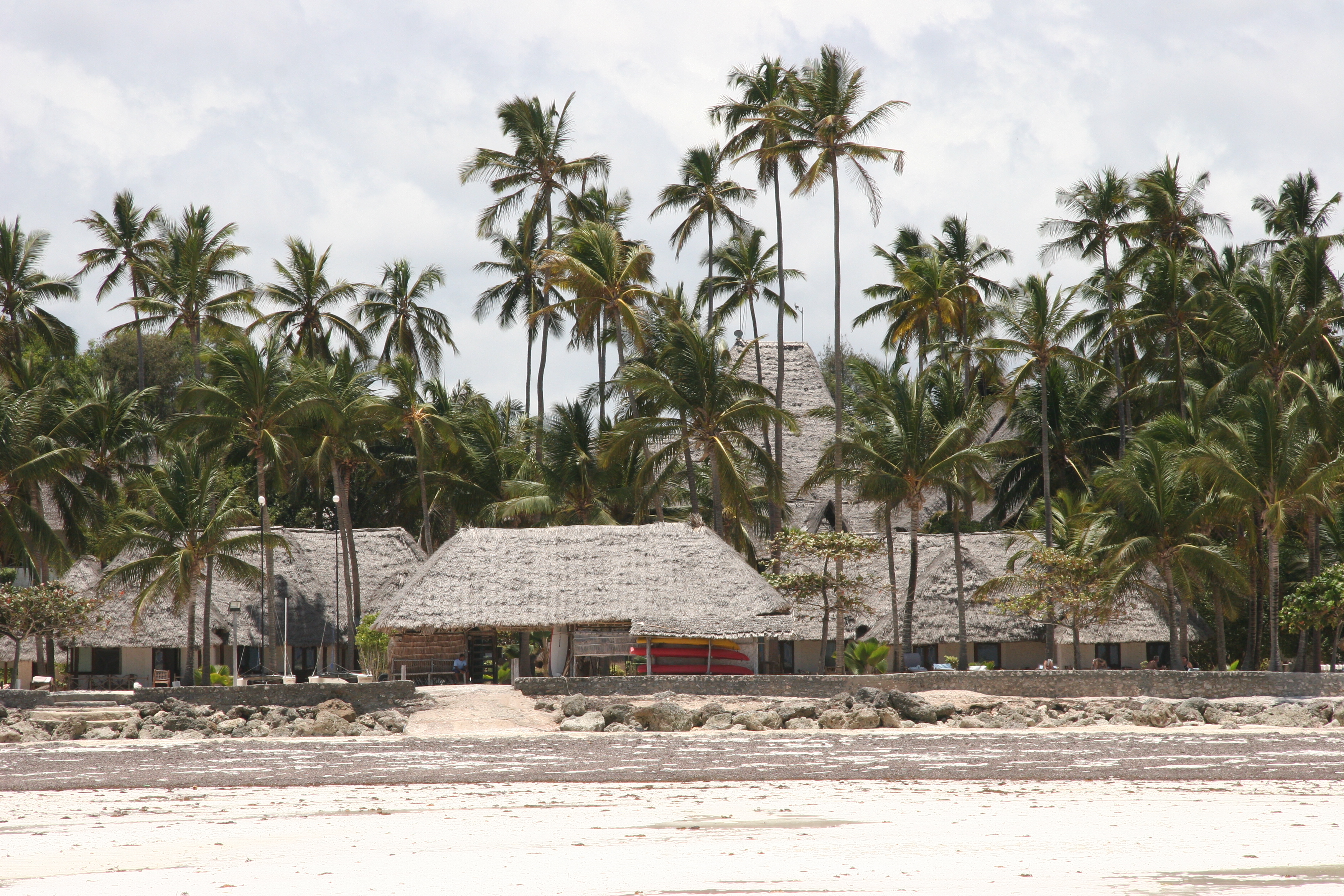
Kwa Herini means goodbye in Swahili. How do you end a journey that has had a profound impact on your attitude and renewed your appreciation for who you are and what you have? We are spending our last three nights at the beach resort Mapenzi on the island of Zanzibar. It is all-inclusive, which means we eat and drink as much as we want and every need is catered to. Karlene and I added on facials, which were relaxing and soothing, while Michael took advantage of the quiet time to read (his version of the ultimate pass time). This resort is the perfect ending to our perfect journey. We are taking advantage of some much-needed down time. When we got here we were warned about the Beach Boys (hoping for a concert, instead finding young African men on the beach offering to be guides for anything and everything). The area around this island is extremely shallow, so when the tide is out, you can walk a mile out before the water is above your knees. When Karlene ventured onto the beach, she was accompanied by two of these young men, who walked her out, at least a half mile, directing her as to the way to go, what to avoid, and local ocean wildlife. They also sang the entire “Hakuna Matata” song from The Lion King for entertainment. They, of course, wanted to be paid for the unsolicited service; and Karlene (against all Resort advice) was willing to pay them, but she made them bring her all the way back before giving them $2. When she realized she had left her shoes on a high spot some distance back, one of the young men produced them, having silently picked them up for her, noticing when she walked away without them, announcing “No problem”. He got another dollar. We have spent one entire day doing “very much nothing” as the Gallery Tour representative phrased it when we said we did not want to schedule anything.
Tomorrow we will go on one last excursion, an all-day boat, walk, snorkle trip.
Until then, I think some acknowledgements are in order:
Thank you to my sister, Karlene — without your encouragement, Michael and I would still just be talking about going to Africa “someday” and without your careful research, who knows what kind of experience we would have had. Thank you to Masha, our driver/guide for 7 days, for your incredible knowledge, sense of humor, patience and command of the English language. Thank you, Benique and Meredith for your great company and for appreciating our sarcastic senses of humor (some might find us silly or annoying — what’s that about??). Thank you to my husband, the best traveling companion EVER, for putting up with me, waiting on me, and for focusing on the good stuff and making fun of the bad (instead of copping an attitude). Thank you, Africa Adventure Company, for selecting all the right places to visit,
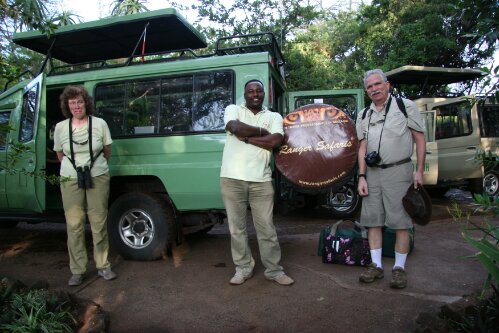
for providing invaluable information every step of the way, for having someone to meet us at every destination, and for answering all our questions. Thank you, Ranger Safaris for employing Masha, we hope you pay him a lot, cause he is worth it! Thank you to the people of Tanzania for welcomimg us to your country and for learning English so you could communicate with us (something else Americans take for granted). Thank you, Gallery Tours for making our last three days such a great ending. Thank you to all the staff at the lodges where we stayed — your customer service is something to behold.
The Maasai Village
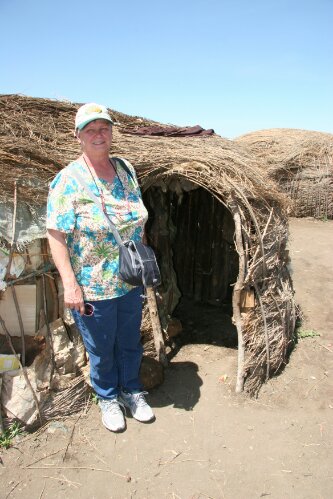
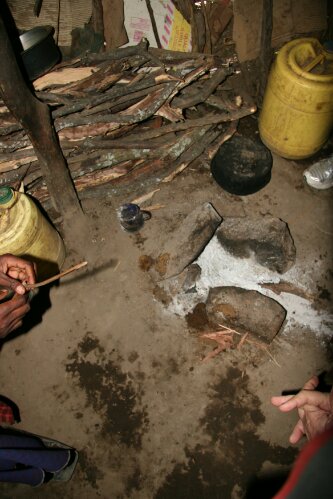
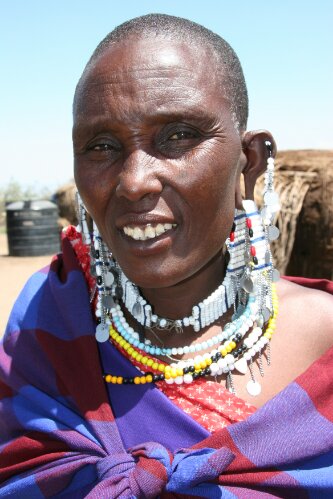
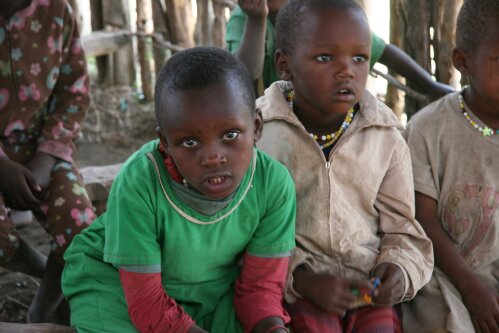
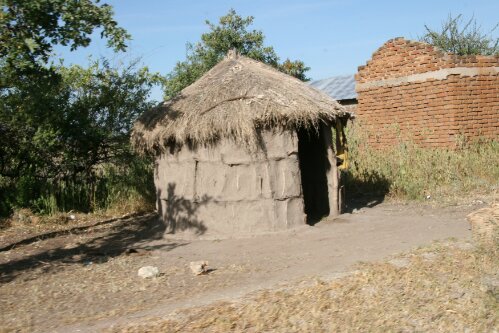
It is believed that the Maasai people originally came from Egypt or Sudan approximately 200 years ago, traveling into Northern Africa looking for water and greener pastures for their cows. They are the only tribe that has maintained their original culture and customs, living in small villages with multiple wives and a specified hierarchy that includes a chief. There is no electricity, plumbing, or running water and lodging consists of very small huts made of sticks, straw and any other material that is handy. Think of a walk-in closet that is 5 feet tall. They cook on small fires in the center of their hut in steel pots that look 20 years old. We wondered how they tolerated the smoke from the fires, which must completely fill the small area whenever a fire is lit. Michael observed that the walls were not solid, allowing some smoke to escape, but with no chimney, it had to be suffocating at times. Their beds were off the floor (on sticks) made from tree branches covered in cow hide, flattened cardboard boxes or a combination of the two; with the adult bed being the size of a small twin bed and the chidren’s bed even smaller. A Maasai man can marry up to 10 wives; however he has fewer children these days as the government now mandates schooling for ALL African children. Although public school is free, it is expensive to clothe the children and transport them the many miles into town. Having said that, it is painfully obvious that this law is often not enforced, as there are school aged children tending herds and milling about during school hours. Masha indicated that educating the Maasai people is beginning to make some positive changes. For example, castrating women has become rare. Boys are still castrated during ceremonies and they are required to wear white face paint for three months, after which a huge celebration takes place welcoming them into manhood. This ritual usually takes place between 12-15 years of age, but can occur as early as 8. They used to go out and kill a lion at the end of the three-month period to prove their manhood; however, such killing is no longer allowed. Now they wear red head covers and dreadlocks, which are meant to resemble the lion’s mane. The Maasai own the land where tanzanite is mined so they are a wealthy tribe. Basd on what we saw, it is a mystery where all the money goes. The village we visited had a small, one room schoolhouse for the 5-6 year olds. The children sang songs to us, including the ABC song. They learn their ABCs and how to count to 100 in English. They are very sweet, but are not clean and wear clothing that has clearly been donated (we saw a child with a sweatshirt on and one with what looked like a pair of pajamas, T-shirts, etc.). They do not wear underwear, we presume to make elimination easier. They sat in the dirt (we did not see one chair or other piece of furniture, except the “beds”) or on Mom’s hip. They had no reaction to the flies that landed on their eyes, noses, or mouths. The men get one hut for each wife and spends time with them in those huts. They eat mostly beef and goat, and drink milk and blood. They eat very little fruit or vegetables. They are very tall and thin and their teeth are in terrible shape or missing altogether. They walk miles to other villages and we would see them walking across the plain or in the hills, in their brightly colored ground-length robes. They are partial to bright red. When they want to move to another village (which happens often), they leave everything taking only the clothes on their back and their walking stick. When they arrive at the new village, they are welcomed and given a hut to live in. The hut they left is available for another traveler to occupy.
Jambo
Jambo means hello in Swahili. It is the first word one learns upon arriving. Our tour group was very small. In addition to Masha, our Driver/Guide, my sister Karlene, Michael and I, we were joined by two soon-to-be friends — Meredith from Massachusetts and Benique from Australia (two lovely women traveling alone). From the first introductions, we hit it off and were joking , laughing at silly things and making fun of each other’s accents and euphemisms. All week we observed other groups that seemed uptight and sour-faced. All five of us agreed that we were so lucky to have been grouped together. Great companions equals great times.
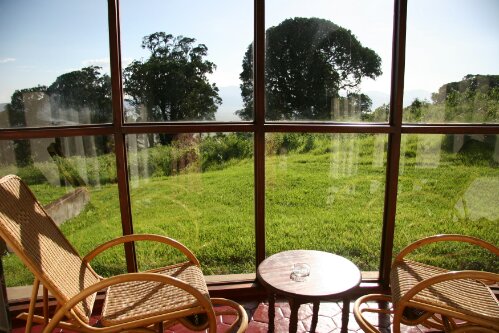
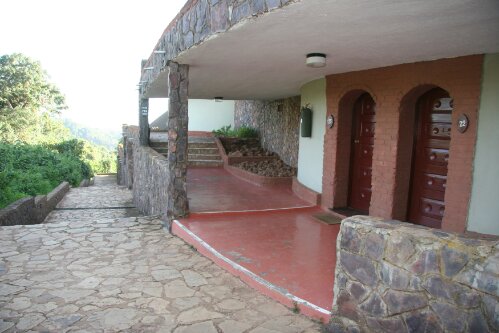
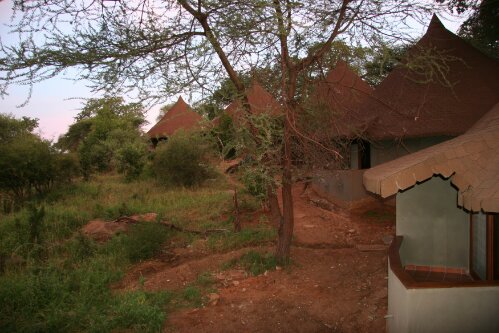
Our accommodations on this trip have been amazing. Each lodge seemed even nicer than the one before (well, until we got to Stone Town in Zanzibar, but that’s another story). The settings have been a coffee plantation (Arusha Coffee Lodge), at the edge of the plain (Serengeti), deep in the jungle (Ngorongoro), overlooking Lake Manyara, and on the beach (Mapenzi Beach, Zanzibar). The staff have been incredibly helpful and they give new meaning to the term “customer service”. At times, their English has not been perfect, leading to some pretty funny conversations, but as Michael pointed out, “Their English is a lot better than our Swahili”. Most recent, the tour representative was going over our itinerary and said we would need to pick up our “toles” the night before we went on our snorkeling trip. All three of us (Karlene, Michael, and I) were completely puzzled and kept making bad guesses as to what he was saying — “tours?”, “tools?”, “school?” Karlene finally said “towels?” His face lit up! Yes, towels.
We all agreed that whoever trains them should come to the US and teach customer service classes. No matter what we asked, the response was “no problem”.
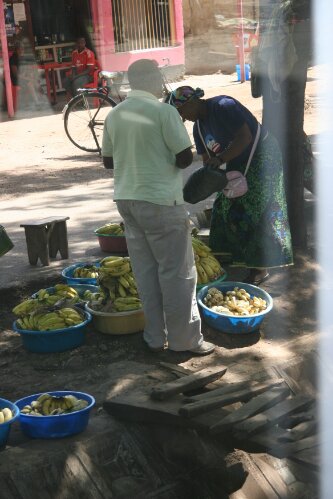
Our trip has involved a lot of driving, both game drives and transfers from lodge to lodge. Tanzania is huge and we only covered the upper right portion. But even when transferring from one place to the next, it has been fascinating to see the different towns, cultures, and living conditions. Most of the people in this area of Africa live in small one room shacks or mud-roofed huts, with no running water and no plumbing. While there are cars in the towns, most walk everywhere they go, often pulling large carts or carrying goods on their heads. Motorbikes are very popular and can be seen with one driver and one or more passengers (often small children). This is a beautiful country, but the living conditions for most are dismal. Bicycles are also a common sight. We passed a man on one yesterday and he had two small children on the back sitting in what looked like a large whicker basket. Very young children (5 or 6?) can be seen tending herds of goats or cows at the side of the road and miles from any adults or assistance. They carry drinking water in old jugs that were used for something else originally (like a Costco size oil jug). Interestingly enough, in towns (and even sometimes out of towns) many, many people have cell phones. It is not unusual to see a man with tattered, old clothes and broken sandals with a cell phone to his ear. It is our guess that cell phone towers are easier to build than a land line infrastructure. They also have no irrigation, which in my opinion is the key to creating an industrialized country. Bananas appear to be their best crop and we have seen vendors on the side of the road with hundreds of bananas for sale — all kinds — yellow, red, 3-inch to 7 or 8 inch. I have always loved the US, with all its flaws and blemishes; but never more than right now.
Just Pics!
We are finally at a location where internet access is decent — taking advantage and uploading some new pics. Enjoy!
Not For The Faint of Heart
Coming to a third world country from an industrialized, technologically advanced country like the US is a little like Alice in Wonderland falling down the rabbit hole. Everything seems strangely out of whack. Very young children tending herds of goats and cattle by the side of the road, people sitting on porches and just milling about mid-day when they should be at work, half built brick houses next to occupied straw covered mud huts*, bee hives hung from tree branches, large carts being pulled down the road by people, children running around with no underwear on, and people with goats boarding buses. It is helpful if you plan to visit this country to suspend judgment and irrational fear, so that you can savor the experience. That being said, there are challenges to being in this country for those of us who are spoiled and generally indulged (i.e. Americans). Among them:
Bad Hair — at the end of our first game drive (after several hours of riding in the Land Cruiser with the windows open due to no air conditioning in the vehicles, of course), I started to comb my hair only to discover that I had the early beginnings of a head full of dreadlocks. It was at that point that I abandoned all hope of looking respectable and realized the best I could hope for was getting the comb through my hair at the end of each day. In fact, I had to wait until I was in the shower with my hair slathered with conditioner, before I combed it.
Ticks — We read warnings of flies and mosquitoes carrying diseases, including the dreaded malaria (for which we have taken meds each day) but nothing of ticks. So when I noticed a spot of what appeared to be a speck of mud on my ankle, I paid no attention to it. Later, I tried to brush it off and it didn’t budge. I reached down with my hand and with horror realized I had a tick! I pulled it off and yelled for Michael to kill it. Needless to say, I was distraught for a few hours, thinking I would surely contract some sort of
spotted tick hemorragic fever. It wasn’t until Masha assured me that ticks in Africa cause no problems that I stopped worrying (sort of).
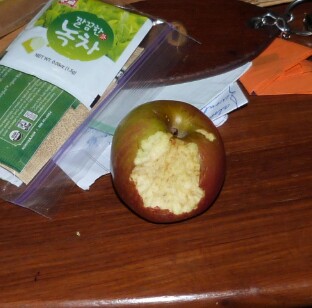
Vermin — We saved a couple of apples from one of our box lunches and took them back to our room in case we wanted a snack later. We went to bed and the next morning, Michael asked, “Did you eat some of that apple?” “No, I did not!” was my response. Well, something chewed on it during the night. One of the apples was about one quarter gone and had little teeth marks in it. The other apple was on the floor (our guess is that the culprit ate until full, then tried to take the second one with).
Rough Roads — Approximately 90% of our travel has been on very rough, unpaved roads — I’m talking off-road-willis-jeep rough. The paved roads have speed bumps every 200 meters near towns or anywhere people, goats or cows might pass, so even the paved roads are a bit rough. I have bruises all over my ams, legs and hips from being bounced around in the Land Cruiser. At one point, we were traveling along a detour or “diversion” (marked by tree branches and rocks) when Masha unexpectedly hit a huge hole. Karlene (sans seatbelt) flew up in the air, hitting her head on the metal bar on the ceiling, almost knocking her out! Masha was very apologetic, while the rest of us tried really hard not to laugh.
Tse Tse Flies — In spite of the fact that Michael and I followed all the instructions provided in the brochures (wear light colored clothes, long pants, lots of insect repellant with DEET) the tse tse flies bit us every time we stopped the Land Cruiser to take pictures. Fortunately, this was mostly the case in the dryer, more arid locations, which was the exception, not the rule. Nonetheless, their bites are painful. They are also very aggressive, dive bombing into your eyes, nose and mouth, if you are not careful.
Communication — Internet access is intermittent, at best. Cell phones generally don’t work. Posting this blog has been hit and miss and trying to include pictures, even worse. One night, it took 40 minutes to upload one picture. We were finally successful, but by then it was late and we were too tired to try more.
Stone Town, Zanzibar — After the safari portion of our trip sadly concluded, we headed to the small island of Zanzibar, off the Eastern coast of Tanzania. We spent one night in Stone Town. This is a dirty, stifling humid, hot, mostly Muslim town with vendors who aggressively peddle their wares on the street as you try to walk around. Never Go There!! Michael summed it up best with this statement “They are 11 hours ahead and 1,000 years behind.” Nuff Said.
Remember this blog is about the challenges of being in Africa and in spite of how it might sound, does not negate the incredible experience we have had here.
*There are no mortgages in Africa, one must pay cash for a house or building material. Consequently, it can take many years to finish a house. A man will work for a while, buy as many bricks as he can, build until the bricks are gone, then work until he has enough money to buy more bricks, and so on and so on.
The Big Five


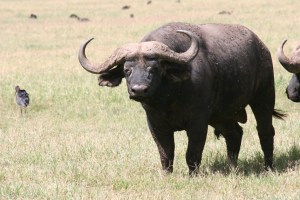
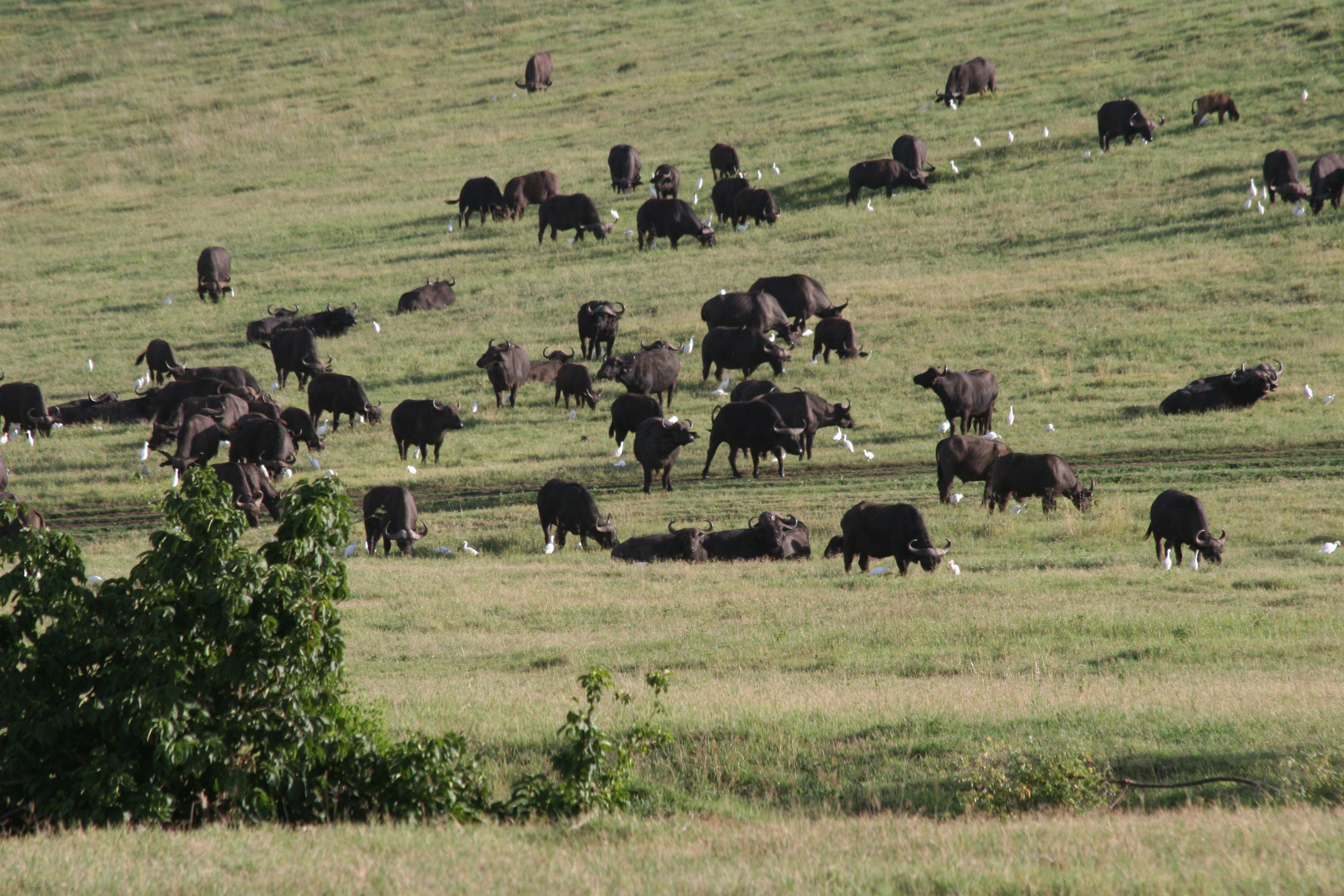
At the top of the list for most tourists visiting Africa is to get a look at what is referred to as “the Big Five” — Lions, Elephants, Rhinoceros, Buffalo, and Leopards. This term was coined from game hunting; they are the most dangerous of the game animals. The first of the big five we saw was a lone elephant in Lake Manyara Park (Thursday, February 21st). He was back, quite a ways, off the road and mostly hidden by the trees. Nonetheless, we were all so excited to spot him and we took many pictures. Likewise with the large group of Cape Buffalo that we saw some distan
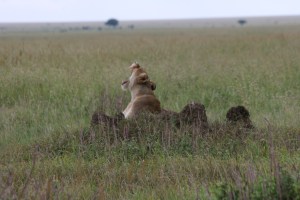
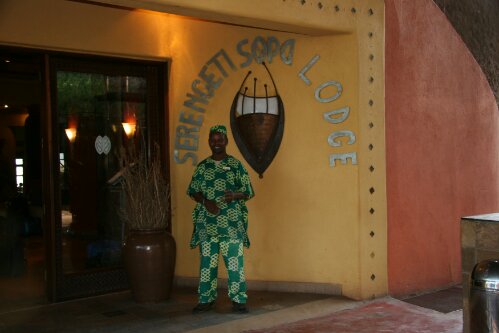
ce away at the same park. Then on the 6 hour drive to the Serengeti Sopa Lodge, we found the lioness behind the rock (picture provided in earlier story). This put our count to 3 out of 5! Although excited to have made such progress, we really wanted to see a male lion, with a big mane and all that, so we requested that Masha find us one. Fortunately, he was very good natured and asked us what we wanted to see and said he would do his best to find it.
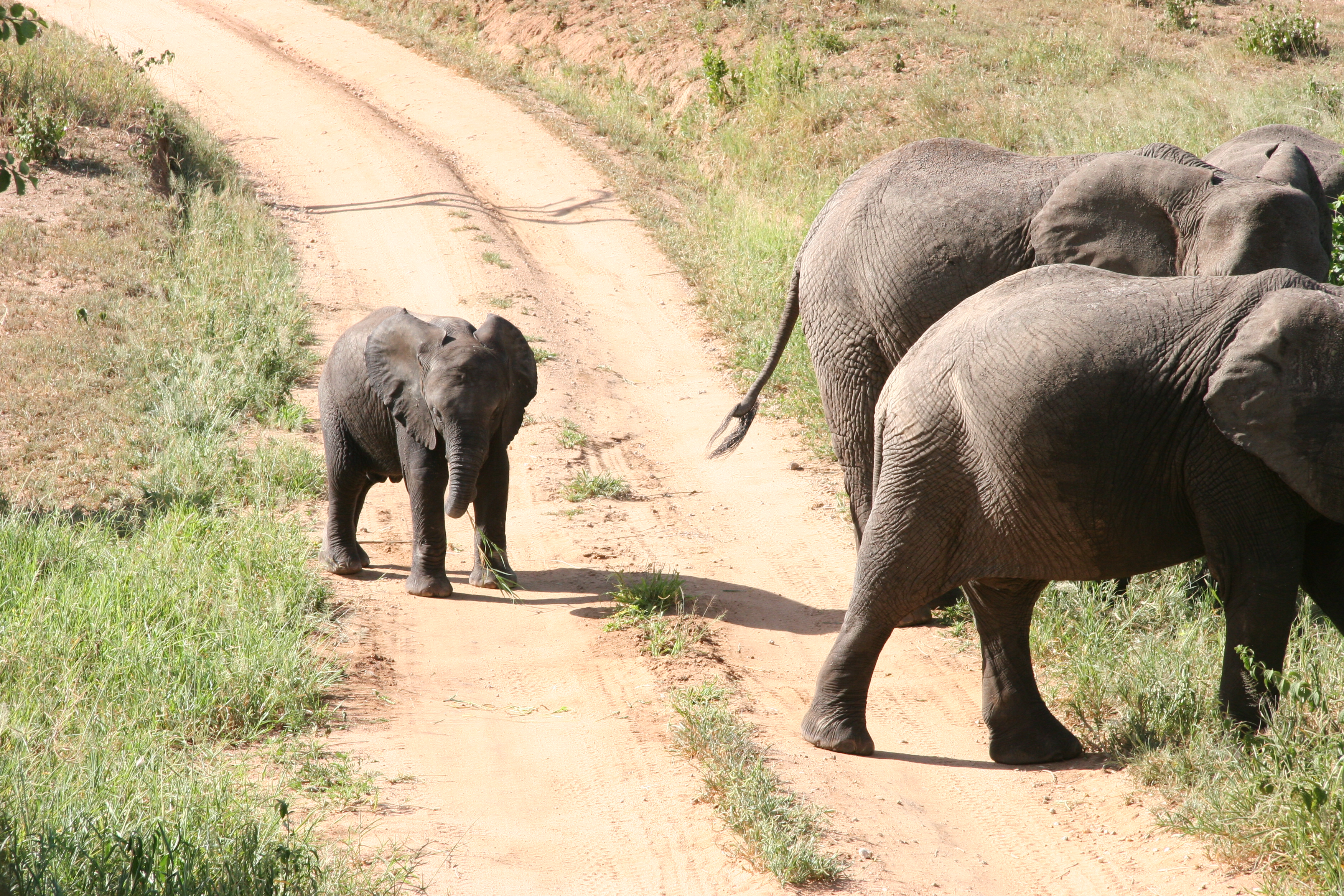
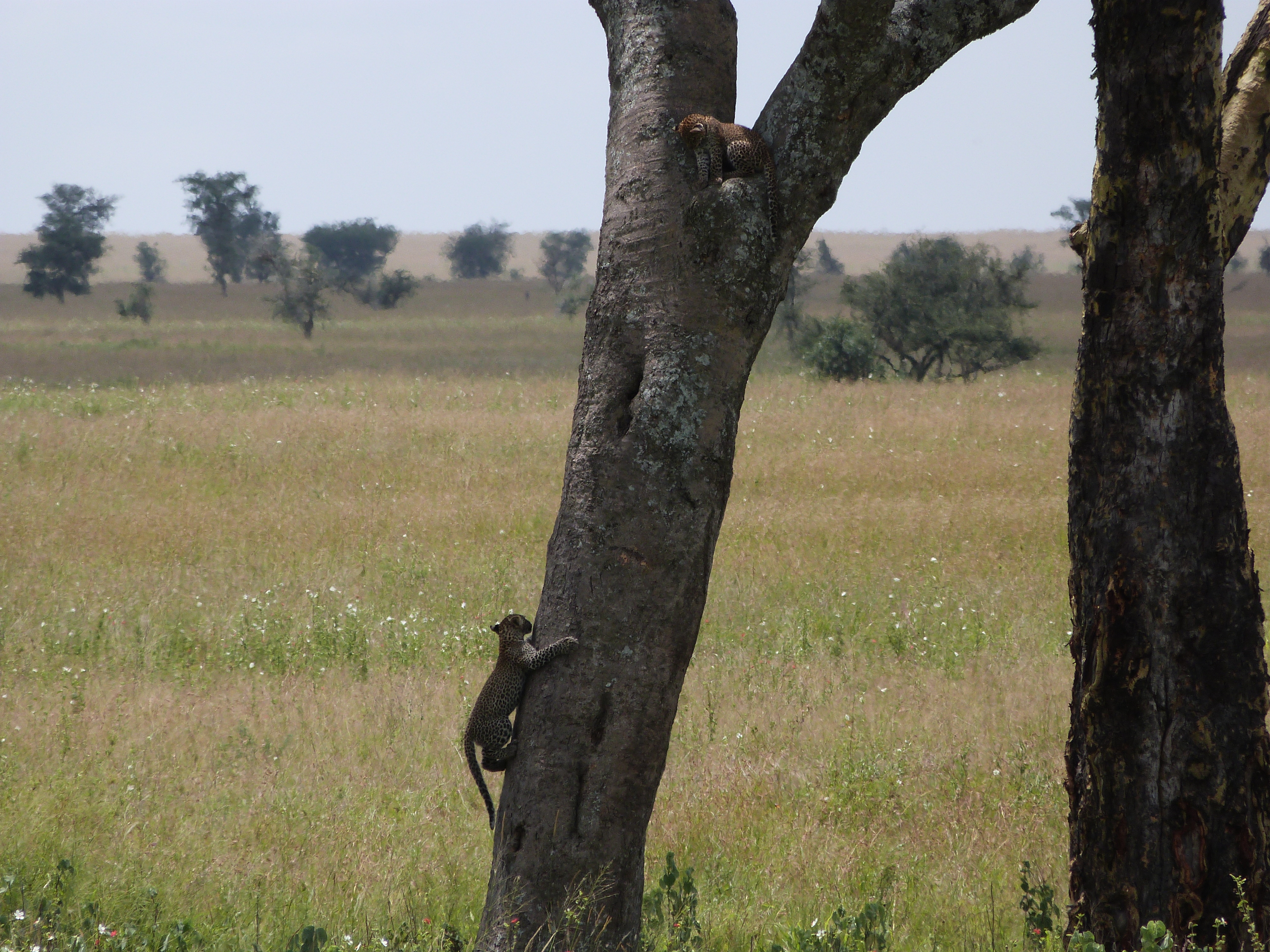
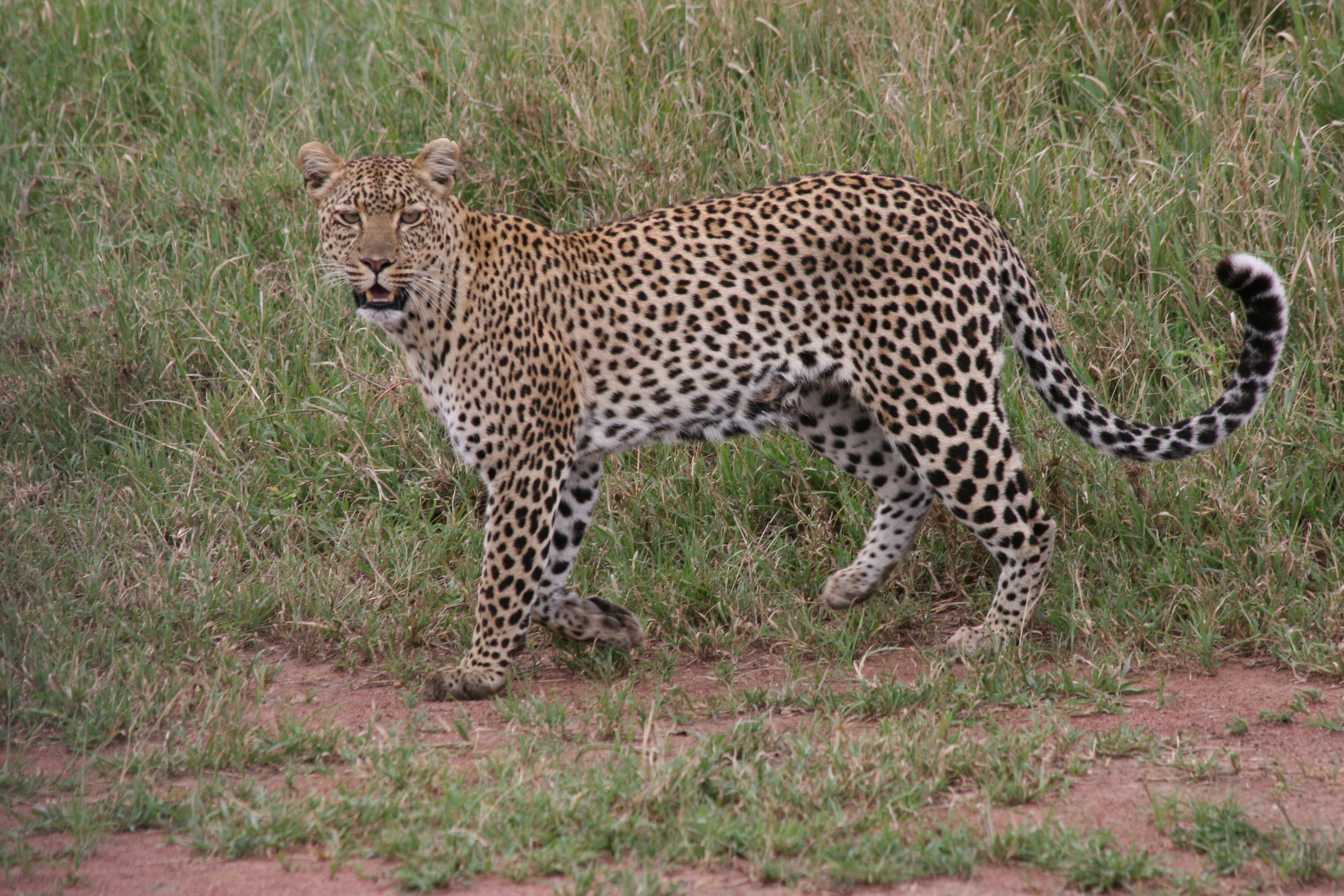
On Friday we saw more elephants and took more pictures — you just can’t have enough elephant pictures! Then, Masha spotted two baby leopard in the crook of a tree not too far from the road. We stopped to take pictures, watching as one of the babies ventured down the tree onto the ground. It was interesting to see him start down head first, quickly realizing that was not going to end well, he turned around and went down feet first, with great success! We wondered where Mom was, as we could not see her anywhere. We assumed she was in the tall grass around the tree, so we moved on down the road. We soon happened upon Mom quite a ways down in the grass. We couldn’t get very good pictures of her, but took many shots anyway of her walking through the grass. We continued on our drive looking for other animals, then spotted Mom again coming across the grass, straight toward us on a road parallel to the one where we first saw her. As luck would have it, this beautiful creature walked slowly and deliberately directly in front of our Land Cruiser. In fact, she stopped and turned to look directly at us, before sauntering on. Woohoo!!! Four down, one to go!
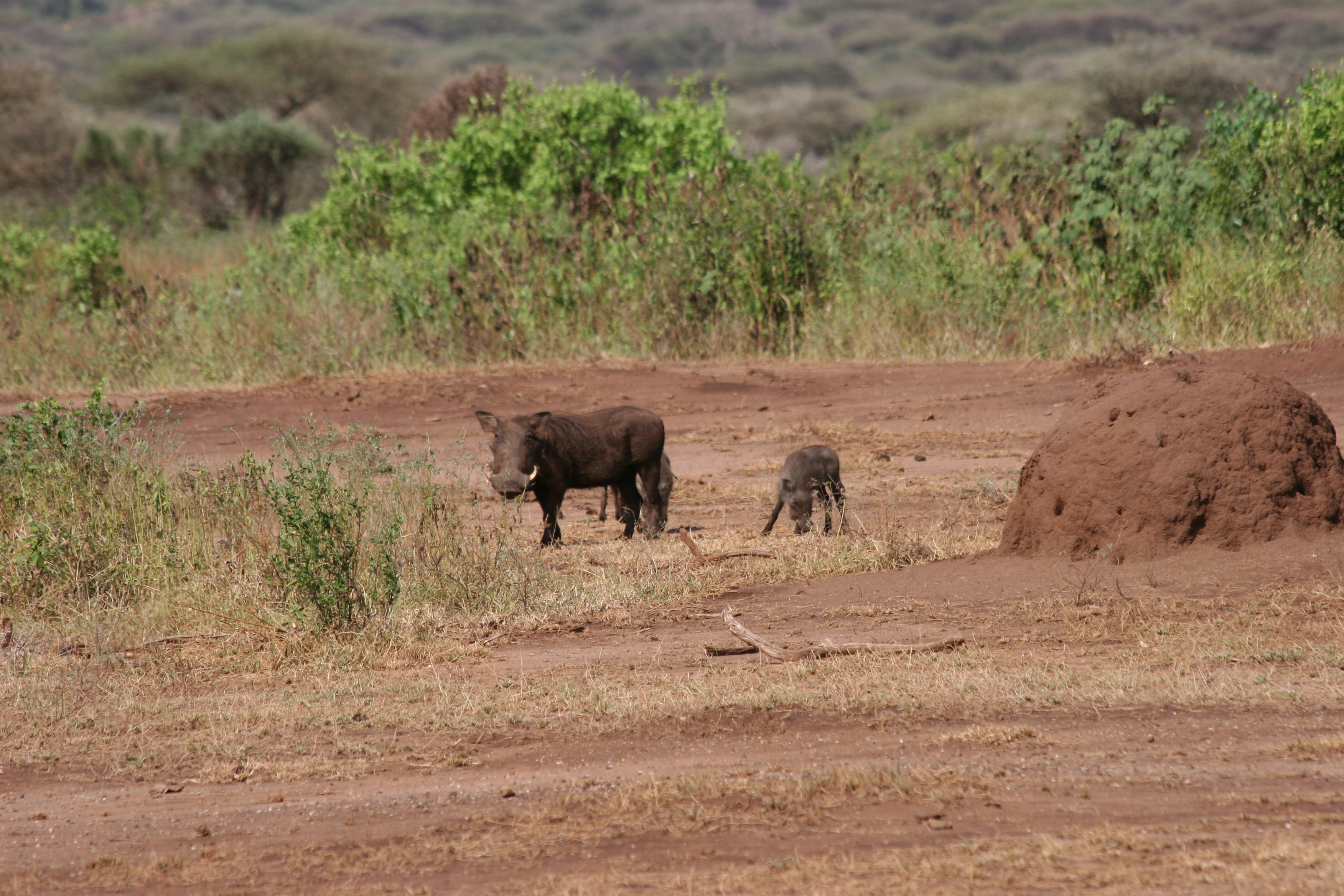
Masha asked what else we wanted to see and we said we really wanted to see a Rhino and we still wanted to see a big male lion. He said no guarantees, but that he would try. We headed out on our game drive, sighting many wildebeests, gazelles, zebras, beautiful birds (and a few ugly ones), warthogs, etc. etc. Then, we heard Masha say the magic words, “I think that’s a rhino out there!” The animal was a long way off, but sure enough, with our zoom lenses, we could see the distinct horn on his nose. He was a white rhino and was huge. Five out of Five, baby! That’s what I’m talking about! Amazing as that was, we traveled a little further on and spotted another – not one, not two, but FIVE rhinos, off in the distance.
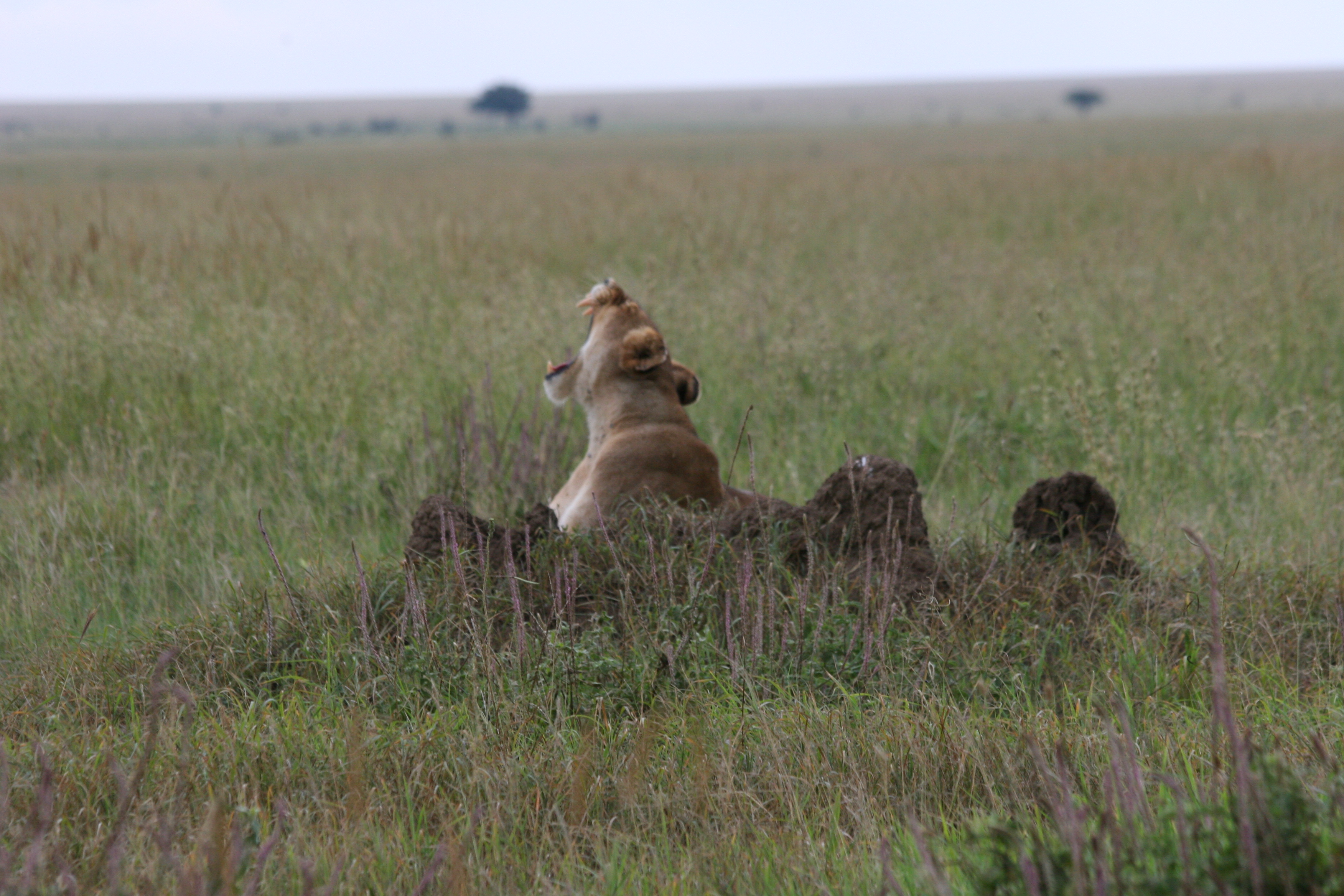
Masha tells us this was the best rhino sighting in 5 years or so. Awesome, but is everybody happy? Well, not quite; we would still like to see that King of the Jungle. So, we continue on our drive, and as we come around the side of a rock quarry, the other American tourist, Meredith said, “Is that a lion’s mane?” Sure enough, there, not far off the road was a male lion with his head barely showing above the grass! What a terrific spotter. As we watched the lion, we kept saying things like, “Don’t just lay there, get up so we can see you” and he would do it. Then we noticed a female next to him as well as another big male down in the quarry, sleeping on a rock ledge. According to Masha, a pride of several females can have two male lions. While we only saw one female and two males, there had to be several more females and numerous cubs nearby. These lions were very close to us, no more than 10 feet away at one point. Masha assured us that all the big five have very distinctive behavior to indicate when they are aggitated or becoming aggressive. The lions we were watching were relaxed and their shoulders were back, most of the time either lying down or walking with their backs to us — clearly not a danger. It really pays to have a knowledgeable guide with you!! LOVING THIS TRIP…
Elephant Graveyard
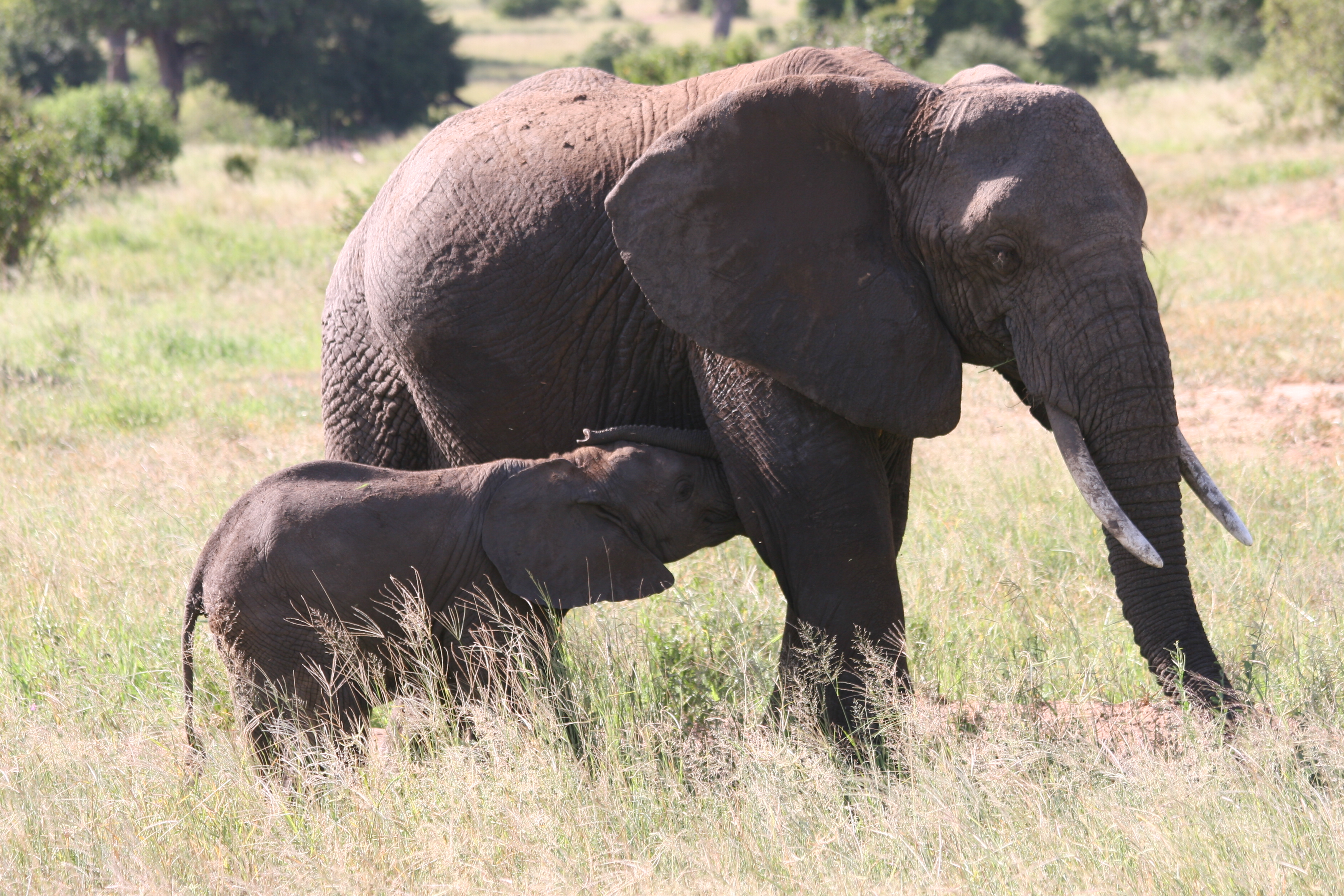
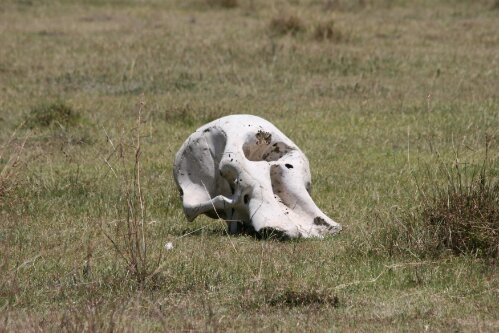
With a great Driver/Guide like Masha, we learn many interesting facts that even Michael didn’t know. One of the better stories Masha told was about Elephant Graveyards in response to the question, “Do elephants really all go to one place to die?” The reality is that elephants are born with 6 pair of molars and can live into their 80’s. They lose sets of molars throughout their lives and if they live long enough, after they lose their last set of molars, they can no longer chew hard stuff. At that point, they walk to the marsh in order to have soft grass to eat. As they gather in this area, they stay until they die — creating what becomes the Elephant Graveyard.
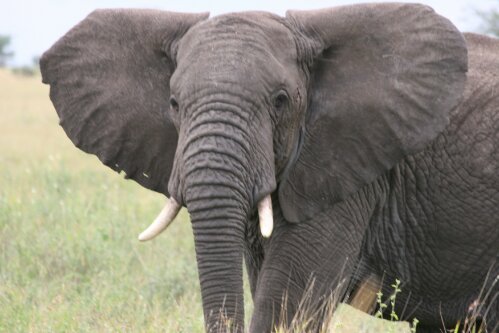
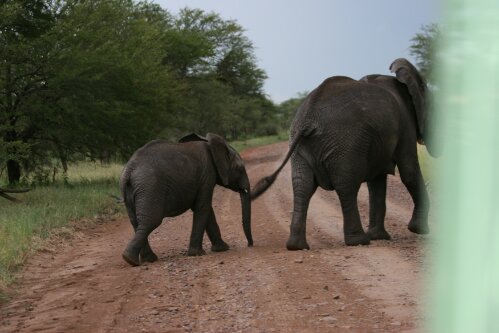
Seeing these huge creatures up close and wandering free has been an incredible experience (mostly). We’ve seen a number of lone males walking toward some destination. They do not just wander around, as Karlene suggested at one point. Masha says they are always headed somewhere — in search of food, a lady friend, or to water. You can tell if they are males or females based on whether there is a baby or a group (females) or alone (males). We came upon a young male that appeared to be sick. His ribs showed and his hips seemed out of alignment. He was very close to the road and we stopped to take pictures. He turned and made aggressive gestures, so Masha moved a little. As he walked on, we again attempted to get close to him (he was 30-40 feet from us). We all had our heads poked up through the roof taking pictures when he suddenly snorted and turned toward us, coming straight at the Land Cruiser!!! I got my picture, then quickly sat, slamming the window shut. Masha immediately drove us to a safe distance. We were all pumped with adrenaline and exhilarated from the experience when Masha asked from the driver’s seat, “Did someone really shut a window?” When I responded sheepishly, “Yes, I did”, he broke out in laughter, as did the rest of us. The absurdness of thinking I could keep this giant creature out of a vehicle that was smaller than he simply by closing the window, did not occur to me. Pure
instinct had taken hold of me. Needless to say, I was the butt of many good-natured jokes for the next couple of days.
Wildebeests As Far As the Eye Can See!
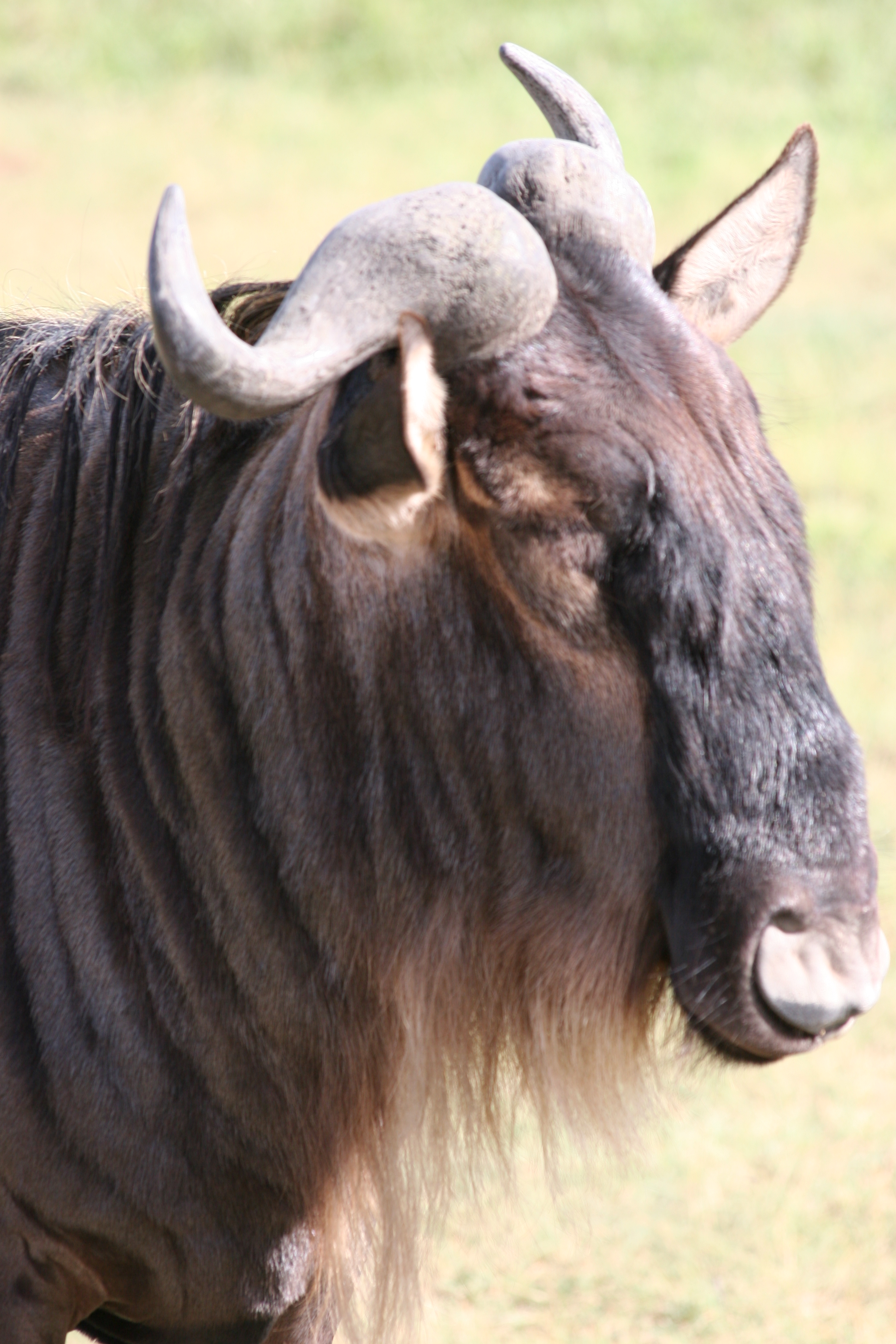
Wildebeests are truly ugly animals — they resemble some sort of prehistoric bull. Although we were not in Tanzania during the official migration, Masha pointed out to us that Wildebeests are always migrating — constantly moving from area to area.
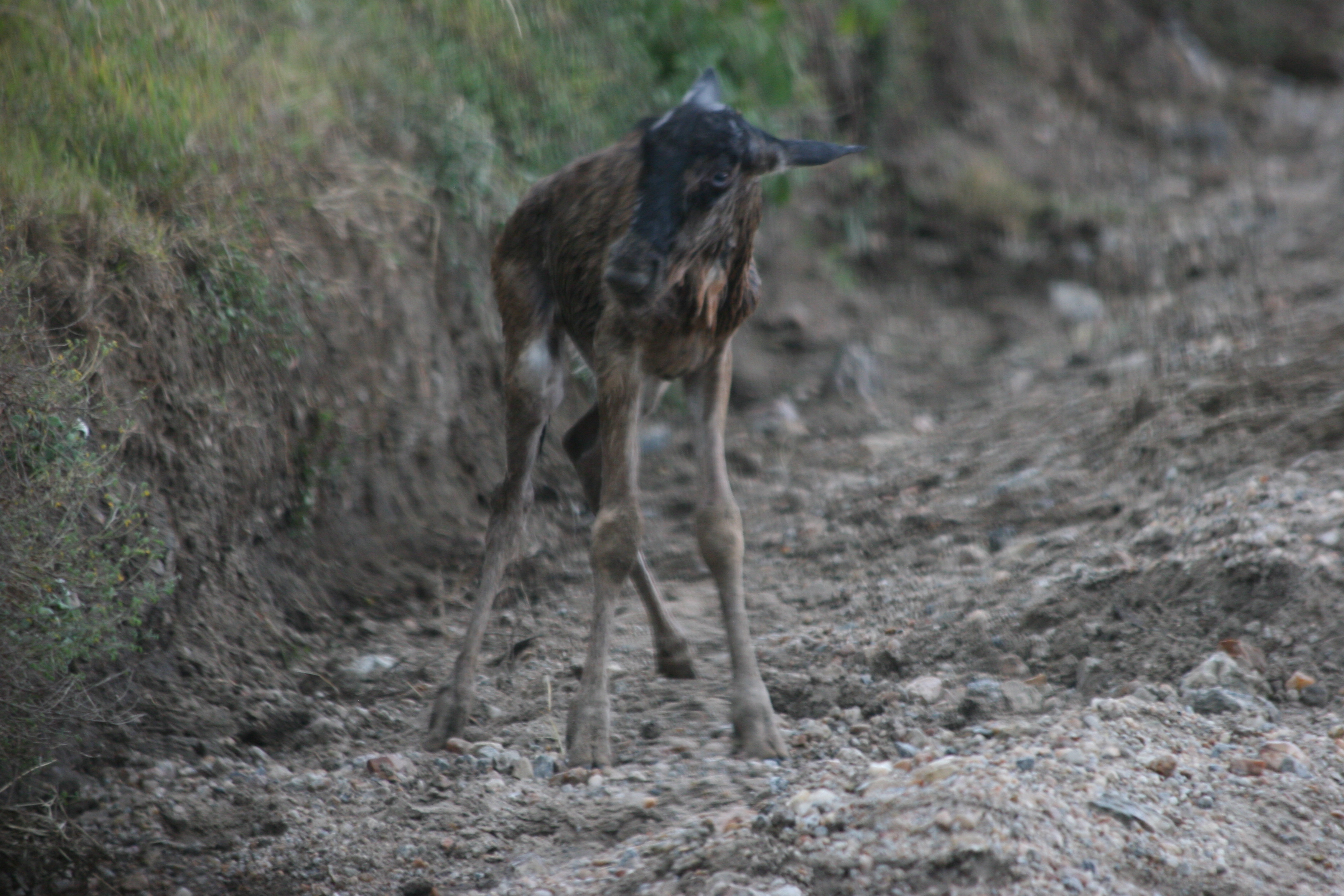
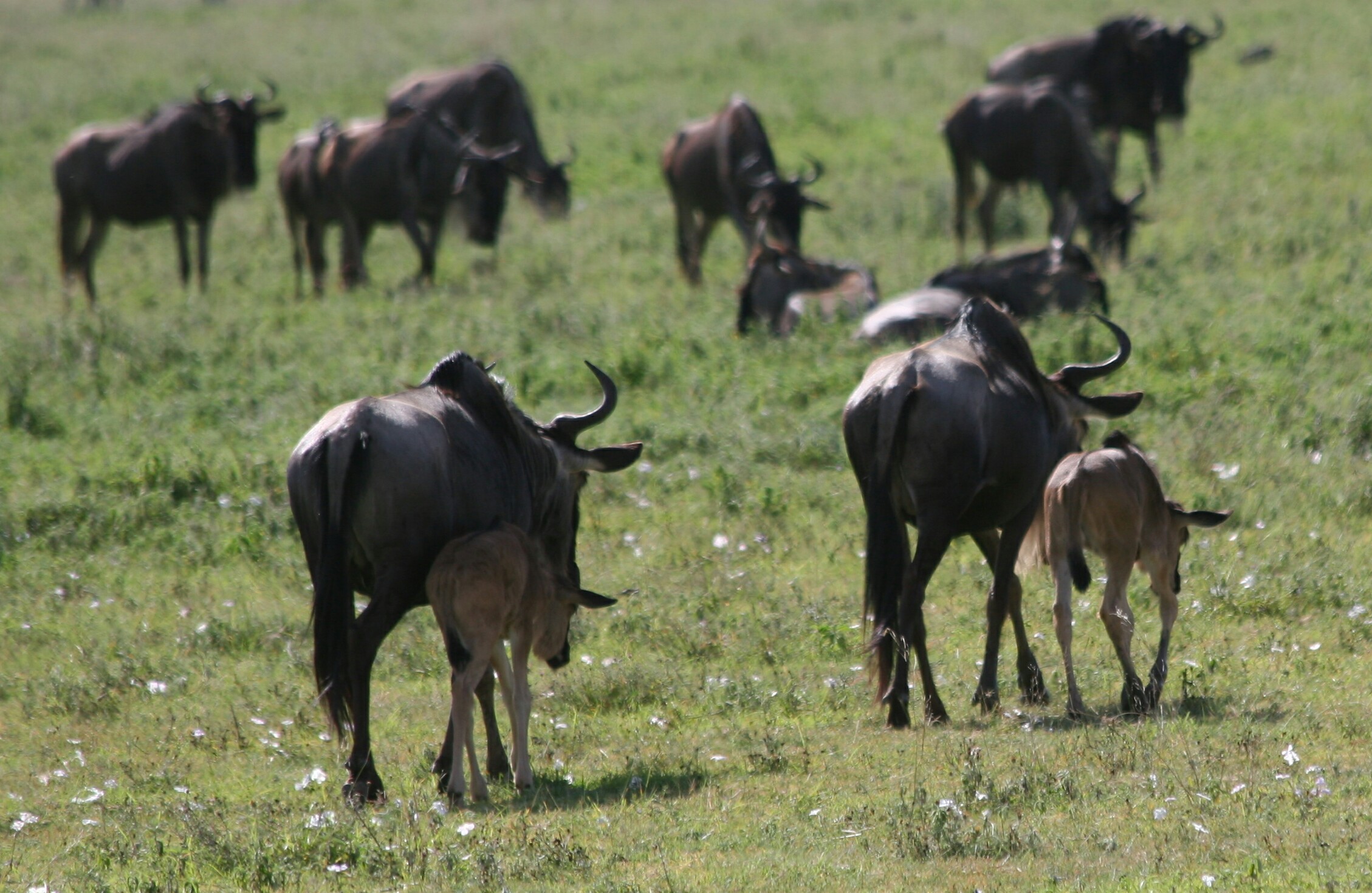
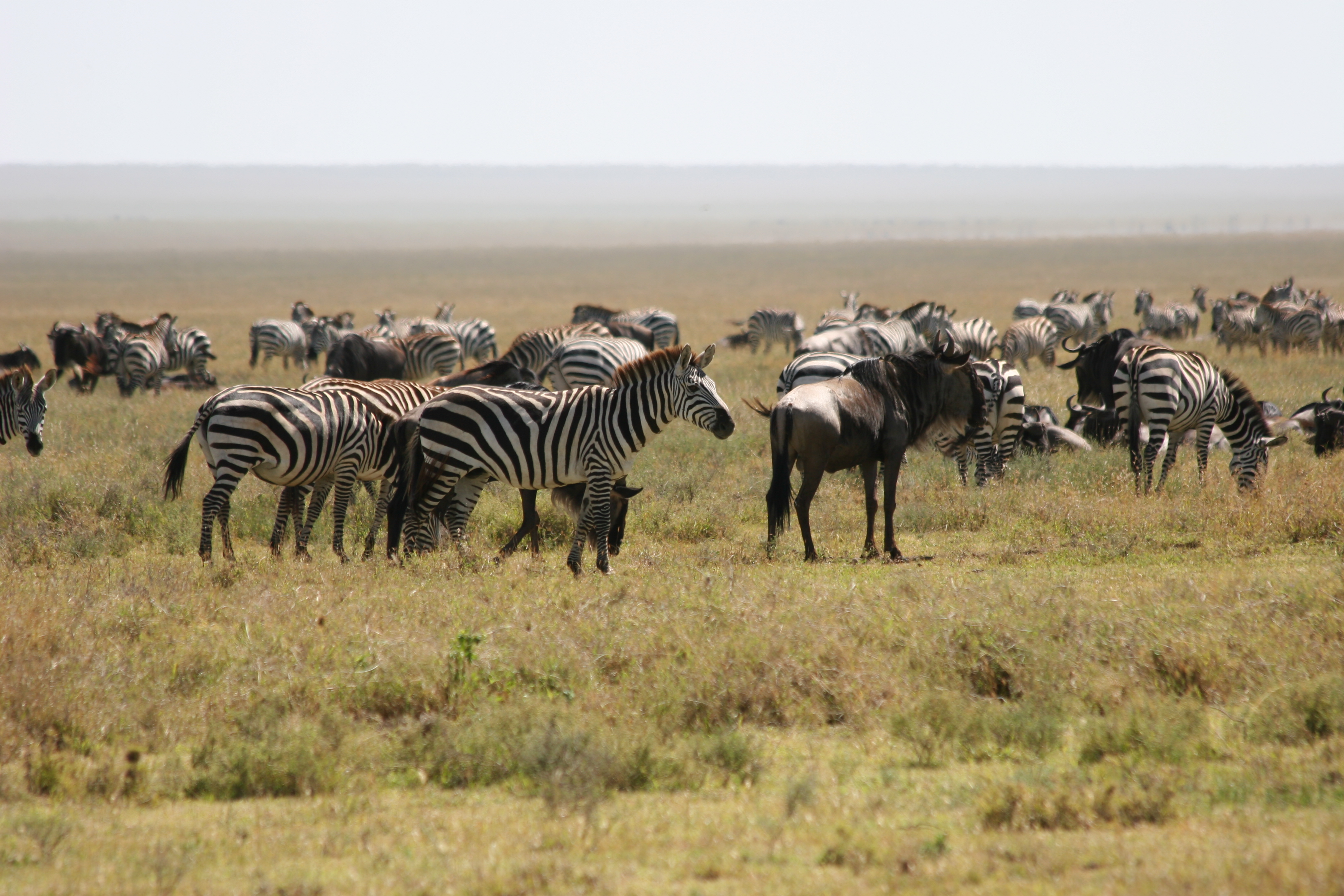
The sight of thousands (no exaggeration) of wildebeests walking across the plain is indescribable. The highlight of our wildebeest experience was, of course, the newborn we saw on the side of the road. In addition, we observed that the Mothers are excellent parents, keeping the babies close at their sides. They even form what we termed “nurseries”, wherein the babies were gathered together inside the circle of Mothers, with a couple Moms on the edge of the circle keeping watch. Even when on the move the babies were kept close enough that they sometimes ran into Mom. We also saw a baby that was clearly afraid to cross the road with it’s Mom, due to the large strange metal animals parked along the road (i.e., vehicles). Mom tried to convince baby to cross, baying at it, to no avail. Finally, she patiently walked back across the road, almost gesturing “Come this way, it’s okay”. The baby responded by running with all its might through a couple of vehicles, arriving safely on the other side with Mom. It was an amazing thing to watch. Zebras are often found with the wildebeests. They graze in the same areas together, with the zebras eating the high grass and the wildebeests eating the low grass. Gazelles, hartebeests, and impala also grazed with the group; the purpose being strength in numbers.
They all get along very well.
Another common sight is hyenas around the wildebeests. They feed on the afterbirth, as well as on the newborns. We came upon a small group of hyenas lying in the road — they were fat probably from having recently eaten a large amount of afterbirth. Wildebeests have all their b
abies within a 3 week period, making migration and protection of the young easier. We were very lucky to be in Tanzania during the birthing season.
On Saturday we were on an all-day game drive, so we had box lunches to eat. Masha stopped in the middle of the Serengeti (which means endless plain) so that we could eat our lunch among the thousands of Wildebeests and Zebras. We don’t remember what it tasted like, but it was the best box lunch we ever ate!
We’re Not in Oz Either
The last two days have been unbelievable. Wednesday afternoon we were driven to the Serena Lodge at Lake Manyara. We had a great buffet dinner, sat by the pool and were entertained by a local group of dancers. The lodge is on the rim of the Great Rift Valley, and the view is absolutely amazing.
The next morning we went on our first game drive around Lake Manyara. On the way down to Lake Manyara National Park, we saw several herders, each with his small group of cows and/or goats. The hillside is very steep, and some of us were worried that the livestock would slip and roll to the valley floor, hundreds of feet down.
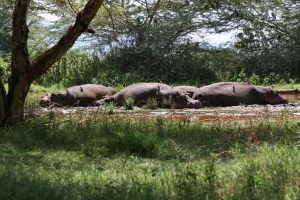
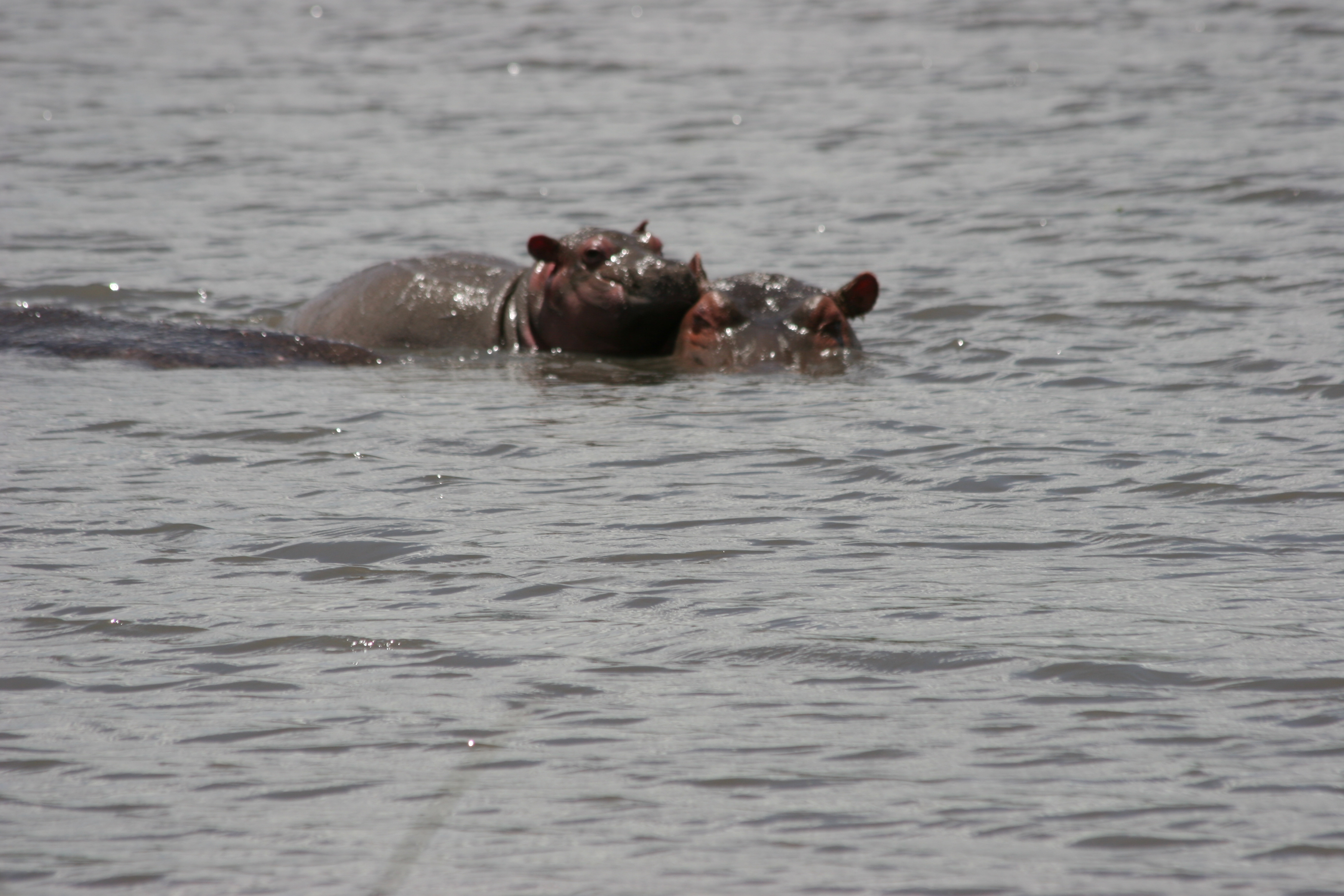
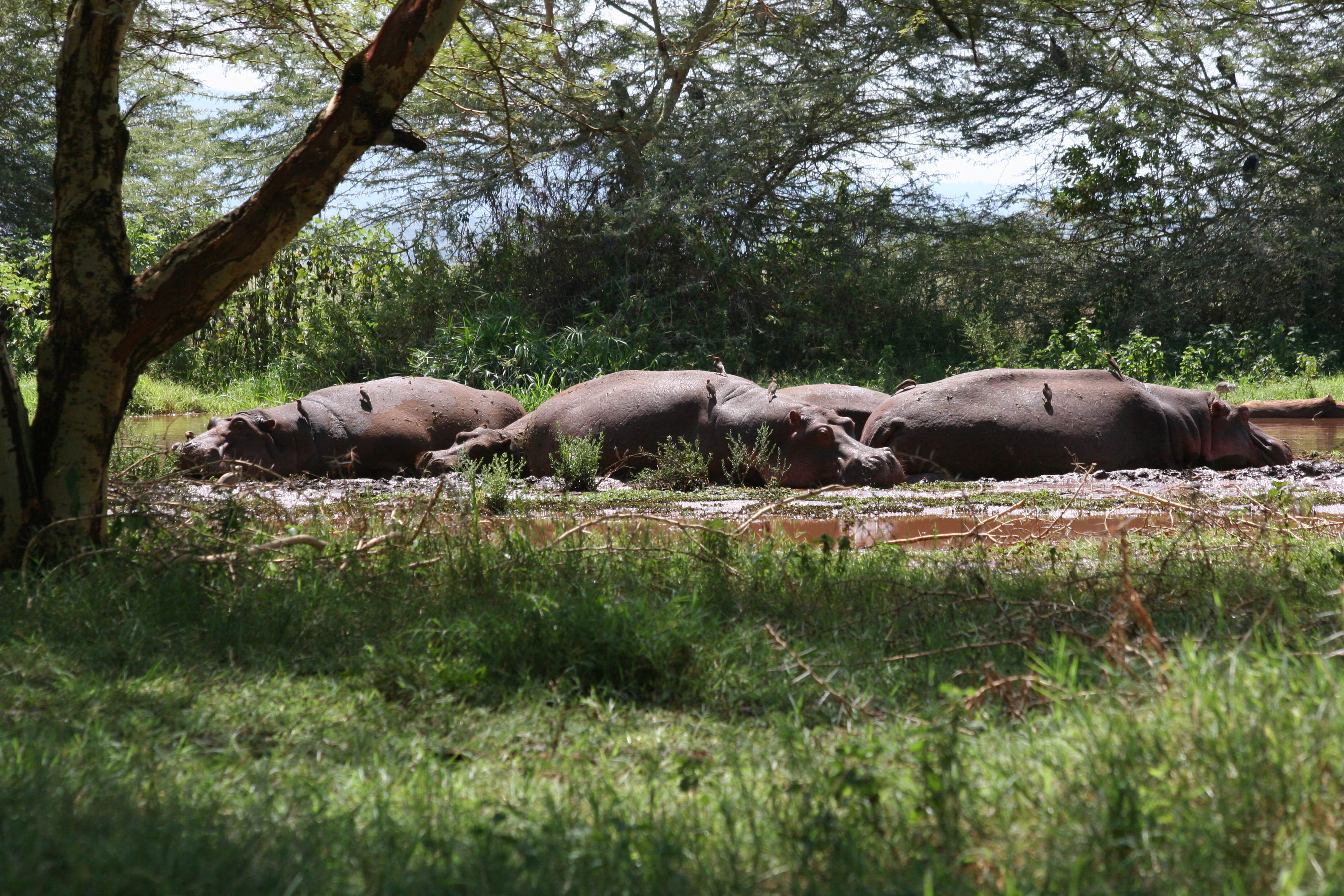
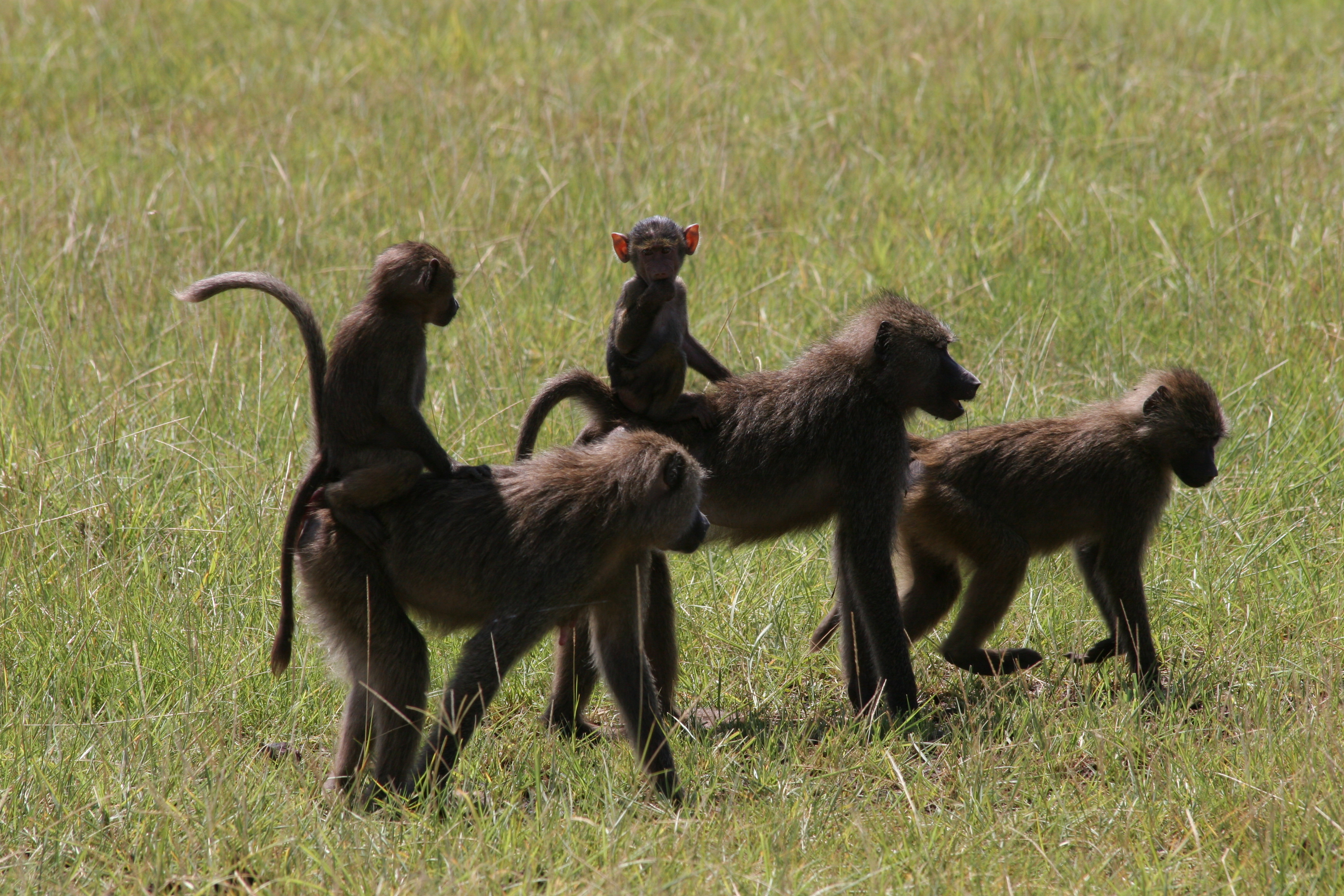
Once in the park, we saw blue monkeys, vervet monkeys, baboons, a lone elephant, some water buffalo from a distance, zebras, gazelles, and hippos in a pond. Our Driver/Guide is Masha and he stays with us for the entire time we are in Tanzania! He is very knowledgeable and is intent on showing us the game we want to see. After our morning game drive and lunch at the lodge, we started the transit drive to the Serengeti Lodge, where we spend the next two nights. Next year, they’re going to have a great, smooth, paved highway from Manyara to Serengeti. We know, because we drove on the dirt road detour next to it for six hours.
Ironically, we saw more game on the transit drive in the afternoon than on the morning game drive. Lots of wildebeest, though the migration is north of here right now. As a result, we only say groups of a few hundred instead of the uncountable thousands in the migration. One highlight of the drive were a lioness about 5 yards off the road who let us stare and take pictures for quite a while before disappearing into the grass. The other, more amazing, event was our encounter with a newborn wildebeest. We saw the mother just standing up, and the calf at the edge of the road, still covered with … well, you know. We watched the calf get up take its first steps, which happens about three minutes after birth. The group of half a dozen or so wandered off, their newest member a little unsteady, but keeping up.
We won’t try to name all the animals we saw, and really won’t attempt to get the order right. The whole experience is just incredible. Random memories:
Corey’s bustard is the heaviest flying bird. (Michael’s response: That thing can fly?!)
Thompson’s gazelle has a stripe on its side and a white rump below the tail. Grant’s gazelle has no stripe and a white rump that extends above the tail. (Common comment at the end of the day: Wait, I see something! Never mind, just more gazelles.)
Baby zebras are born without stripes. They just look like fuzzy brown horses.
Road crews are the same everywhere. Smoothing pavement takes one man driving a roller and five men watching him.
Finally, with everyone sore and exhausted, we pulled into Serengeti Lodge at 7:30 p.m. The good news is that the hot water stays on until 9:00. In fact, there is hot water from 6 pm until 9 pm — plenty of time for everyone to shower!
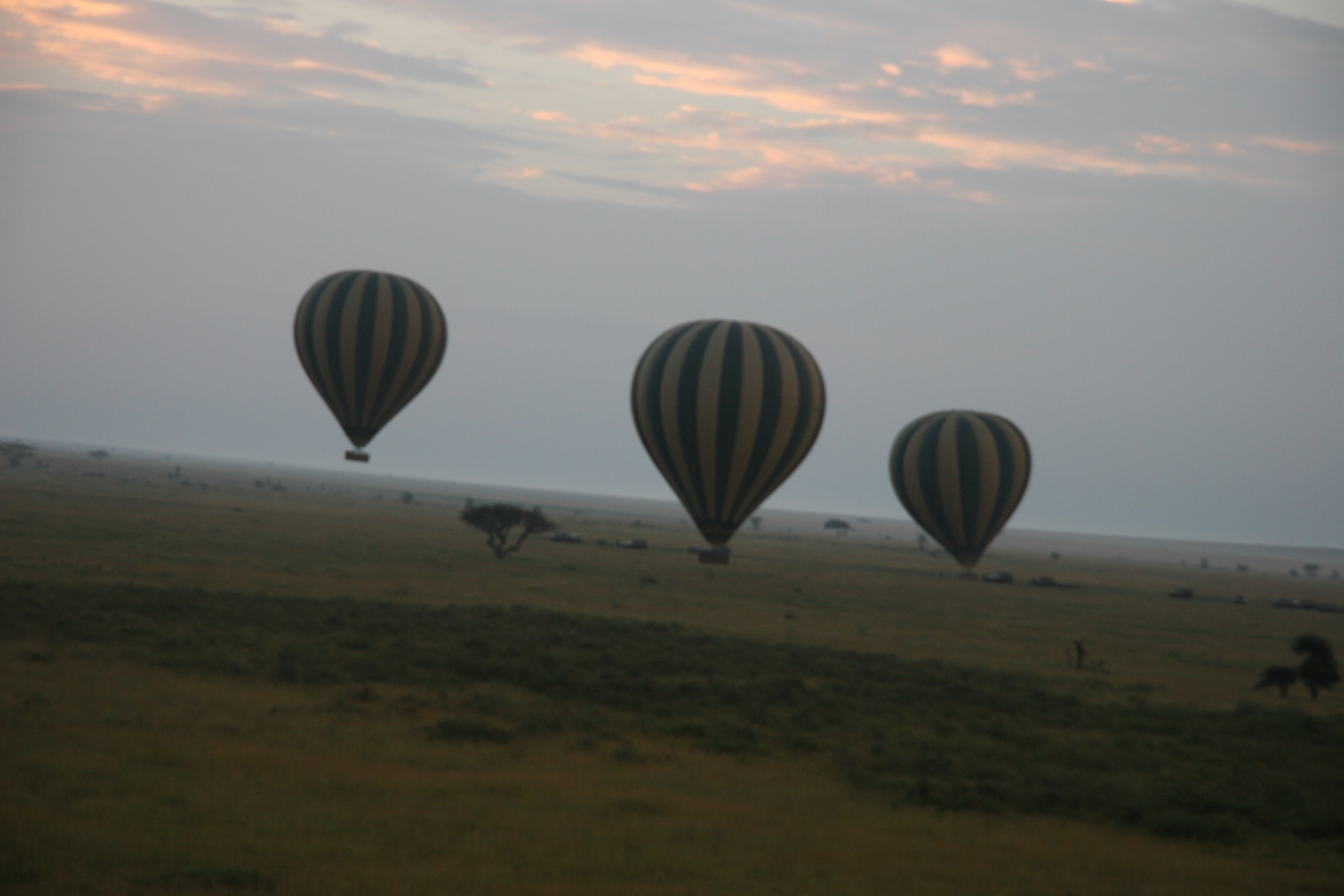
The next day (Friday) started bright and early with a 4:00 wake-up call. There are no phones in the room. Someone comes and knocks on your door. We got dressed and went to the lobby for coffee (instant) and tea before climbing into vans for the one hour drive to the balloon ride. You forget how dark it is when there are absolutely no street lights or other cars. There were only two hold-ups on the drive. First, we saw a hippo grazing by the size of the road, and had to stop and watch until it wandered off. Next, we came upon ten or twenty piles of dirt dumped intentionally in the precise center of the road. Apparently, they’re planning to grade it sometime this week. As a result, the drivers had to go completely off the road (which is not only dangerous, but illegal) for a couple hundred yards. It is important to point out here that the “road” is not like the roads you and I are familiar with — most of the roads are one or barely two lanes and not paved. Fortunately, we were in the van with the best driver, because he was the one who pulled up next to the other vans to tell them how to get unstuck. Ours was the only van that had no problems.
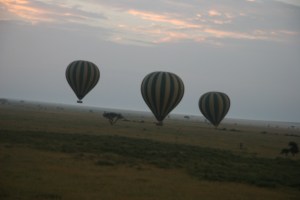
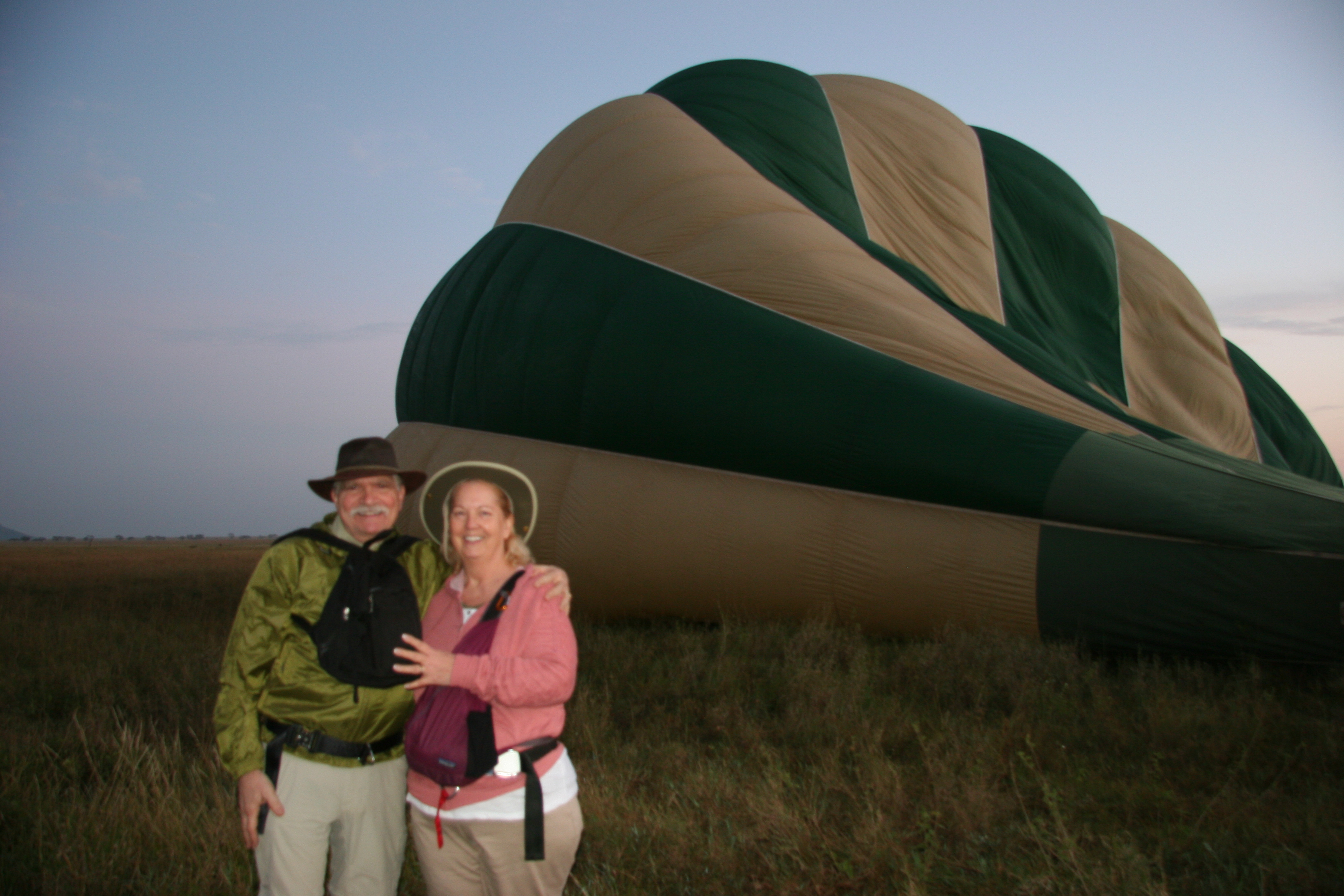
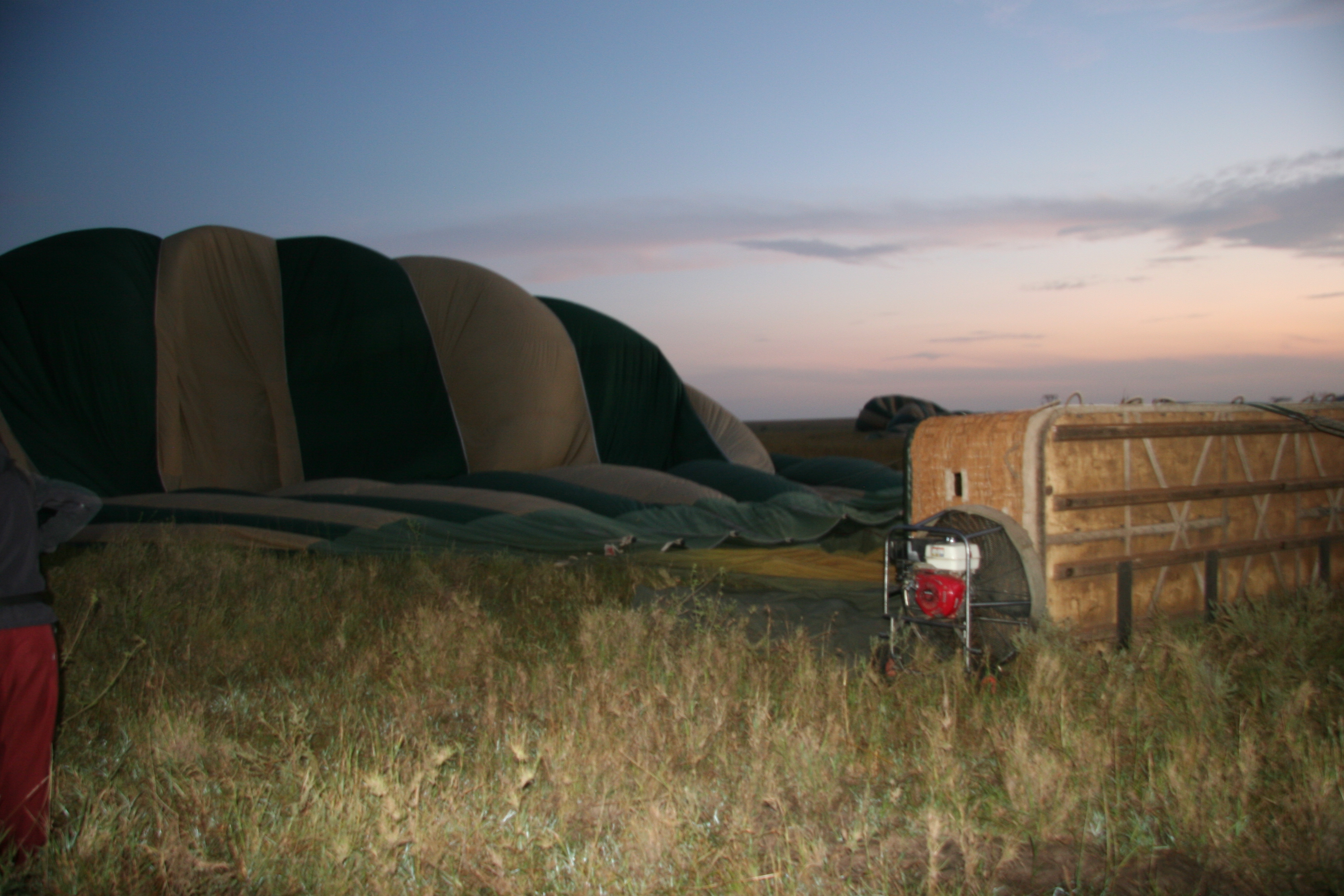
We got to the launch site to find four huge balloons being filled by large fans. I learned later that the balloons are 450’s (450,000 cubic feet of air). Attached to each balloon was a very large basket for the sixteen passengers and the pilot. The baskets were lying on their sides. During the preflight, we were instructed on hopping into the balloon while it was on its side. The basket was like a weaved picnic basket, separated into 4 sections — 4 people fit into each section. Think of a rectangle sliced into 4 even sections. The 2 sections on top (as the basket lay on it’s side) required those 4 people to hop into them. Needless to say, our pilot (Dan) took one look at Michael, Karlene, and I and said you 3 (plus our Australian friend) on the bottom. That still required us to basically lay on the ground and scootch into our tight spots. Once in, we were laying on our backs in a sitting position. The position you would be in if you tipped over backwards in a straight-backed chair. We were instructed to clip our seat belts (really, belts that looked like car seat belts) onto the strap connected to the bottom of the basket. That’s so you don’t fall out on take-off or landing. Once all in – like eggs in a carton — the pilot starts the fire which fills the balloon further and the basket straightens out (with help from the ground crew, who are pulling on the side of the basket). We were up!!! We didn’t see a lot of animals, but the view was breathtaking, nonetheless. It was too wonderful to be scary. The entire flight was perfect, as was the landing! We all have a new-found respect for balloon pilots – who have very challenging jobs.